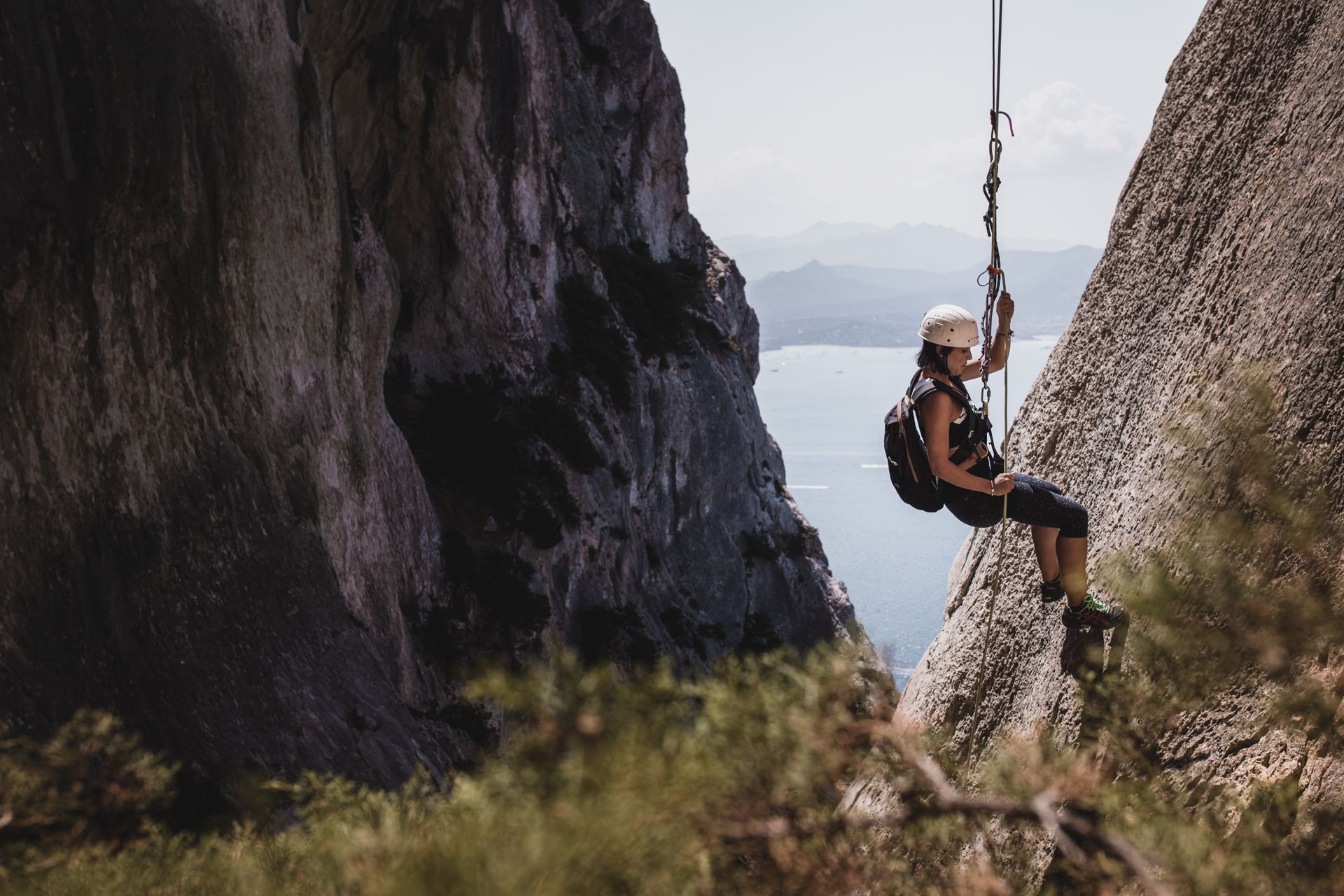

Abseiling down a building, also called a rappel, gives a corporate event or a team day a moment everyone remembers. You stand on the edge, with your feet against the wall and the rope in your hands, and descend a building you otherwise only know from the inside.
In this article you read where a rappel is possible, how it works, how safety is arranged and why you need no experience for it.
Where you can abseil
A rappel is possible in many places, as long as there are suitable anchor points and the owner agrees. Possible places include:
- company buildings
- historic buildings
- lift shafts
- industrial sites
- gorges and rock faces
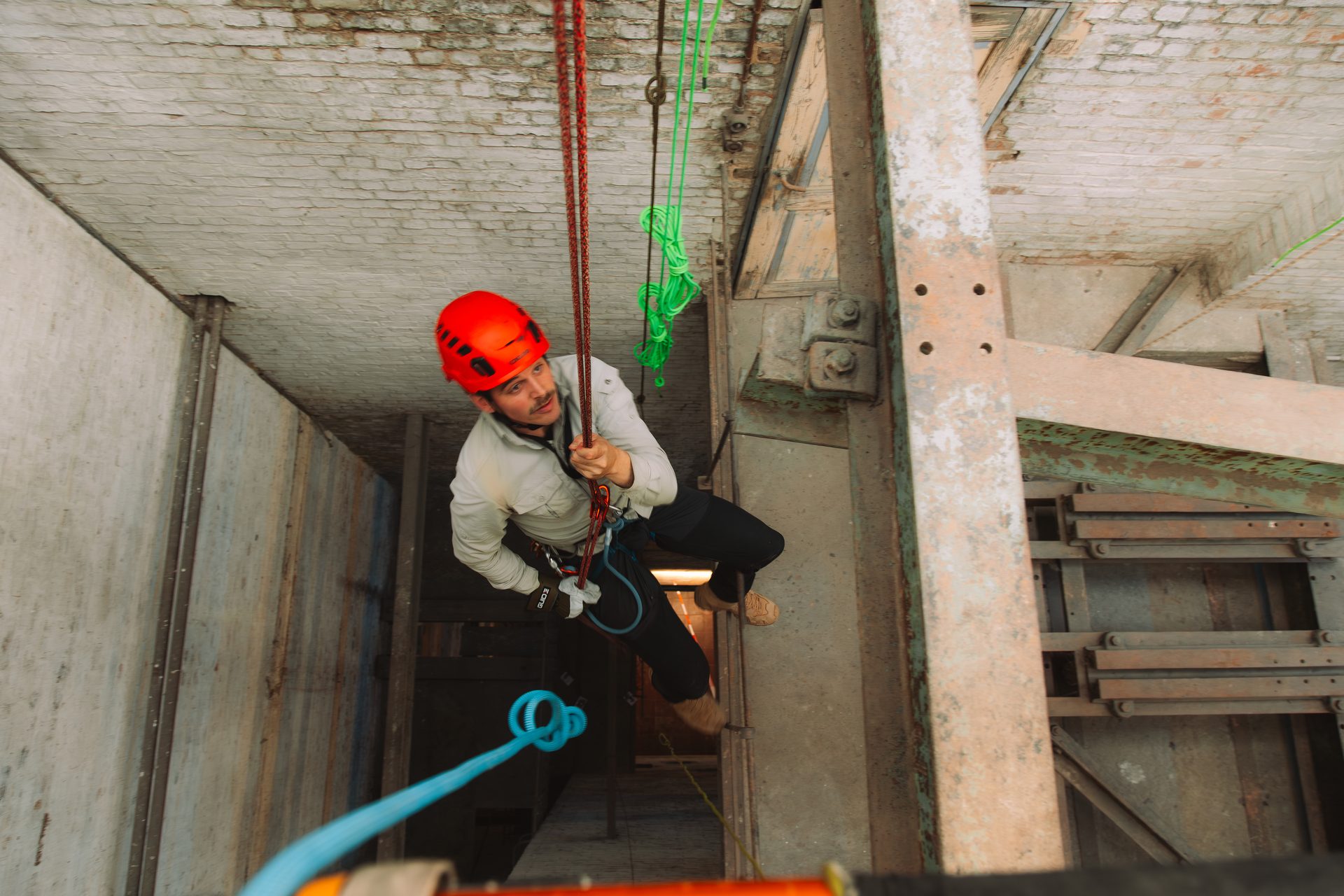
We have already had the guests of an event descend into the lift shaft of a building. A rappel on your own company building is often possible too. We come and look at the building, check whether there are suitable anchor points and arrange the necessary permits. That way your own building becomes the setting for your event.
How a rappel works
- Briefing. You get your harness and helmet, and a clear explanation of the equipment and the technique.
- Practice. A short practice at a low height, until the rope feels familiar.
- Over the edge. The moment you lean back and the rope carries you.
- At the bottom. Feet on the ground, and you look up at where you just stood.
A rappel takes a few minutes per person. With several lines side by side, a whole group can descend one after the other, while the others watch and cheer them on.
How high is a rappel?
We match that to the location and the group: from a lift shaft of a few floors to a facade or rock face of tens of metres.
Safety when abseiling
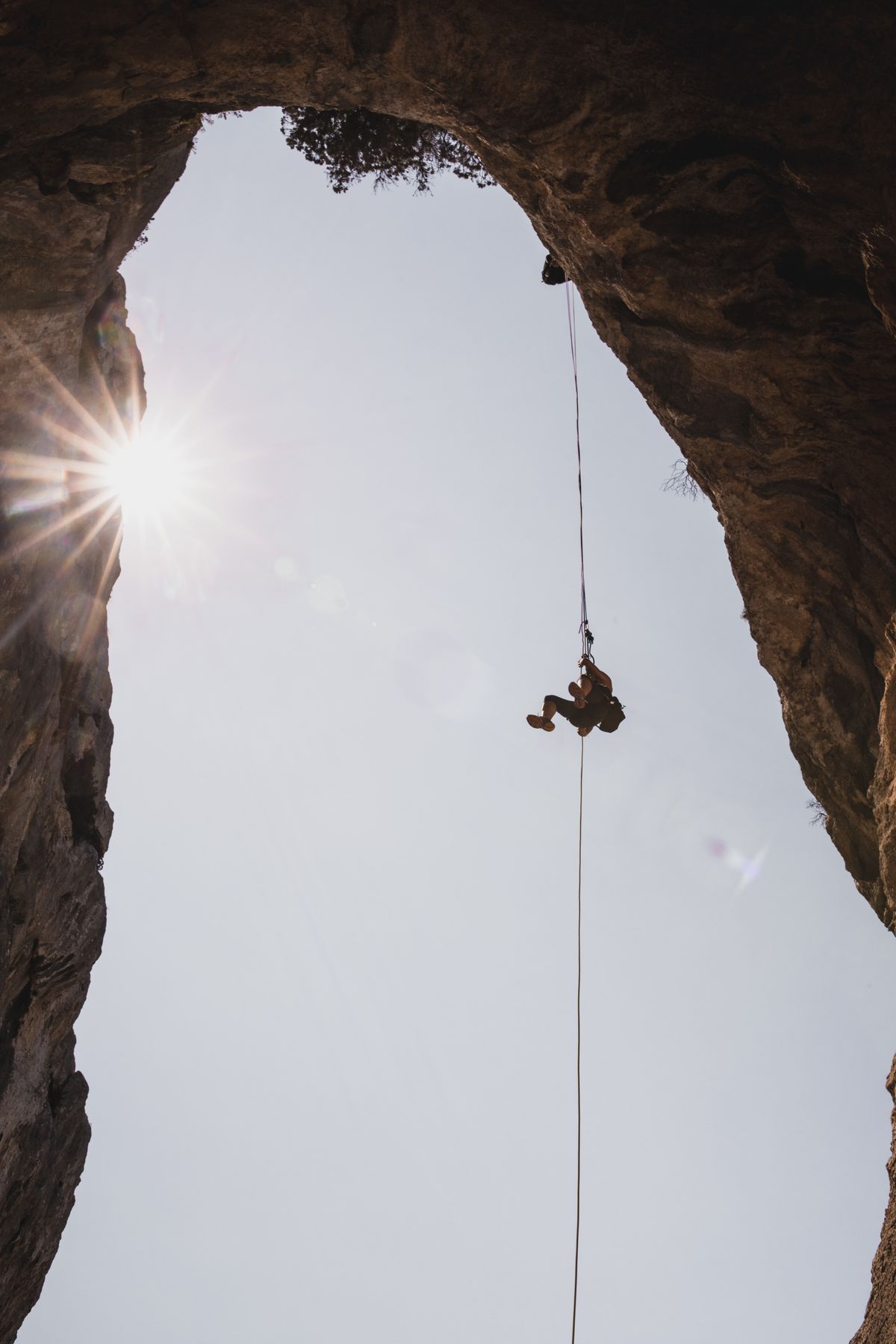
Safety is our highest priority. A rappel down a building starts long before anyone steps over the edge.
- Location and permits. We check whether the location is suitable, talk to the owner and arrange the permits and insurance.
- Anchor points. Rope technicians decide on the anchor points and build a system with two independent ropes per person.
- Supervision. Experienced people at the top and the bottom, a clear briefing and a short practice for everyone.
You are always attached to a second, independent rope and wear a helmet and harness. How we approach safety is explained on the page safety.
Why a rappel works at a corporate event
For most people, stepping over the edge is a small boundary. They hesitate for a moment, then lean back anyway and stand at the bottom a few minutes later. They share that moment with colleagues or clients watching at the top and the bottom, and it is often still talked about afterwards.
A rappel can open a team day, a kick off or a client event, or be its high point. Whoever does not descend watches. We think along about the set up, the timing and what happens around the rappel.
Frequently asked questions
Do I need experience to abseil?
No. You get an explanation of the equipment and the technique beforehand, and you practise at a low height first. Only when it feels familiar do you go over the edge.
Can a rappel take place on our own company building?
Often, yes. We come and look at the building, check whether there are suitable anchor points and arrange the necessary permits.
How many people can take part?
A rappel takes a few minutes per person. With several lines side by side, a whole group can descend one after the other.
Find out more
The locations, how it works and how to request it are on the page rappel at unique locations. If you want to take your team outdoors for longer, also have a look at our team expeditions.