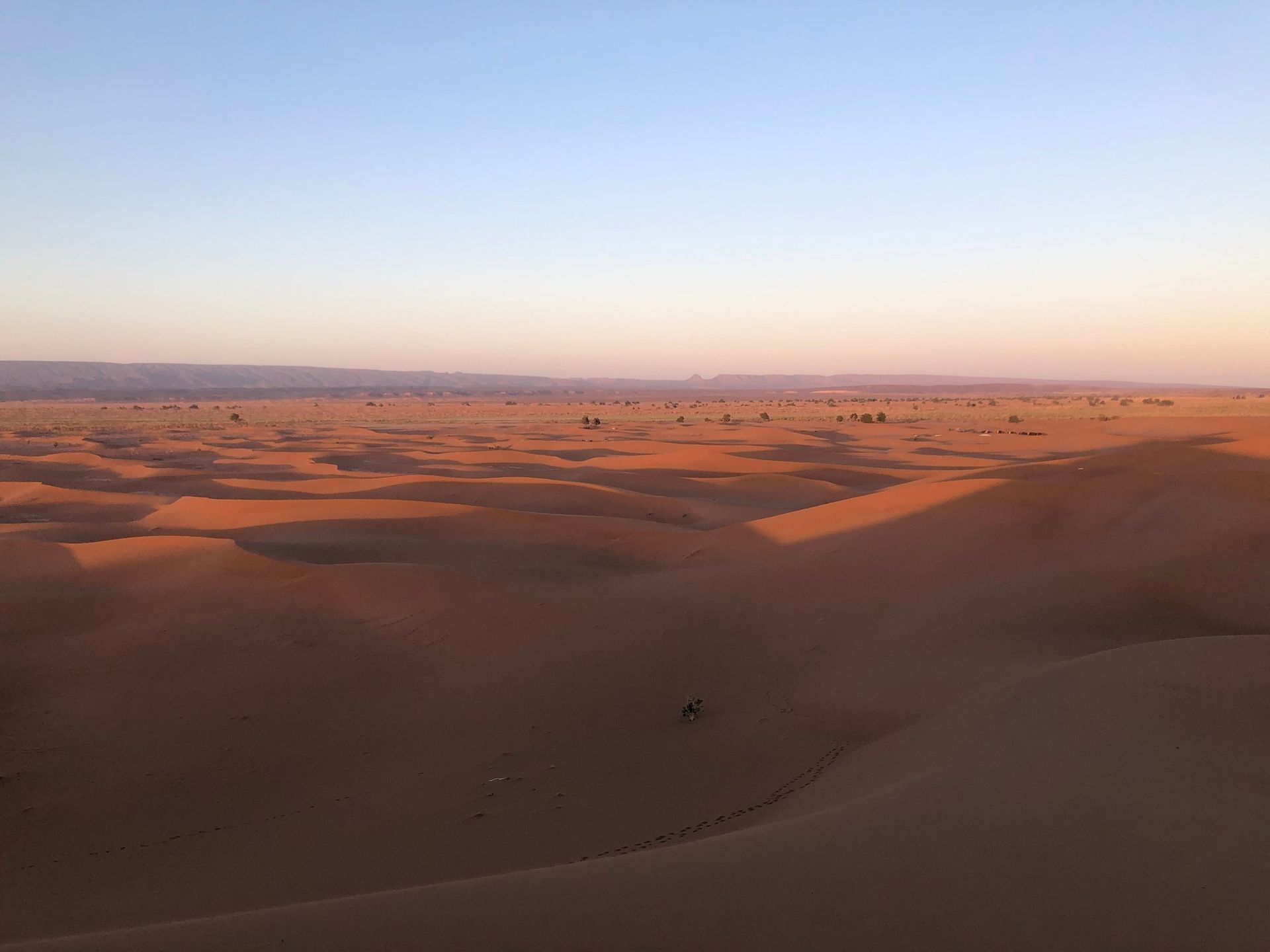

When people think of the Sahara, they often picture a line of camels or a jeep driving over the dunes. It can be done differently: on foot, with all your water in a cart you pull yourself, and at night outside under the stars. In the south of Morocco, between Foum Zguid and M'Hamid El Ghizlane, lies a stretch of desert without roads or villages where that is possible.
At Element X this is the Sahara expedition: seven days, with a group of 6 to 12 entrepreneurs. In this article you read what the terrain looks like, how the desert cart works, where you sleep and what the expedition asks of you.
From Marrakesh to the edge of the desert
From Brussels you fly to Marrakesh. Then the group drives south together over the Atlas, to Foum Zguid on the edge of the desert. That evening we get the desert carts ready.
The next morning a 4x4 drops the group in the Sahara, waits until everything is unloaded and drives back. From then on there are no roads, no signal and no village to walk to. Only days later, at the highest dunes, does the 4x4 pick us up again.
The terrain: black stone and soft dunes
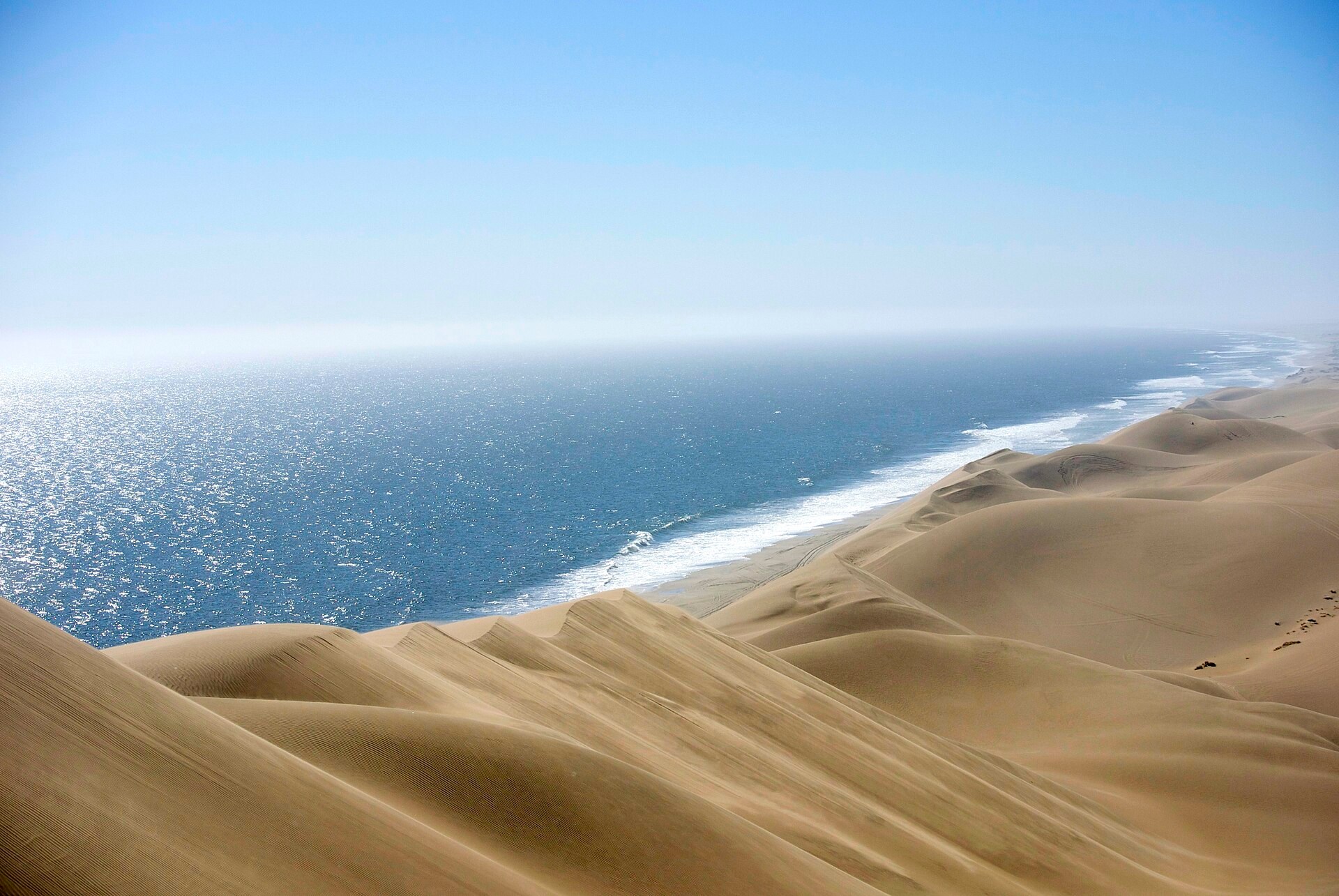
We head east on foot. The ground keeps changing: hard plains strewn with black stones, soft dunes where you sink in with every step, and long ridges from which you see the group stretched out ahead. There is no trail. We navigate with compass, map and the position of the sun.
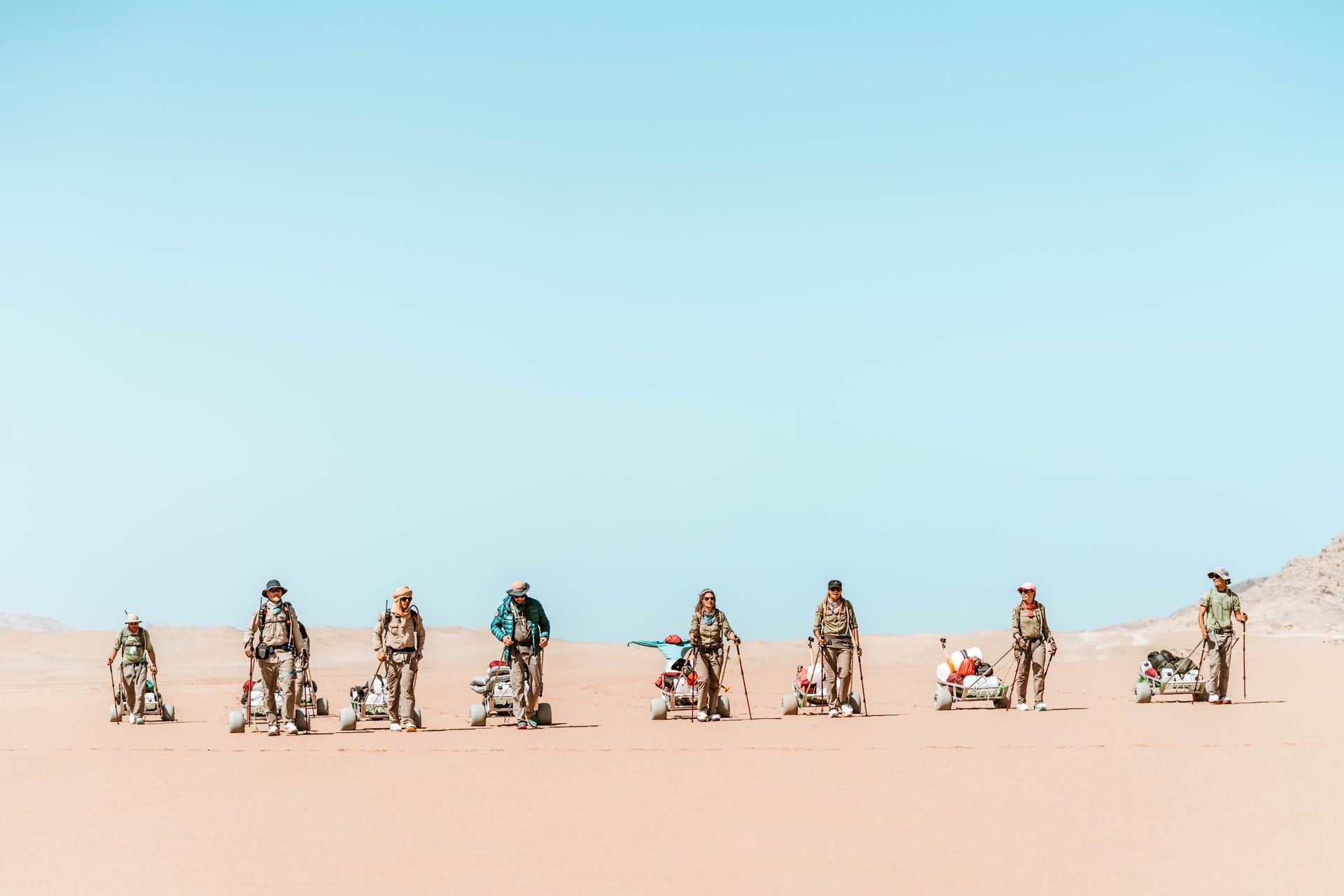
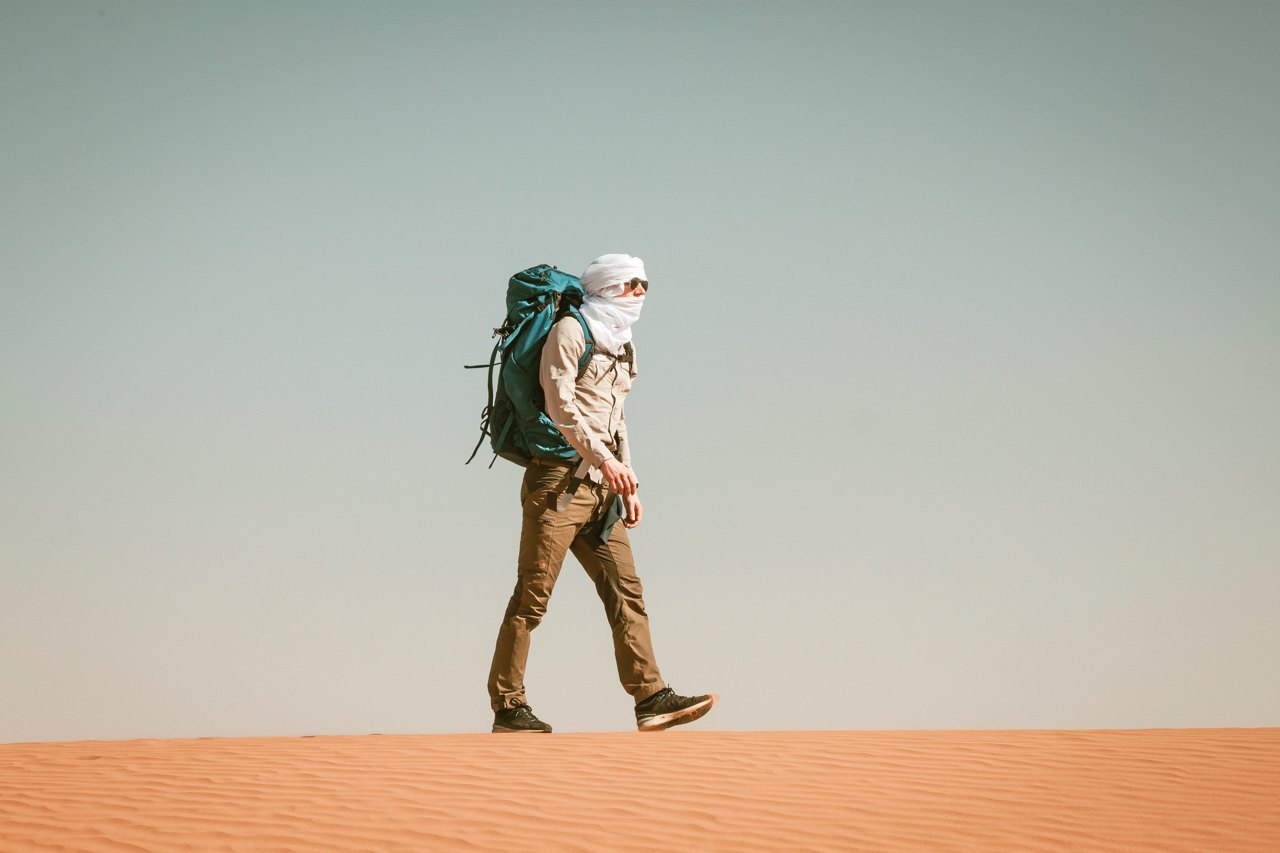
Walking in loose sand is something you learn on the way: shorter steps, a steady pace, in the footprints of whoever is in front. You carry your own rucksack with your clothes, your sleeping kit, the food for the day and two litres of water. A three metre scarf wrapped around your head keeps out the sun and the sand.
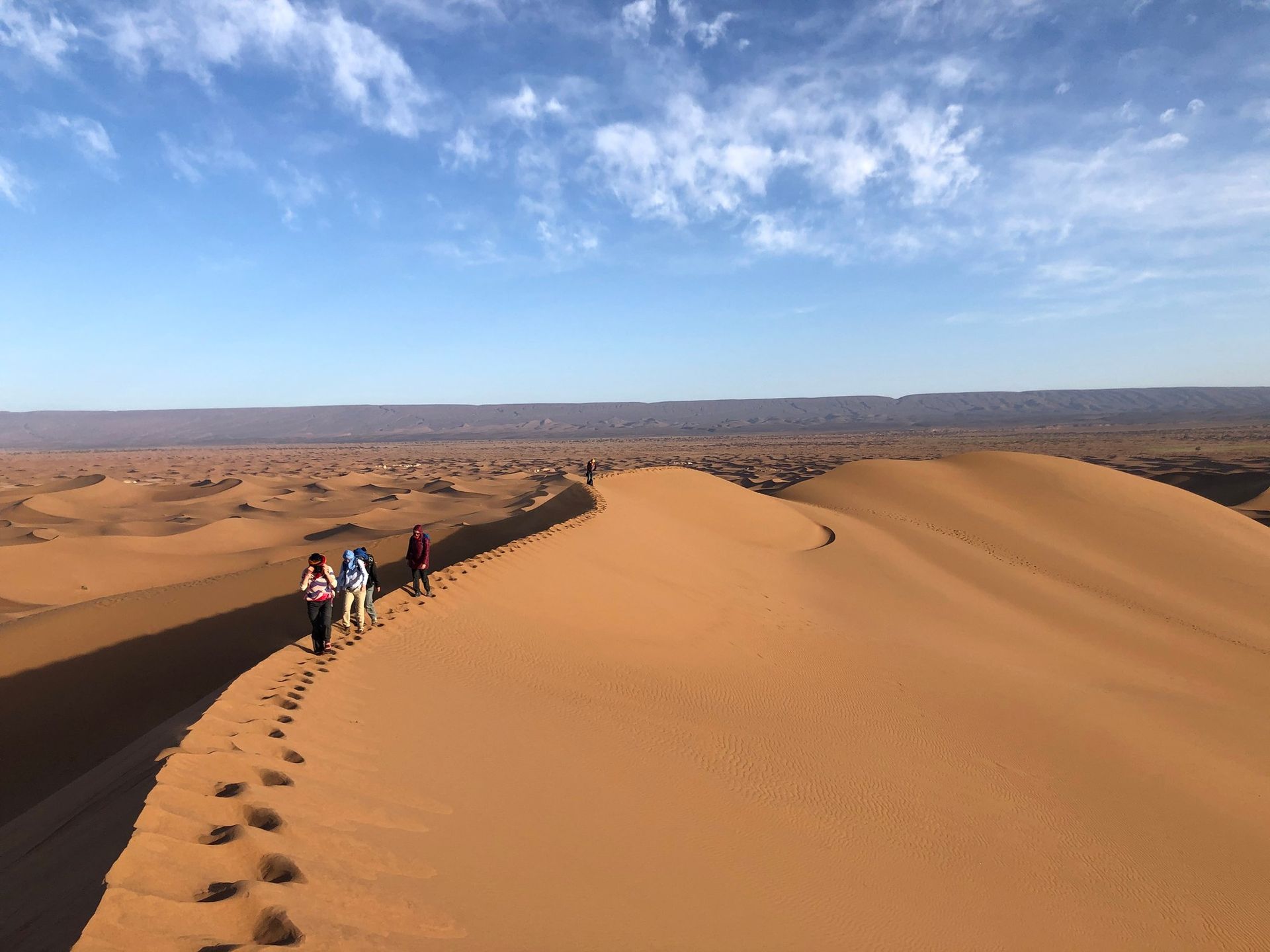
Photo dune ridge: Thomas Woodtli, Wikimedia Commons, CC BY-SA 2.0
The desert cart: you pull your own water
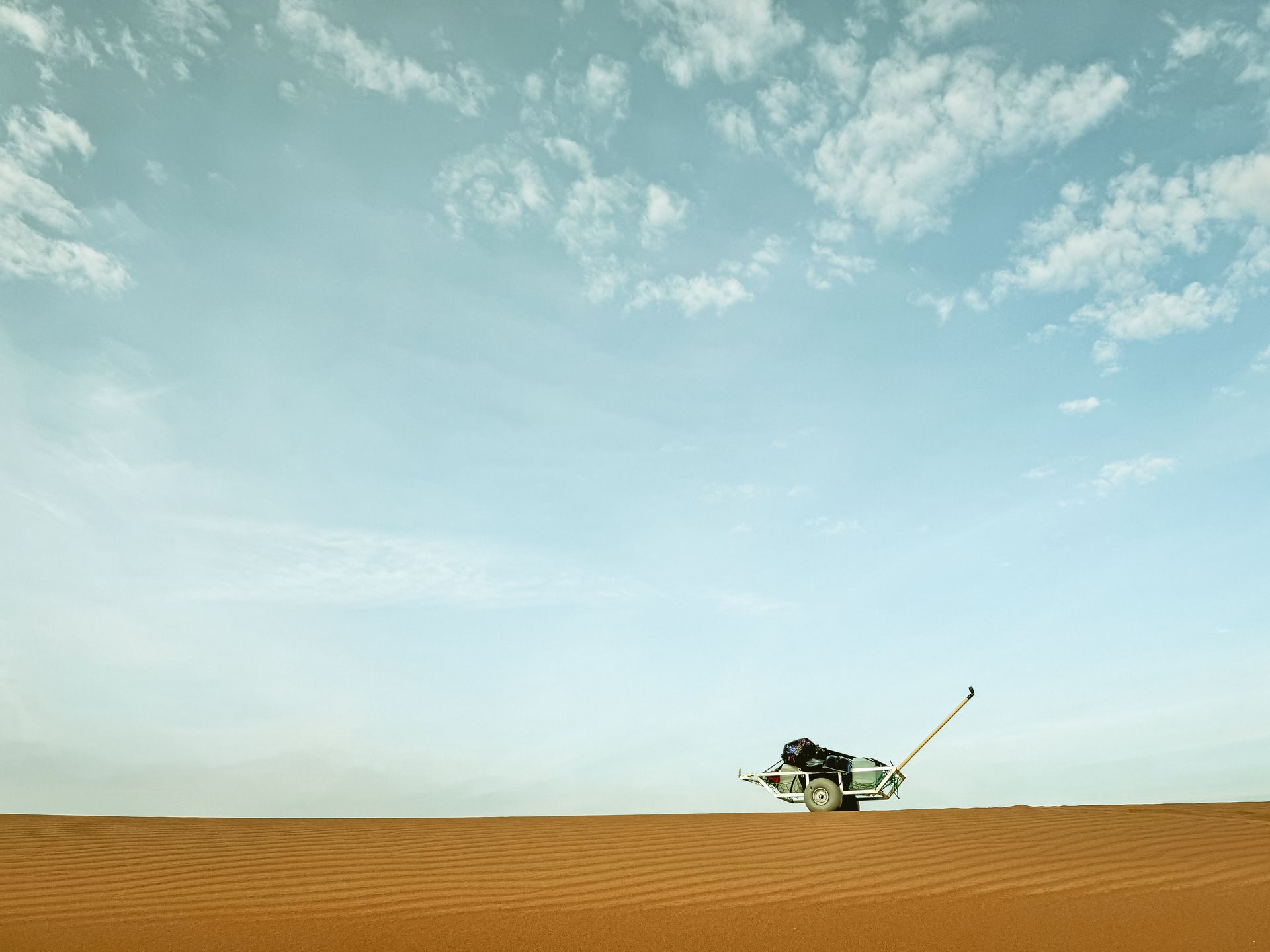
On this expedition no camel and no jeep carries your kit. The water for the whole group, around 25 litres per person, rides in desert carts on wide tyres. We pull and push them ourselves. On hard ground they roll easily; in soft sand and up a dune they only move when everyone lends a hand.
You feel straight away how much water weighs and why you use it sparingly. When a tyre goes flat, whoever is mechanic that day fixes it, while the rest help or wait.
Who does what in the group
Nobody here simply follows. Everyone takes a role: navigator, weather, camp, first aid or mechanic. In the evening the group keeps its logbook together. That is why we prepare you for months: you are not here to watch, you help lead.
In the desert, water and pace decide everything. Set off too fast and you pay for it in the afternoon; wait until you are thirsty and you are already too late. So we walk at a steady rhythm and drink at fixed moments. We practise that during the preparation, so you don't have to learn it out there.
Koen De Leeuw, expedition leader
Sleeping under the stars, without a tent
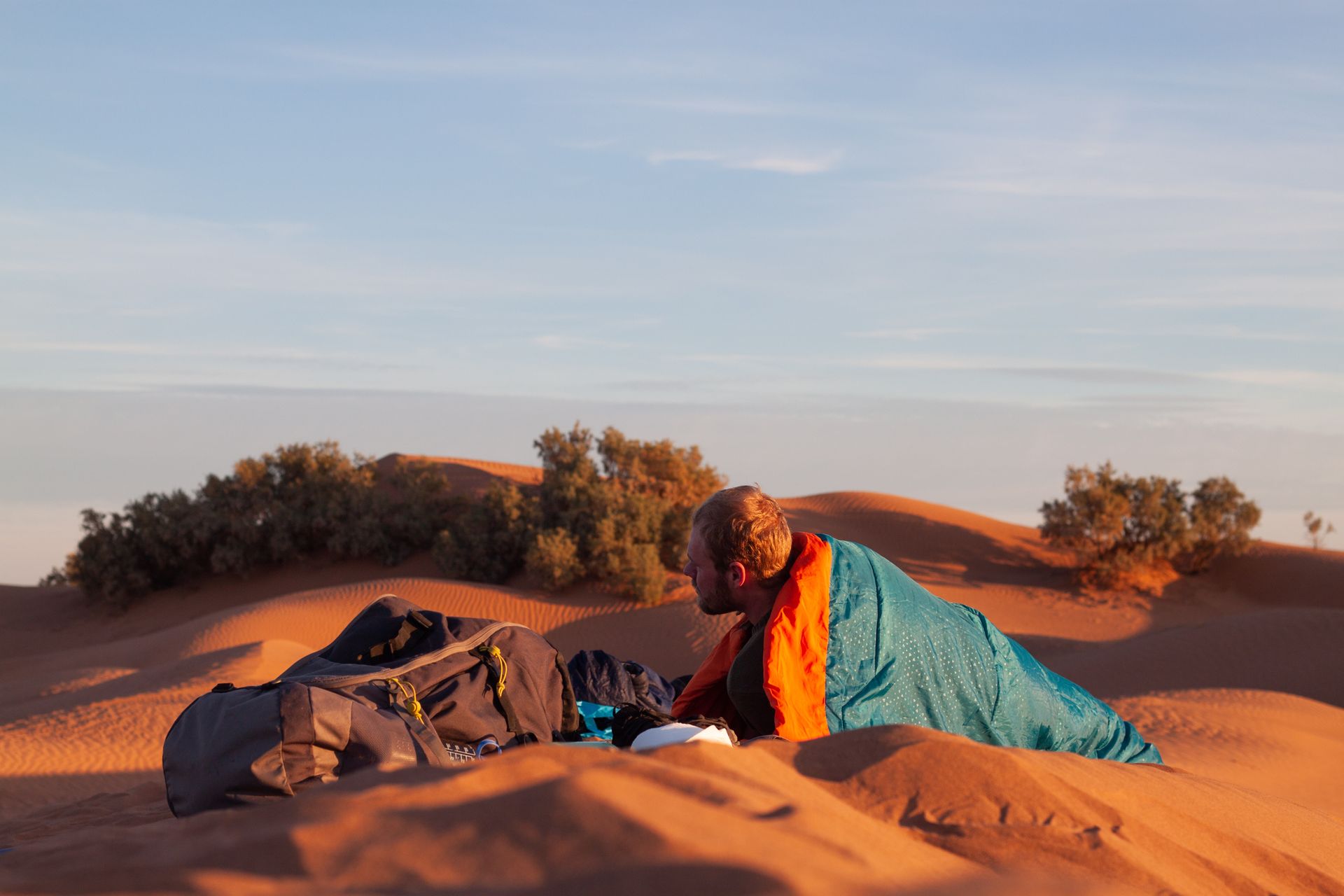
We sleep without a tent, in a bivvy bag on a mat, in the lee of a dune. Element X provides your rucksack, sleeping bag, mat and bivvy bag, which you receive before departure. We carry tarps for a night with strong wind.
There is no light anywhere nearby, so once the sun goes down the stars come out over the dunes. You cook your own expedition food on the stove and get into your sleeping bag early, because the next morning we set off early again. Before and after the desert you stay in a hotel.
When you go: November
The expedition runs from 11 November to 17 November 2028. We choose November because the summer heat is over by then.
The weather in the Sahara in November
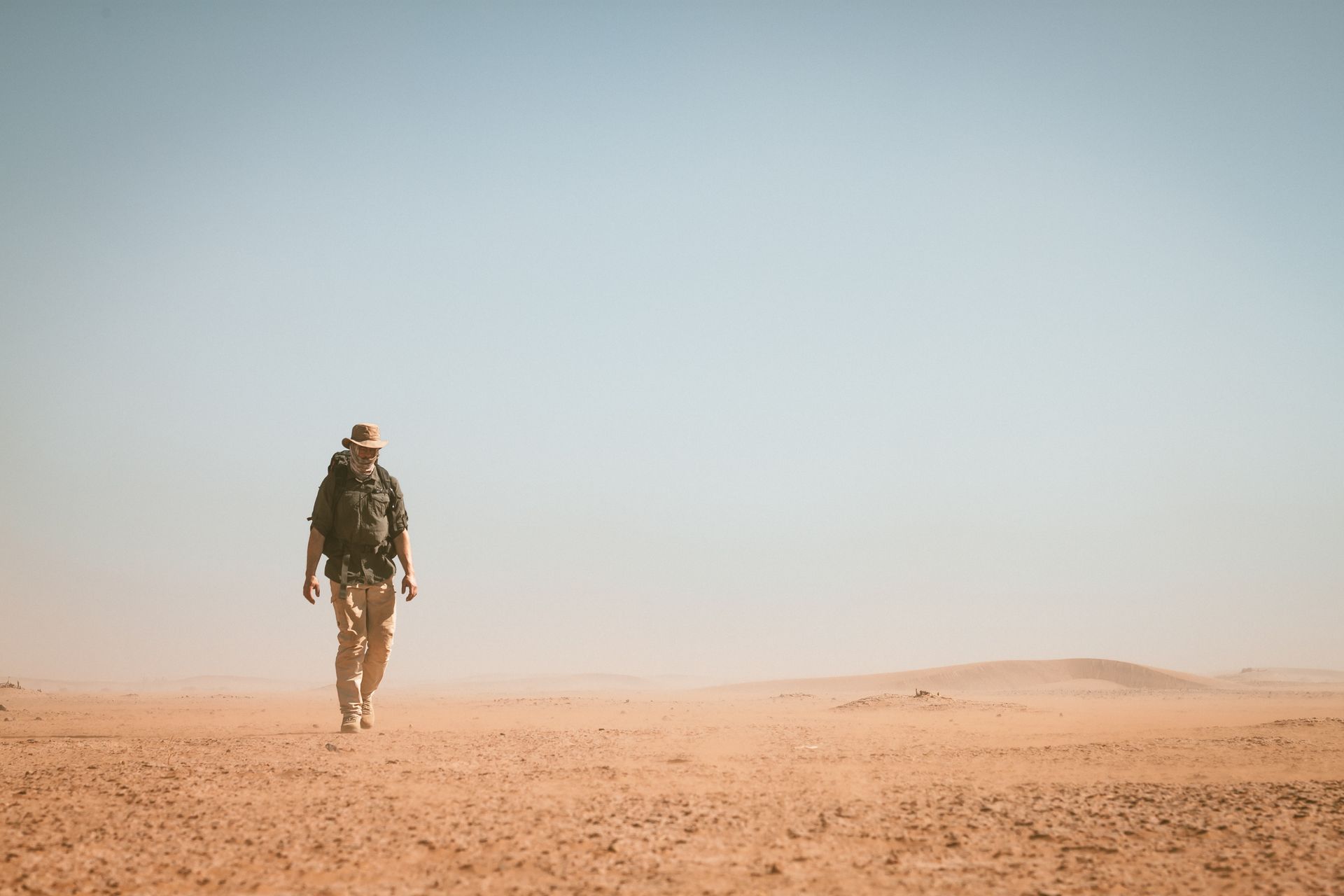
During the day it is usually between 20 and 28 degrees, with strong sun and dry air. At night it cools down, usually to 5 to 15 degrees. So you need light, long clothing that protects your skin from the sun, and a warm layer for the evening. Sturdy but light shoes with gaiters keep the sand out. You get a long scarf and sand goggles from us.
Wind can whip up the sand. That is why sandstorms are on the list of risks we go through together at the kick off before departure, alongside heat, sun, orientation, snakes and scorpions.
What it asks of you
The level is Adventure, 3 out of 5 on our scale. You are on the move for long days, on foot through loose sand and over stony plains, and together with the group you pull and push the carts with the water. Endurance matters more than technique. You do not need any desert experience.
Preparation
In the preparation programme of 3 to 6 months you work towards that level, from the kick off to the final check two weeks before departure. You learn to navigate with map and compass, to ration your water over the days and to repair a desert cart when a tyre gives out. You get to know the X Guide who comes on the expedition during those months.
What does the Sahara expedition cost?
The Sahara expedition costs €4,200 per person, excluding flights. The preparation programme, the X Guides, the desert carts and drinking water, the 4x4 drop and pick up, your sleeping kit, all overnight stays, all meals during the expedition and all local transport are included. We book flights together with you during the preparation programme; they are invoiced separately.
Frequently asked questions
How much water do you need on a desert expedition?
On this expedition we count on around 25 litres per person. That water rides in the desert carts that the group pulls and pushes itself. During the day you also carry two litres of water in your rucksack. You drink at fixed moments and not only when you are thirsty, because by then you are already too late.
How do you find your way in the desert without a trail?
With compass, map and the position of the sun. There are no trails and no signs, only stony plains and dunes. One participant takes on the role of navigator, with the X Guide alongside. You learn to navigate with map and compass beforehand, in the preparation programme.
Do you need to be in peak condition to walk through the Sahara?
No. The level is Adventure, 3 out of 5: endurance matters more than technique. At the kick off you do physical tests and go home with training advice, so that you work towards that level in the months before departure.
Find out more
The dates, everything that is included and the button to take an option are on the page of the Sahara expedition. How we handle risks in the wild is explained on the page about safety. Rather talk first? Then you can book a call.
Cover photo dunes in the evening light: Thomas Woodtli, Wikimedia Commons, CC BY-SA 2.0