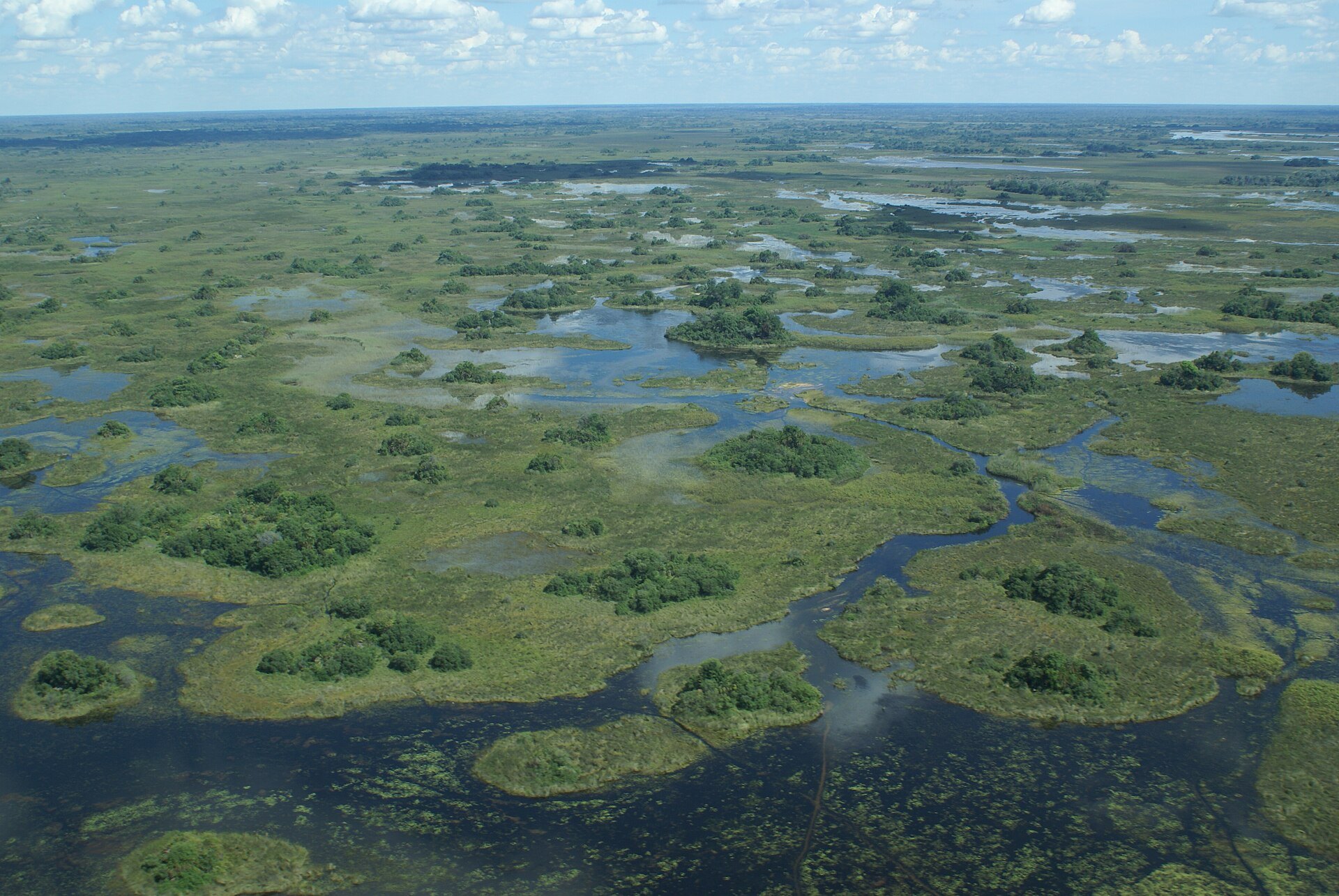

On a walking safari you do not watch wild animals from a vehicle. You walk through their habitat on foot, in single file behind an armed walking guide. In the Okavango Delta in northern Botswana you do that across islands and open grassland, and where the water gets too deep, you carry on by canoe.
At Element X this is the Walking Safari Okavango: ten days on foot and by canoe through the delta, with a small group of 6 to 12 participants, licensed walking guides and local trackers. In this article you read how a walking safari works, where you sleep, when you go and what it asks of you.
A river that never reaches the sea
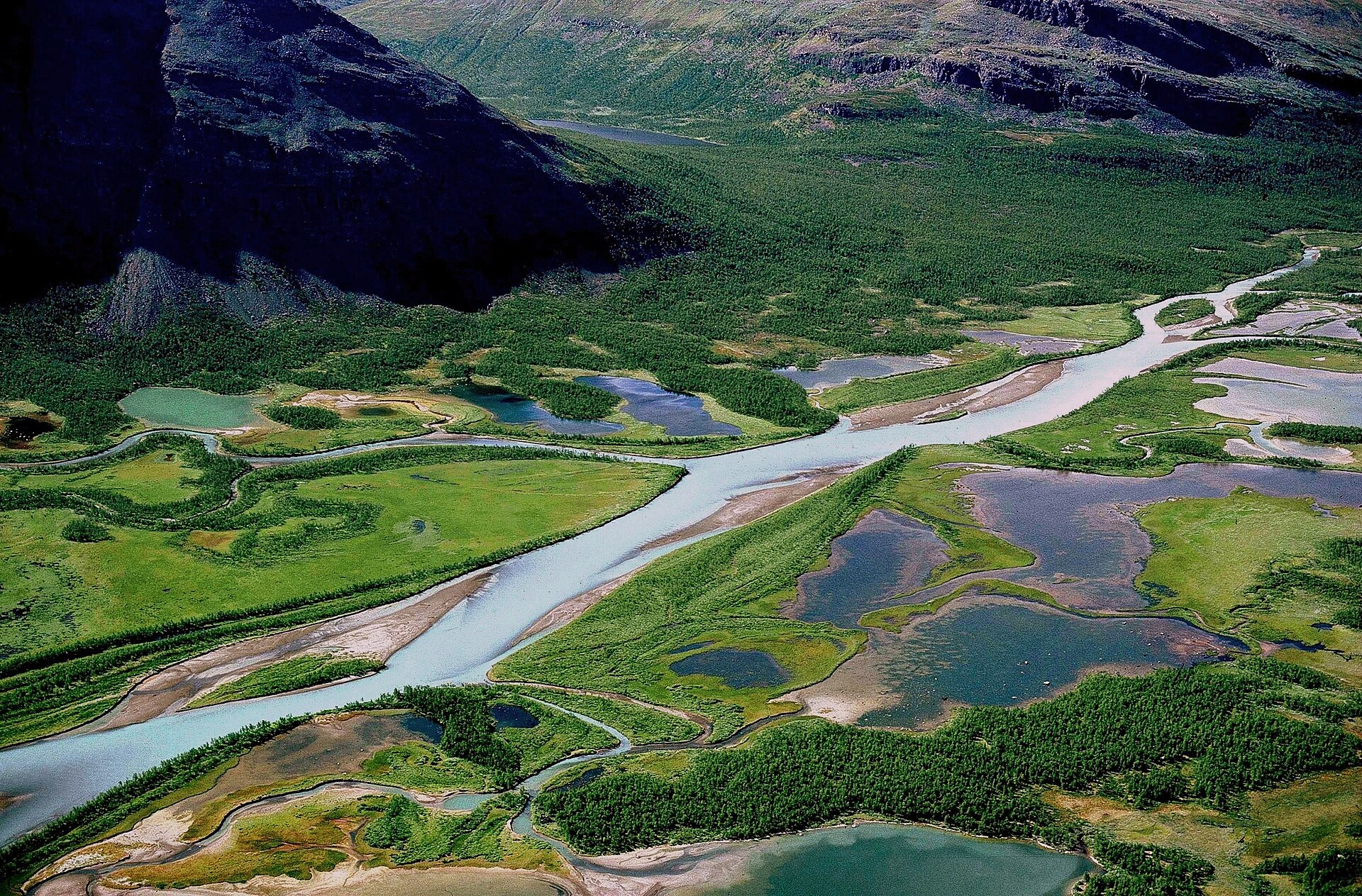
The Okavango rises in the highlands of Angola and never reaches the sea: the river runs out into the Kalahari. The rain from Angola only reaches the delta months later, around July and August, in the middle of the dry season. That water draws in elephants, buffalo, hippos and lions.
The ground is flat. You walk across open grassland and islands of palms and thorn bush, and everywhere you see tracks in the sand. Between the islands run channels with papyrus and water lilies.
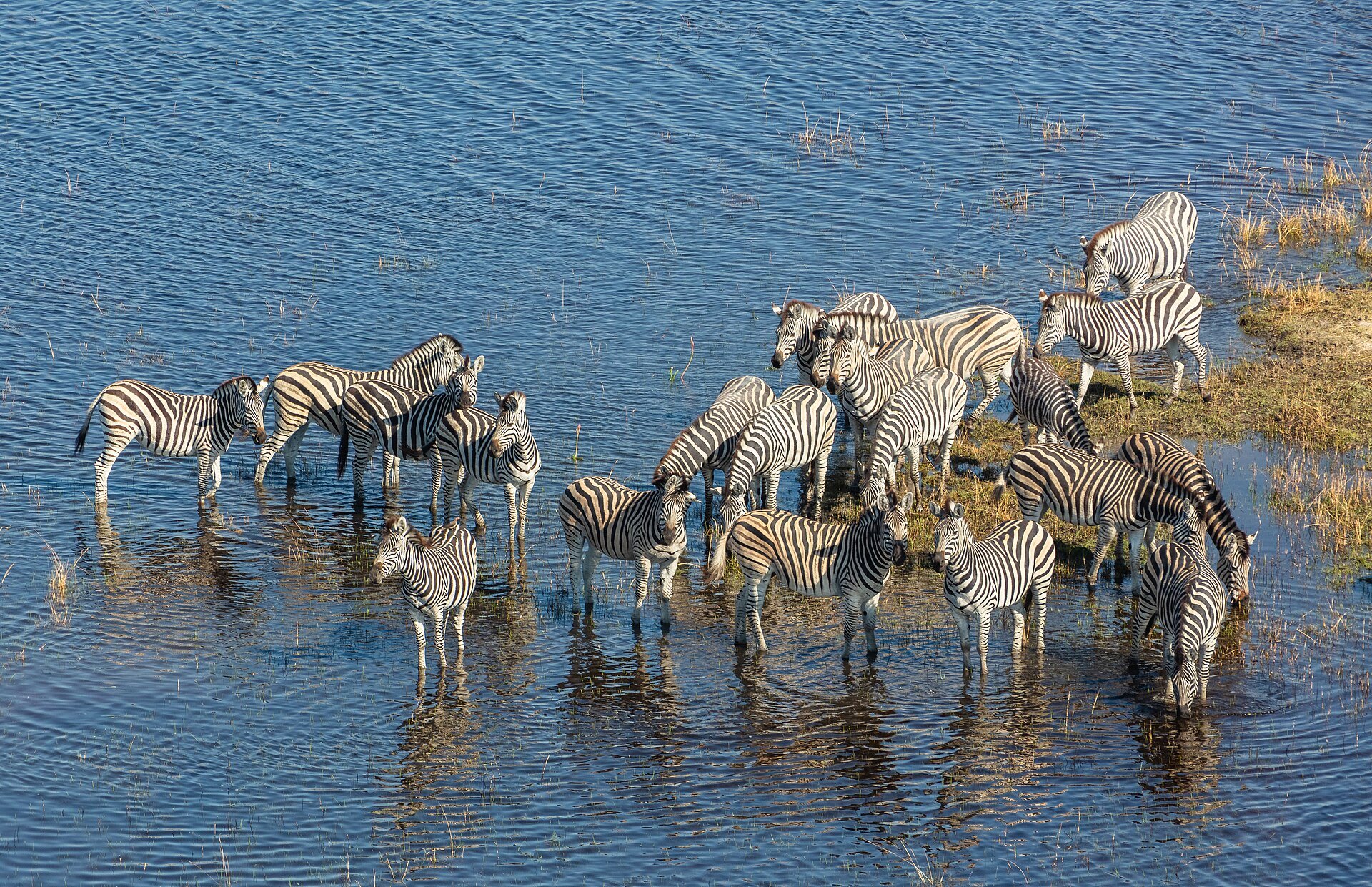
Photo zebras: Diego Delso, Wikimedia Commons, CC BY-SA 4.0
How you get into the delta
From Brussels you fly to Maun, on the edge of the delta, with at least one change, usually in Johannesburg. In Maun we board a small plane that flies low over channels, islands and reed beds and drops us on an airstrip in the middle of the delta. Then the plane heads back to Maun.
From then on there is no lodge, no fence and no road, and no vehicle either.
On foot: how a walking safari works
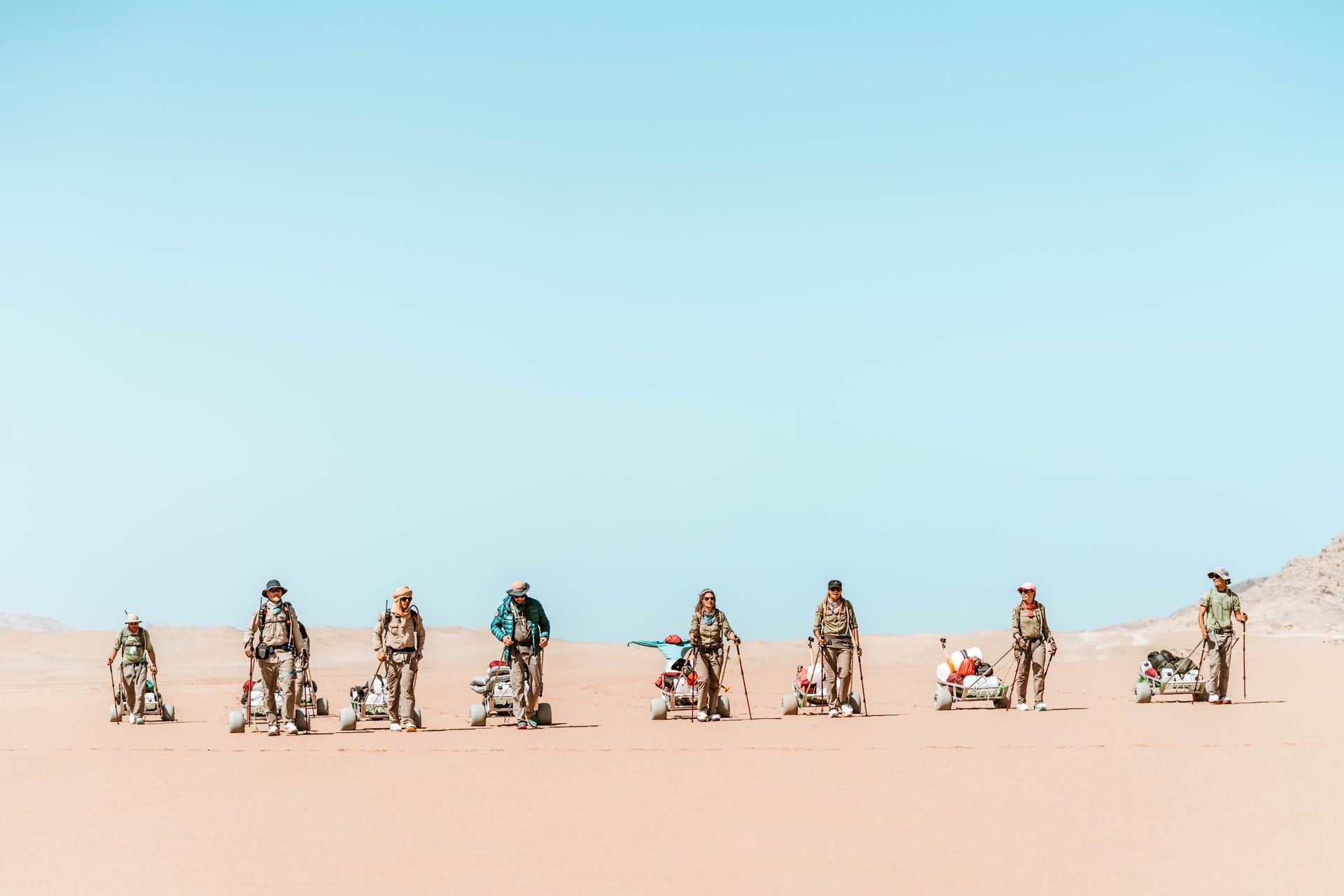
We walk in single file behind the armed walking guide, without talking and with the wind in our faces. You often hear an elephant before you see it: a branch snapping, a stomach rumbling in the thicket. You learn to keep your distance, to stand still when the walking guide asks you to and never to run from an animal. Whatever you need along the way, you carry yourself in your rucksack.
On foot in wild country your attention changes completely. You are no longer watching animals, you are moving among them, and then the small things count: where the wind is coming from, how loudly you talk, whether you stand still when you are asked to. We train those rules beforehand, so that out there you no longer have to think about them.
Koen De Leeuw, expedition leader
By canoe through the reeds
Where the islands end and the water begins, we take to the canoes. They are narrow, low boats, pushed along from the stern by a local boatman standing with a long pole, with no engine. You sit just above the water among papyrus and water lilies, and the only sound is the pole sinking into the riverbed. The boatmen know the channels, where the hippos lie and how to keep clear of them.
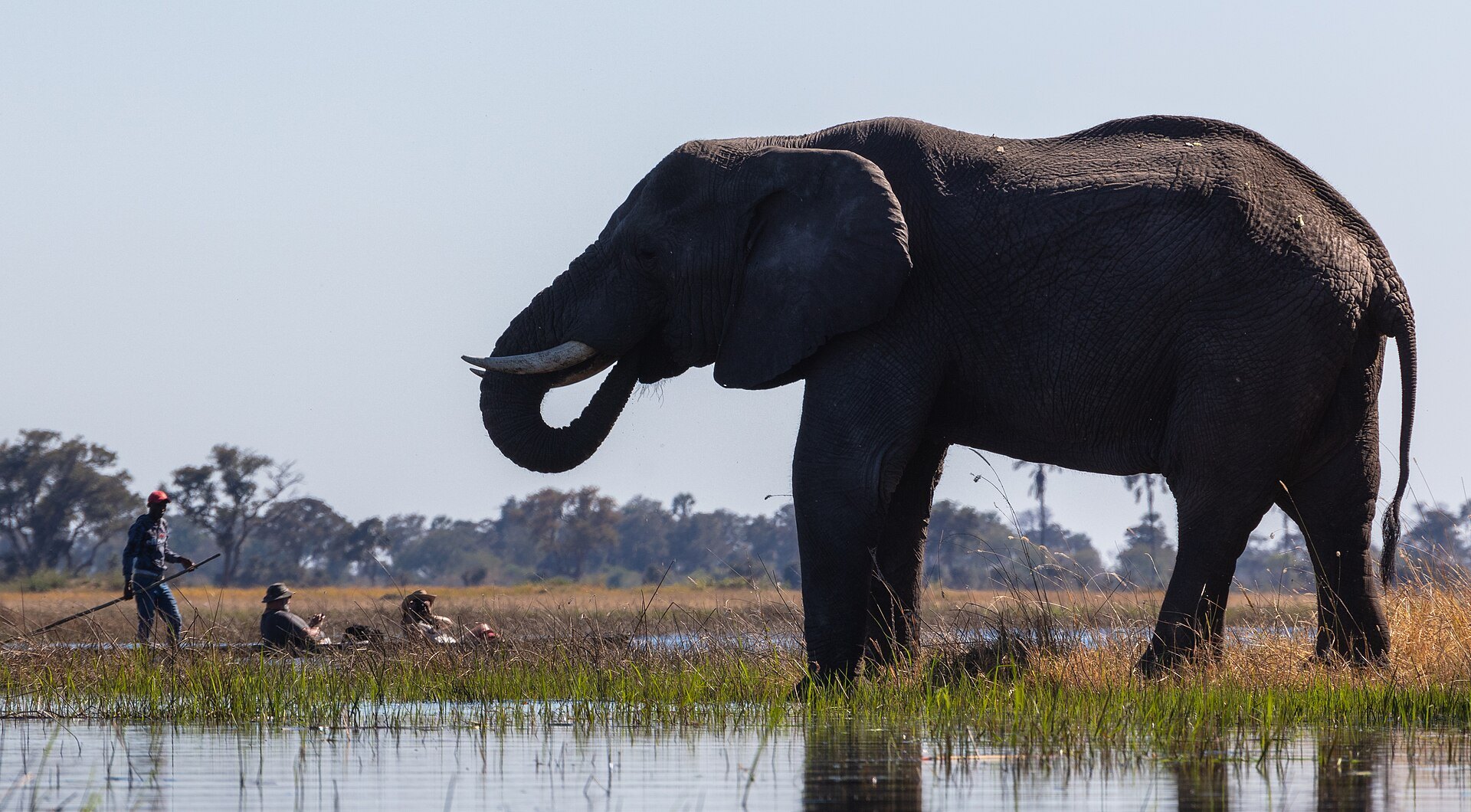
Photo elephant and canoes: Diego Delso, Wikimedia Commons, CC BY-SA 4.0
Where you sleep: a camp without a fence
We sleep in tents in a simple camp, set up where it is safe and where nature allows. We filter our water from the river and cook our own expedition food on the stove. As darkness falls the delta comes alive: frogs, a hyena in the distance, sometimes a lion roaring. A watch system runs all night, and you take your turn too.
In the morning we walk around camp with the trackers and read in the sand which animal passed, how long ago and in which direction. After a few days you can tell for yourself a track from yesterday from one made last night.
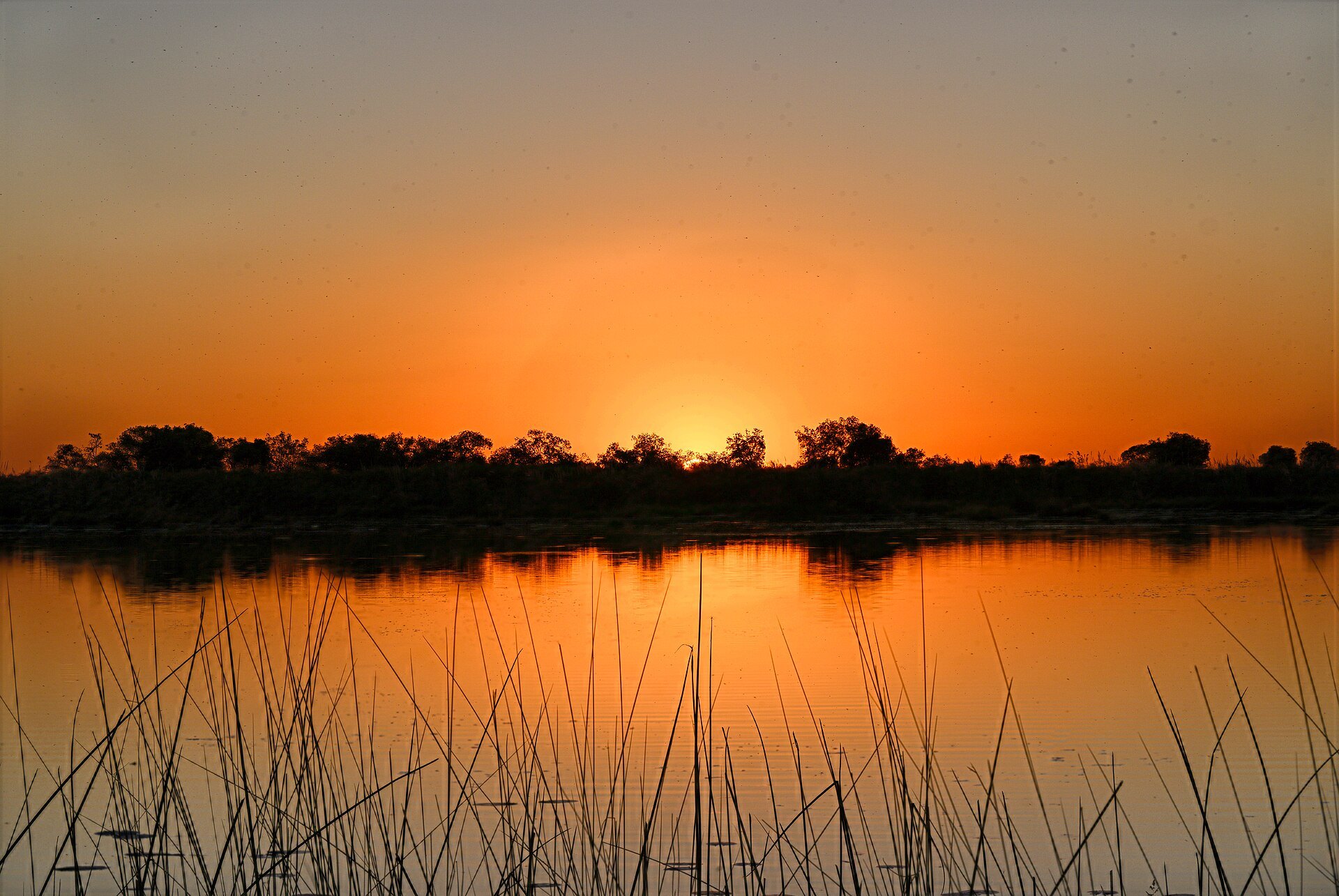
Photo sunset: Eric Kilby, Wikimedia Commons, CC BY-SA 4.0
When you go
The expedition runs from 26 August to 4 September 2028 and takes 10 days. The end of August is the dry season in Botswana, and yet there is a lot of water in the delta, because the rain from Angola only arrives around July and August. The grass is lower, the wildlife moves to the water and on foot you see further.
The weather at the end of August
It is dry and sunny. During the day it is usually between 25 and 30 degrees, often warmer towards September. The nights are cool and can drop to a few degrees above zero. You receive a packing list built on layers, which we go through together at the kick off.
Northern Botswana is a malaria area. In the dry season there are fewer mosquitoes, but the risk does not disappear. Discuss prevention and vaccinations in good time with your GP or a centre for tropical medicine.
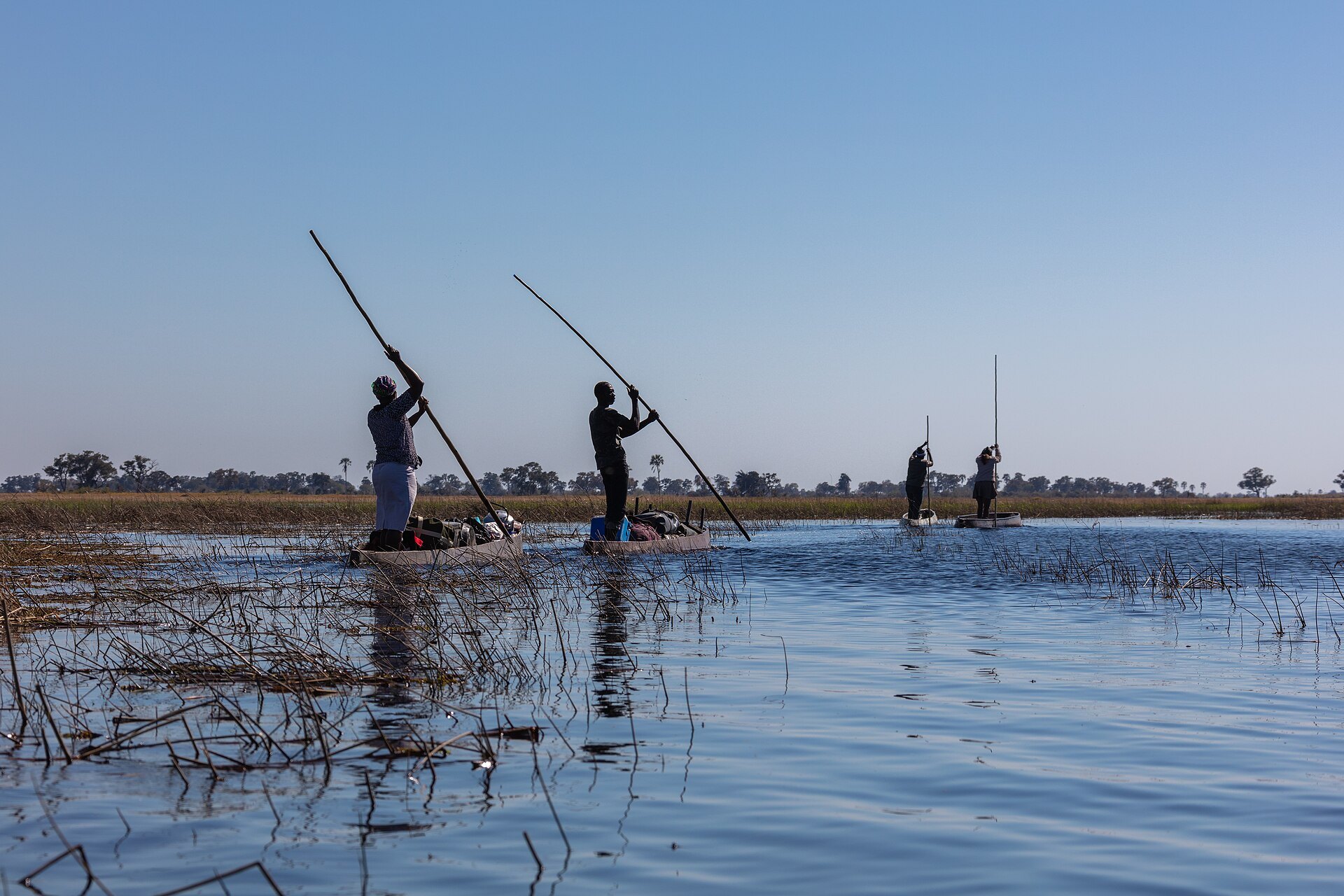
Photo boatmen: Diego Delso, Wikimedia Commons, CC BY-SA 4.0
What it asks of you
The level is Adventure, 3 out of 5 on our scale. The ground is flat, but you spend long days outside in the heat with your own rucksack, and you sleep in a simple camp with a night watch. You do not need to be a top athlete.
Walking among wild animals is never without risk. We walk with licensed, armed walking guides and local trackers, and our X Guides hold a Wilderness First Responder certificate. We carry satellite phones and GPS tracking and work with an evacuation plan and local support in Botswana.
Preparation
The preparation programme of 3 to 6 months is included. It starts after you sign up with a kick off at Kasteel Borgwal in Gavere, where you go home with training advice. Then follow monthly group training sessions and a technical training, and two weeks before departure a final check.
What does the Walking Safari Okavango cost?
The Walking Safari Okavango costs €7,600 per person, excluding flights. That covers among other things the preparation programme, the X Guides, the walking guides, trackers and boatmen, the bush flight into the delta, the permits, the camping gear and all meals during the expedition. We book flights together with you during the preparation programme.
Frequently asked questions
What is the difference between a walking safari and a regular safari?
On a regular safari you watch the animals from a vehicle. On a walking safari you are on foot, with no car window or engine between you and the wildlife. You walk in single file behind an armed walking guide and learn to read tracks, mind the wind and stand still when you are asked to.
What do you take on a walking safari?
Whatever you need along the way, you carry yourself in your rucksack. Element X provides your rucksack and sleeping bag, which you receive before departure. Survival equipment, sleeping setup, water filters and jetboils (compact stoves) are included. We go through the packing list together at the kick off.
Are you allowed to talk on a walking safari?
As little as possible while walking. You walk in single file behind the walking guide, without talking and with the wind in your face. You train those rules of conduct (silence, keeping your distance, standing still, never running) beforehand in the preparation programme.
Find out more
The dates, everything that is included and the button to take an option are on the page of the Walking Safari Okavango. How the preparation works is explained on the page about the preparation programme, and how we deal with risk on the page about safety. Rather talk first? Then you can book a call.
Photo at the top (the delta from the air): Justin Hall, Wikimedia Commons, CC BY 2.0