
How do you pack your backpack?
Lower compartment
We start with the items you only need when setting up camp at night. This is the place where you put the small towel, soap, toothbrush, sleeping bag, sleepwear, and sleeping mat (only smaller inflatable sleeping mats).
If you have any space left, you can fill it with things you don’t need immediately, such as extra food, energy bars, extra underwear, …
Do not place your headlamp in this compartment! Always keep it easily accessible.
Hydration compartment
Directly in front of the back panel, you normally have a narrow compartment for your hydration bladder. In newer backpacks, there is also a small Velcro strip that allows you to secure the top of the bladder so it doesn’t shift when it’s empty. That’s already 2 to 3 kg off your pack weight, and you want it to be balanced and close to your body.
In the top corners of the bag, there should be an outlet for the drinking tube. Some backpacks have a clip on the shoulder straps so you can secure the tube to keep it within reach during your activities.
Make sure to pack the filled hydration bladder before you pack the core of the bag. It’s difficult to squeeze it in when it’s full.
Core of the bag
The middle compartment is the largest storage space in the backpack. The way you place your items in this space determines whether you feel stable or not. Remember: we want to avoid back pain and sore muscles!
The heavier items (such as food, water, cooking set, small tent or tarp) should be placed in the middle of your backpack. Do not place heavy items too low, as this makes your bag sag. Placing heavy items too high causes instability while walking.
So, the heaviest item should be placed on top of the bottom compartment and close to your spine. Other lighter materials such as spare clothing can be placed around it to keep the heavy items in place.
The top of the bag
Most backpacks have a zip at the top. Frequently used items should be stored in an easily accessible place. This includes your first aid kit, headlamp, compass, pen, toilet paper, insect spray, sunscreen, sunglasses, and snacks for the day.
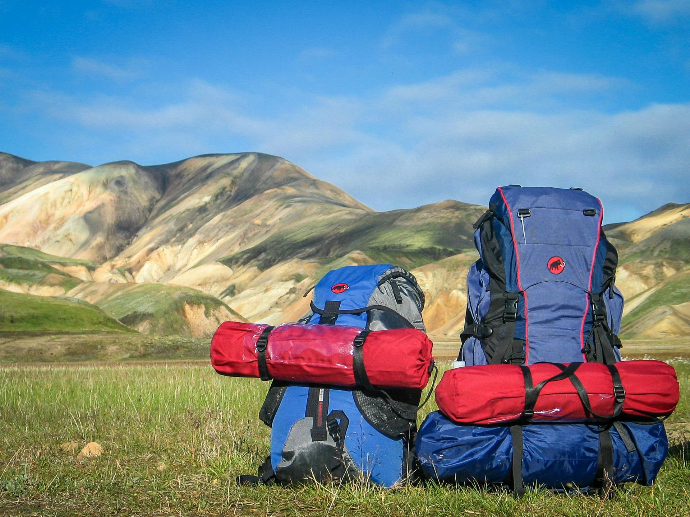
Most backpacks have hooks on top, where you can attach adjustable straps. If you have a foam sleeping mat, this is the place to store it. Make sure it does not push against the back of your head while walking. If this is the case, choose option B and try tying it with a small piece of rope to the bottom of the front (not under the bag, still at the front).
Side pockets
Side pockets are ideal for multiple items. If you are taking a larger tent, you can place the tent poles in the side pockets. Ensure that the edges cannot pierce the pockets and use the compression straps on the side of the bag to secure them.
Trekking poles can also be placed here. Place the tip upwards to prevent punctures (some backpacks have separate elastic straps for trekking poles).
Voorkant zak
This is usually a very small pocket. You can keep a few items in it that you want to use without taking your bag off your back. I am thinking of a small camera, energy bars, sweets, smartphone,…
Lussen aan de voorkant
Some backpacks have loops on the front. These can be used to secure extra materials. This can be done by attaching them to one or more loops with a carabiner, or by weaving a piece of rope through the loops.
Most backpacks also have a special loop for storing an ice axe. Be extra careful with this. Pay attention to the way you point them and ensure they cannot pierce your backpack and, more importantly, keep the pointed end away from your body.
Try to minimise the amount of equipment you attach to the outside of your backpack, as this can jeopardise your stability. Also, if you are walking through dense vegetation, you can easily get stuck.
Regenhoes
Most rain covers are located at the bottom of the bag in a special compartment. You should always take your bag off your back to attach the rain cover. Be careful when walking through the woods, they can easily be pierced. Also, when the rain stops, it’s good to leave them on the bag until they are completely dry.
Other tips
Pull all compression straps very tight. The smaller the bag, the more balance you have. It also prevents the load from shifting.
Fill all empty spaces. If you are taking a cooking pot, fill it with food, tea bags, small items, or even clothing.
Use bags to compress and protect your clothing. It saves a lot of space in the bag, prevents chaos when you are looking for an item at the bottom, and keeps your spare clothes dry if you get soaked in a downpour.
Try to share the weight you are carrying with your hiking partners. Food and a tent are items that can easily be shared.
Never skip the next item on your list: Duct tape.
If you get a puncture in your rain cover or a strap comes loose, you can still try to repair it while you're on the go. Be creative!