
Alaska is larger than France, Germany and Spain combined, and the vast majority of it has no roads. No roads also means no paths: outside the national parks with visitor infrastructure, simply nothing has been laid out.
That sounds like an obstacle. It is the premise of this destination. This article is about how you move through a landscape that has laid nothing out for you.
Where there are no paths, the river is the route
Travelling through Alaskan wilderness on foot is slow. The terrain is dense brush, boggy tundra and valleys full of alder that you literally push your way through. A day of hard work sometimes yields barely any distance.
Rivers, by contrast, run exactly the way you want to go: down from the mountains, straight through that impassable terrain. With a packraft of a few kilos out of your pack, that becomes the logical route. You walk over the pass, you inflate the boat, and in a day you descend what would take a week on foot.
It is no coincidence that packrafting came of age here of all places. The discipline grew out of exactly this problem: how do you make progress in a landscape without paths where there is water everywhere. Alaska is where the technique and the terrain belong together.
Braided glacial rivers
The rivers coming off the glaciers are not gentle streams. They are grey with rock flour, they split into dozens of channels across broad gravel flats, and those channels shift constantly.
That makes them hard to read. What is a river on the map is a fan of channels in the field, some of which dead end on a gravel bar. You choose your line on what you see, not on what you expect.
The water is meltwater too: a few degrees above zero, even in July. That determines the clothing and it turns a capsize from an inconvenience into an incident.
Glacier crossings
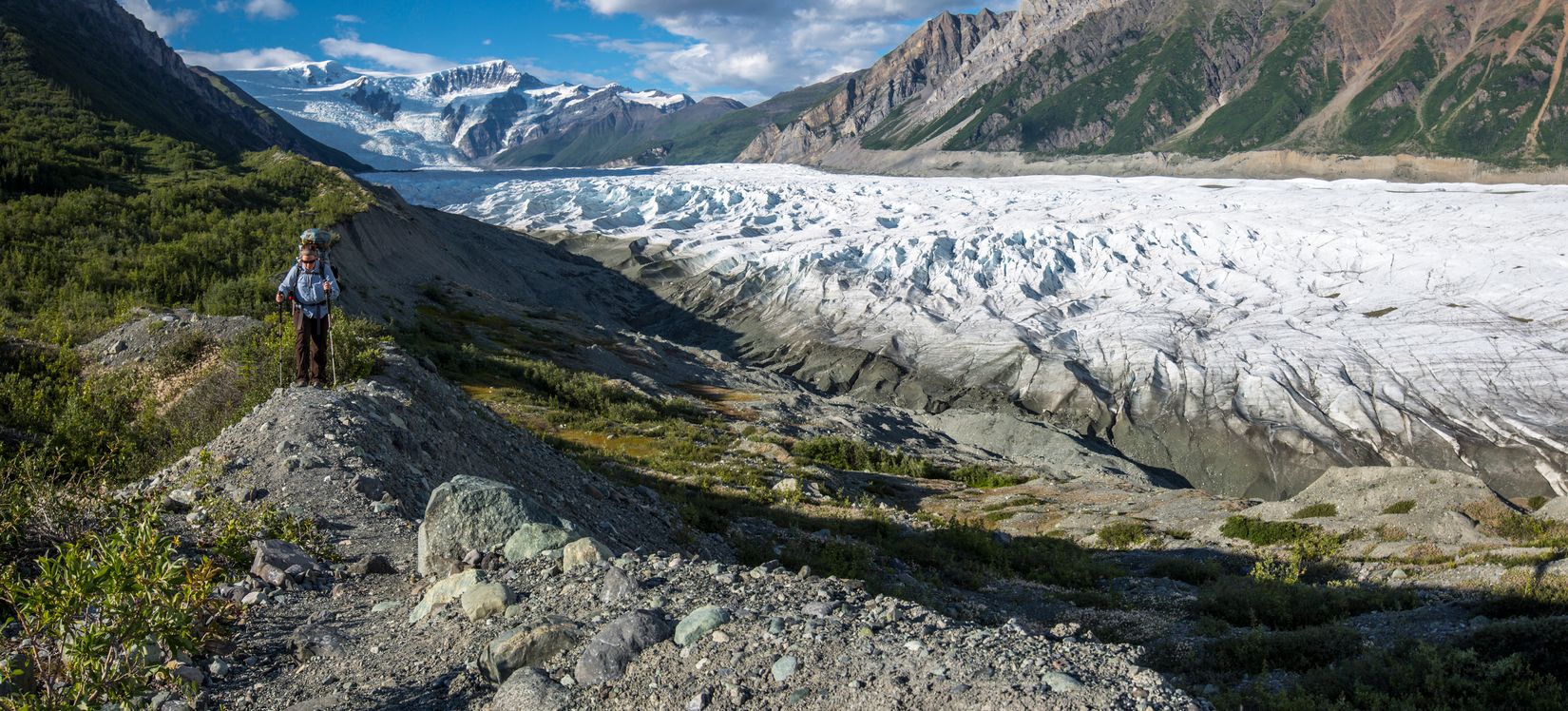
Part of the route runs over ice. Alaska has thousands of glaciers, and the large ice streams are often the only way through between two valleys.
That requires the usual discipline: rope team, crampons, and attention to crevasses under a snow cover. What Alaska adds is the moraine, the rampart of rock the glacier pushes ahead of it. Walking over that with a full pack is unstable, slow, treacherous work that people rarely prepare for.
The route is not fixed here. A river runs differently from the map, a glacier is too broken up, and then we turn around and replan. That belongs to the destination, not to misfortune.
Koen De Leeuw, expedition leader
The salmon decide where the bears are
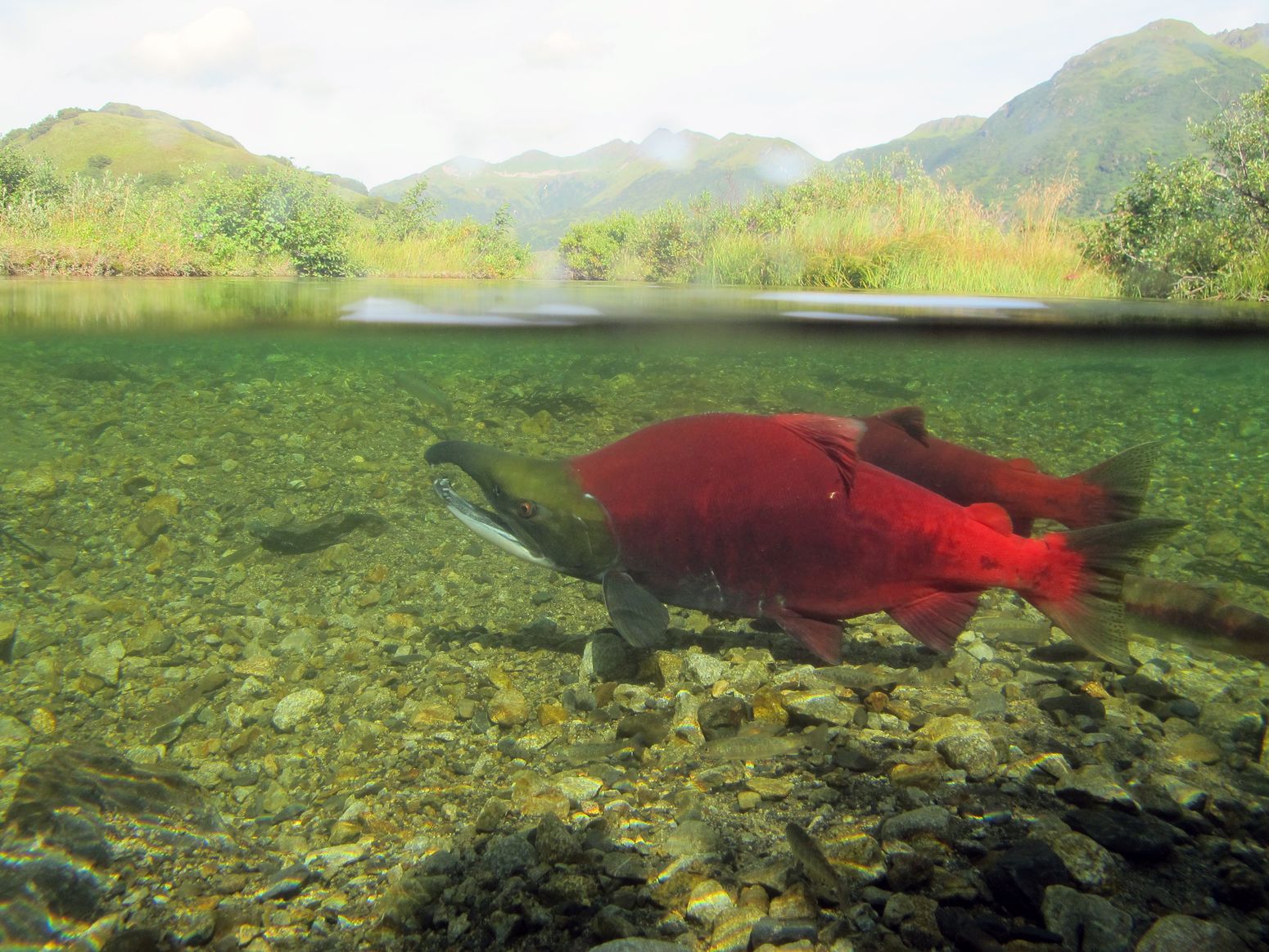
In summer, salmon run up the rivers to spawn, and that is one of the greatest concentrations of food on earth. Brown bears gather exactly there.
That is no reason to stay away, it is a reason to know where you camp. You do not sleep on a bank where the salmon are, you store food in bear proof containers away from the tents, and you make noise in dense brush so you never surprise a bear.
Anyone who follows those rules runs little risk. What it does do is sharpen your attention. You read the landscape constantly for tracks, scat and sight lines, and that is a way of looking most people have lost.
The mosquitoes are no joke
This belongs in any honest article about Alaska in summer. In the weeks after the thaw, mosquitoes appear in numbers that do not exist in Europe, especially in still, boggy areas.
They are not dangerous, they are wearing. A head net is not a curiosity but standard kit, and a windy campsite is worth more than a beautiful one. On the water they barely bother you, which is another reason the river is the better route.
Why summer
The window is short. Before the thaw the rivers are still frozen and packrafting is impossible. From September winter returns and the nights turn hard.
In between lie weeks with very long days, high water from the melt, and temperatures that are comfortable during the day. It is also when the salmon run, so the landscape is at its most alive.
Mountain terrain, ice and water in one expedition
Alaska is rated Challenge (4 out of 5) and lasts fifteen days. It is a combined destination: mountain terrain, ice and water, and you have to be able to function in all three.
You need no prior packrafting experience, because that is built up along the way. You do need solid fitness, comfort in cold water, and the ability to keep functioning when you are wet, harried by mosquitoes and tired all at once.
And it requires accepting that the route is not fixed. A river running differently than expected or a glacier too broken up means turning around and replanning. Here that belongs to the destination, not to misfortune.
Practical
The Alaska expedition is planned for 2028 and lasts fifteen days, with glacier crossings, mountain terrain and packrafting on salmon rivers. All the details are on the page for the Alaska expedition.
Want to see the destinations side by side: which expedition suits you compares them on terrain and intensity. And the packing list for an expedition goes into detail on what has to come along.