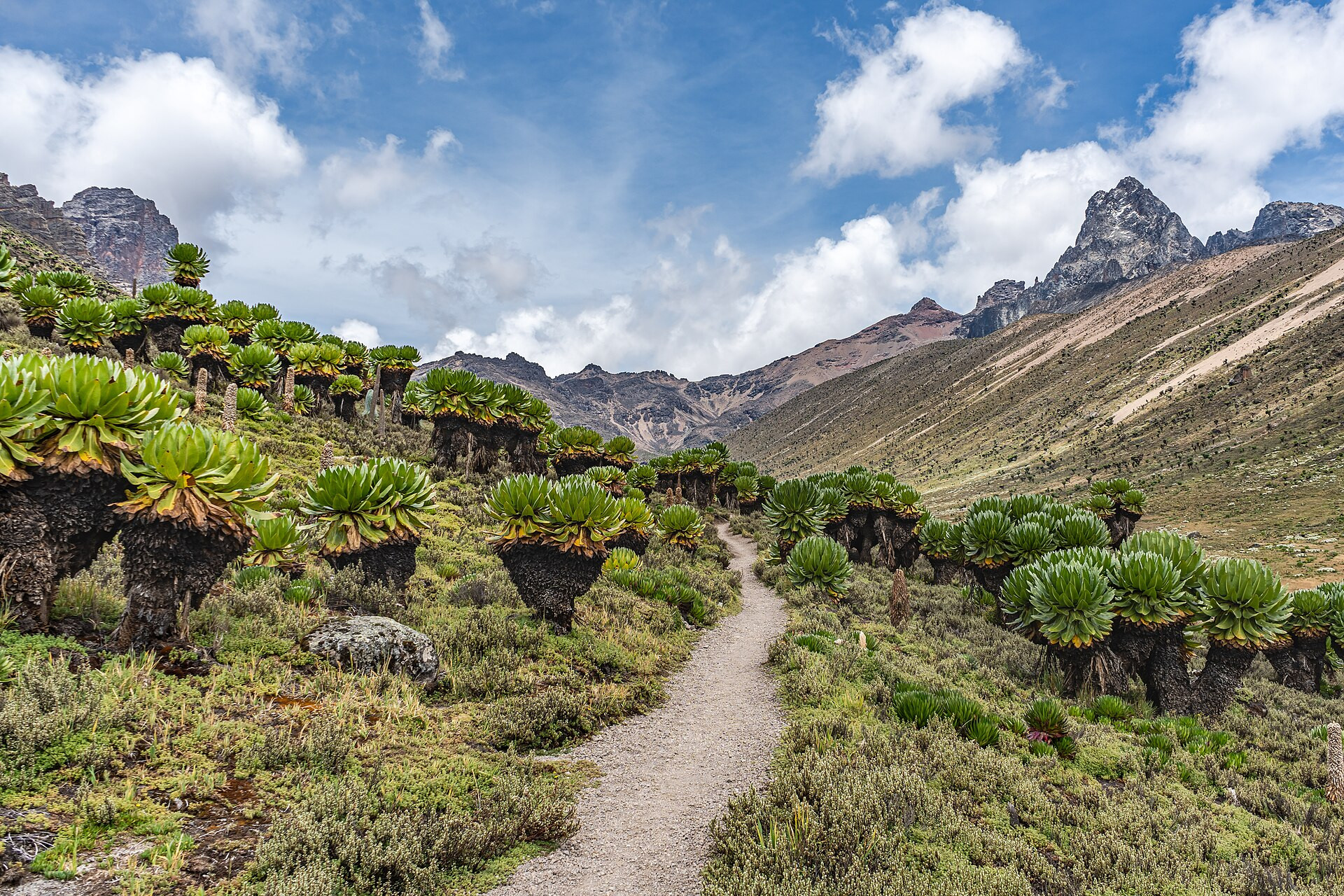

Mount Kenya is the second highest mountain in Africa, after Kilimanjaro, and the less known of the two. You climb it through bamboo forest, across moorland and through valleys full of giant plants, up onto bare rock at almost five thousand metres. You do not need climbing technique for that. You do need to be able to walk at altitude for several days in a row.
At Element X this is the Mount Kenya expedition: nine days, with a small group of 6 to 12 participants and a local mountain crew, to Point Lenana at 4,985 metres. In this article you read how the mountain is built, how summit day runs, where you sleep, when you go and what it asks of you.
Batian, Nelion and Point Lenana
Mount Kenya is 5,199 metres high. Only Batian, the highest summit, reaches that height. Nelion, at 5,188 metres, stands right beside it. You can only reach both summits with rock climbing and rope technique. Point Lenana, at 4,985 metres, is the highest summit of the mountain you can reach on foot. That is where the expedition goes.
Compared with Kilimanjaro (5,895 metres), Mount Kenya is lower but more rugged. You see sharp rock summits, remnants of glaciers and mountain lakes, and you meet far fewer other groups.
From bamboo forest to bare rock
From Nairobi we drive about 150 kilometres north with the group, to where the farmland stops and the forest begins. At the park gate the vehicles stay behind. From there everything happens on foot, together with a local mountain crew of mountain leaders, cooks and porters.
First you walk through dense mountain forest and bamboo. Elephants and buffalo live here, and you usually see their tracks before you see the animals. The path climbs steadily and the air turns cooler and damper. Above the tree line the forest ends quite suddenly and open moorland with tussock grass begins.
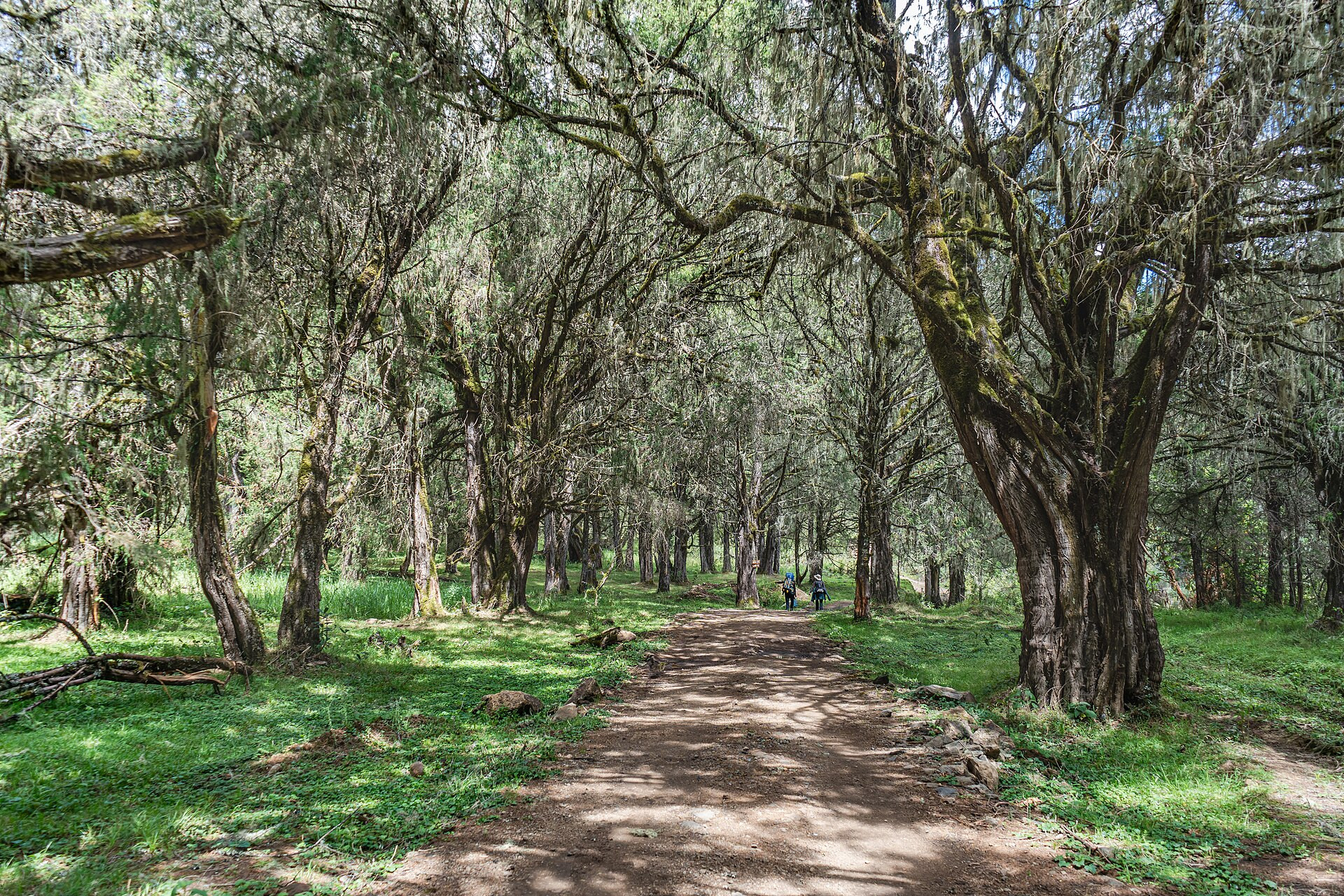
Photo mountain forest: Nina R, Wikimedia Commons, CC BY 2.0
Then you enter valleys with giant plants several metres tall. They have a trunk like a palm tree and leaves like a cabbage, and they grow only on a handful of high mountains near the equator. Higher still the vegetation disappears. Then you walk over scree and bare rock, below the rock walls of Batian and Nelion.
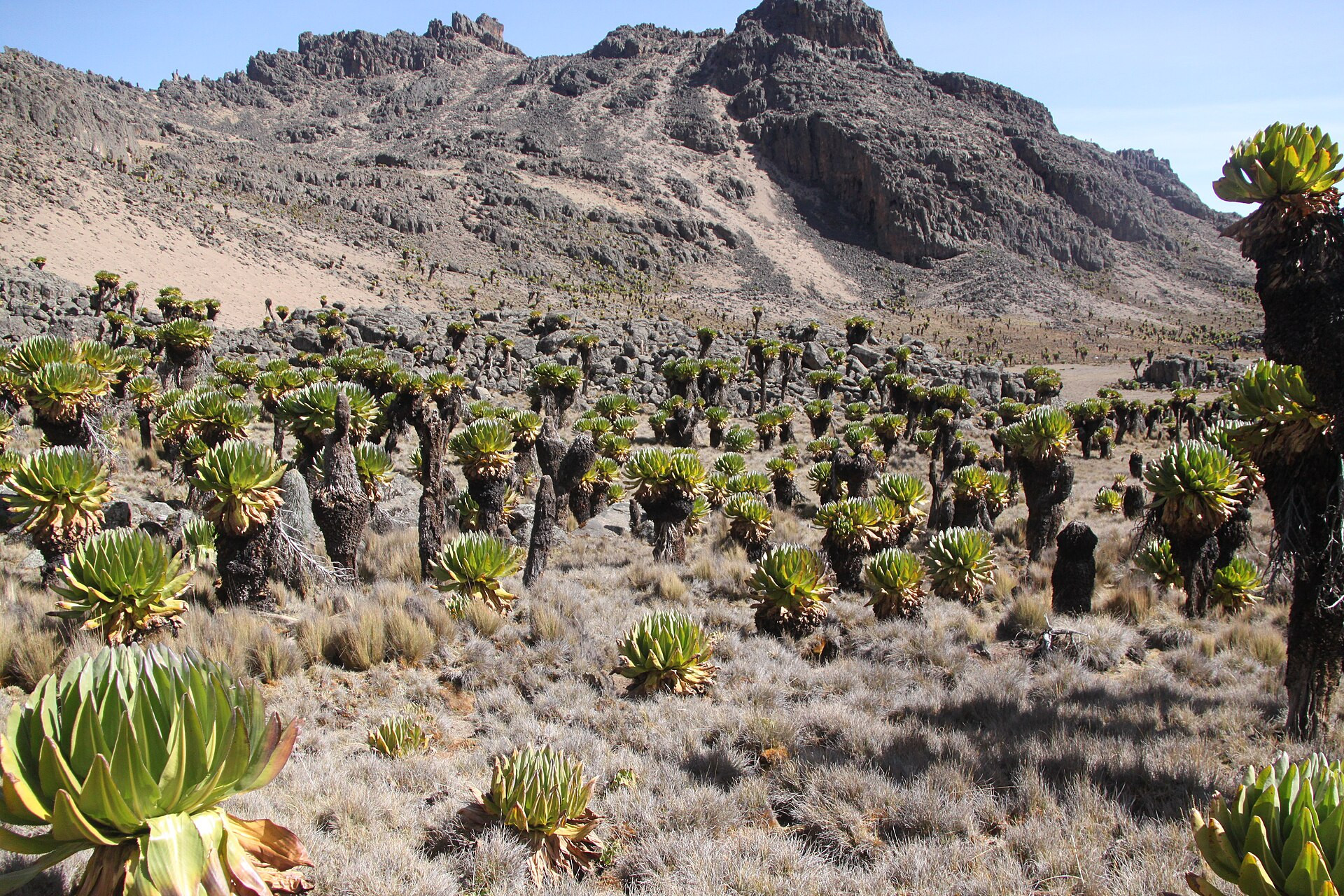
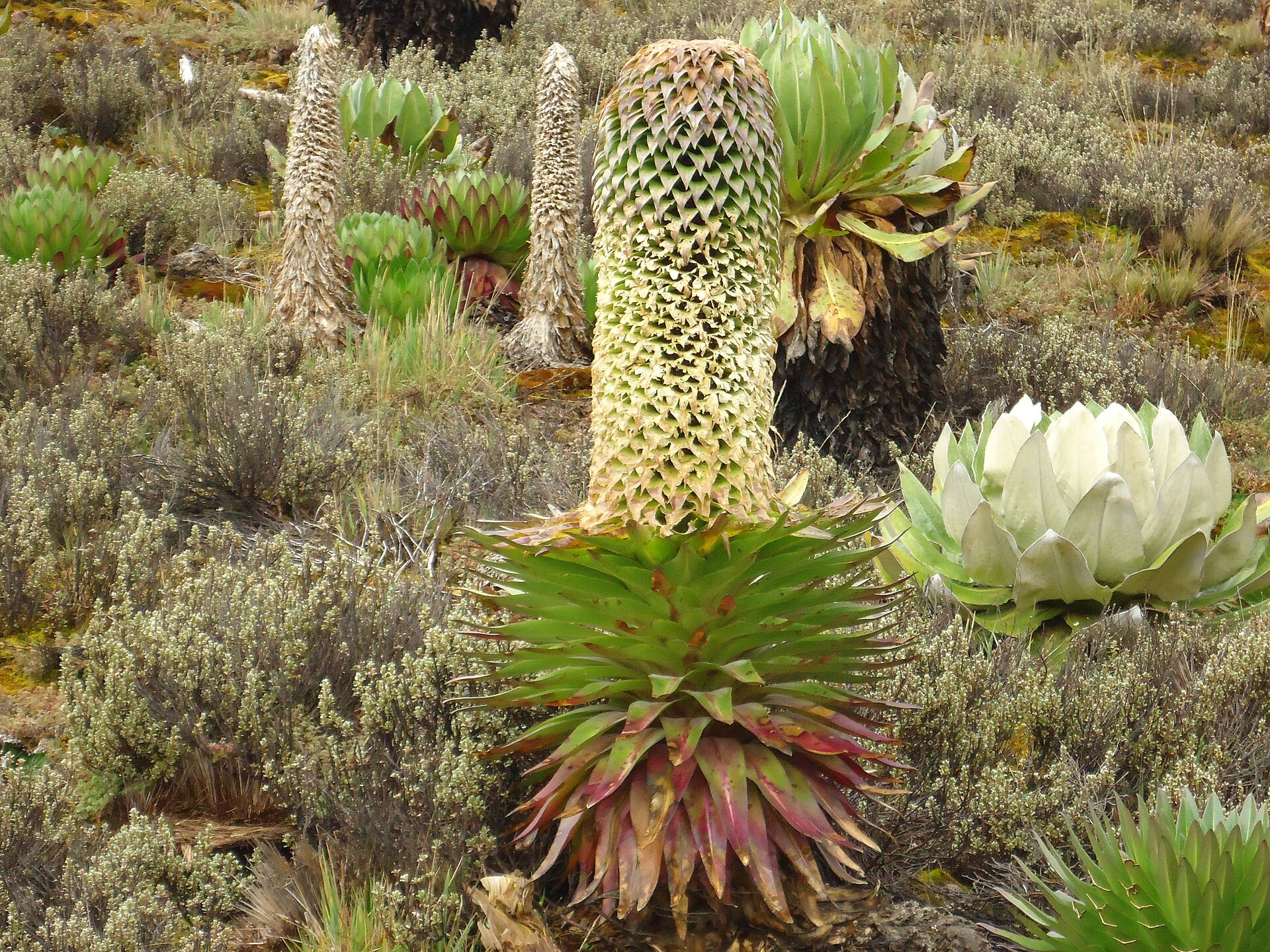
Photos giant plants: Dwergenpaartje and Mara008, Wikimedia Commons, CC BY-SA 4.0
Summit day to Point Lenana
On summit day you get up in the dark, long before sunrise. With a head torch and every layer on, you climb over scree and rock at a steady rhythm, with short breaks. It is cold and the air is thin, so every step is slower than at home.
At first light you stand on Point Lenana. The rock walls of Batian and Nelion rise right beside you, and the shadow of the mountain falls across the plains of Kenya, far below the clouds. After the summit we descend, back to thicker air and warmer nights.
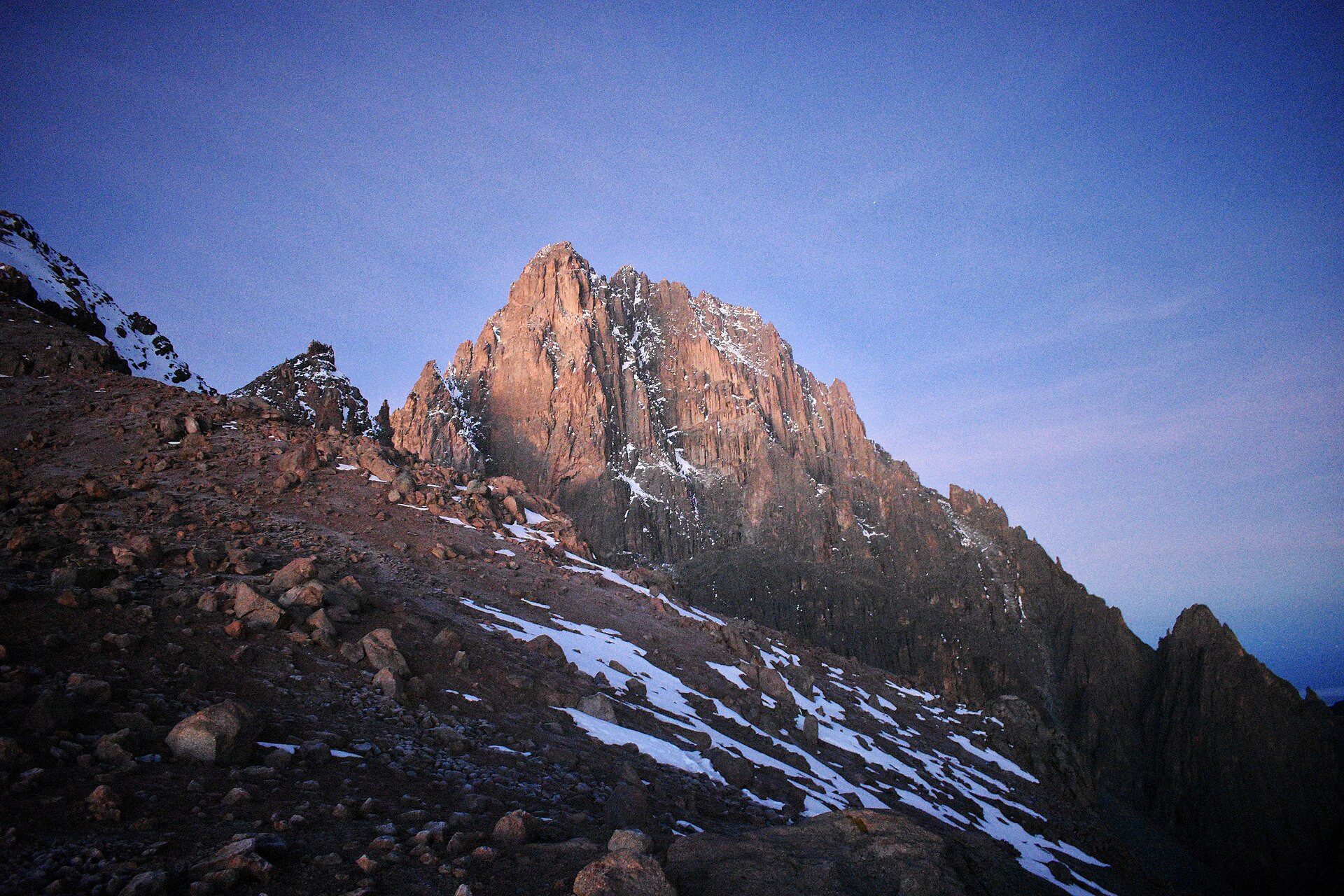
Photo summits of Mount Kenya: Bett Duncan, Wikimedia Commons, CC BY-SA 4.0
Where you sleep
On the mountain we are off grid. We sleep in tents, together with the local mountain crew. We take water from the mountain streams and filter it, and we eat expedition food. Tents, sleeping setup, water filters and jetboils (compact stoves to boil water) are included.
By day the sun is fierce, but at night it freezes around the tents. Day by day we set up camp a little higher, so that your body can adjust to the thinner air.
When you go
The expedition runs from 23 September to 1 October 2028 and takes 9 days. The end of September falls in the long dry season on Mount Kenya. The mornings are then usually clear, and that matters on summit day: you want to stand on top at first light, with a view of the summits and the plains.
The weather on the mountain
At the foot of the mountain it is warm during the day. Higher up the sun is fierce, but it freezes at night, and on summit day you set off before sunrise in temperatures below zero. You receive a packing list built on layers, which we go through together at the kick off.
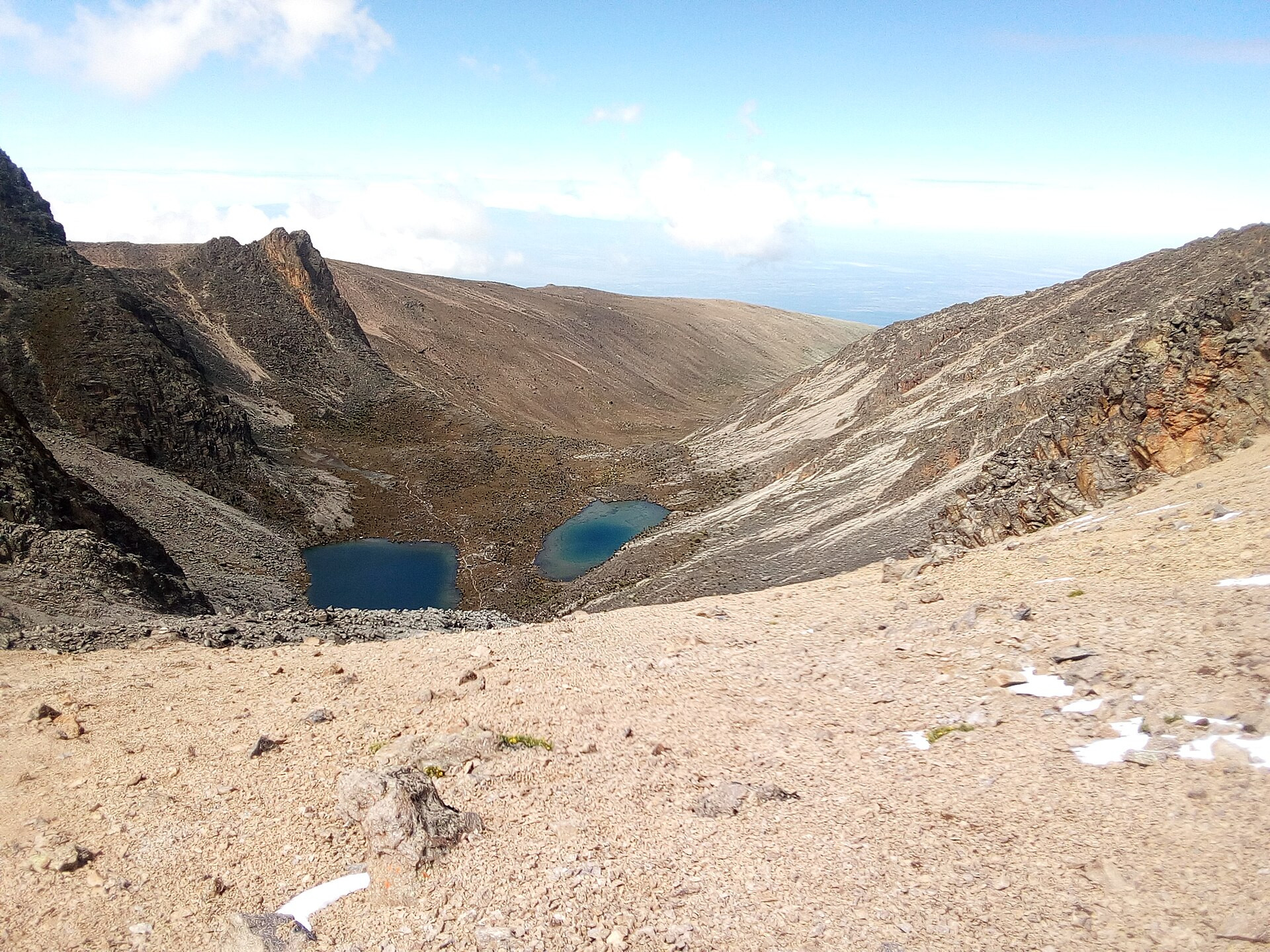
Photo mountain lakes: Machvin, Wikimedia Commons, CC BY-SA 4.0
What it asks of you
The level is Challenge, 4 out of 5 on our scale. You need no climbing technique, but you walk at altitude for several days in a row, and summit day starts long before sunrise, in the cold. Endurance and a steady pace matter more than speed. You do not need to be a top athlete.
From about 2,500 metres anyone can suffer from altitude sickness, even people who are well trained. That is why we climb gradually, walk at a steady pace, drink a lot and regularly measure your oxygen saturation. Our X Guides hold a Wilderness First Responder certificate and help decide when someone needs rest or has to descend.
On Mount Kenya the altitude is the real challenge, not the technique. Go too fast and you pay for it higher up the mountain. That is why from day one we walk slower than you would like, drink a lot and regularly check how everyone is doing. That way you start summit day with something in reserve.
Koen De Leeuw, expedition leader
Preparation
The preparation programme of 3 to 6 months is included. It starts after you sign up with a kick off at Kasteel Borgwal in Gavere. You go home with training advice. Then follow monthly group training sessions and a technical training, and two weeks before departure a final check of your gear and your fitness.
What does the Mount Kenya expedition cost?
The Mount Kenya expedition costs €6,100 per person, excluding flights. That covers among other things the preparation programme, the X Guides, the local mountain crew, all permits and park fees, local transport, the camping gear and all meals during the expedition. Insurance (cancellation and search and rescue) you arrange yourself. We book flights together with you during the preparation programme.
Frequently asked questions
Do you need climbing skills to climb Mount Kenya?
Not for Point Lenana. The two highest summits, Batian and Nelion, can only be reached with rock climbing and rope technique. Point Lenana, at 4,985 metres, you reach on foot over paths, scree and rock. The challenge lies in the altitude and in several long days in a row.
How many days do you need for Mount Kenya?
The Element X expedition takes 9 days, from 23 September to 1 October 2028. On the mountain we climb gradually, so that your body has time to adjust to the thinner air before you start summit day.
Will you come across wild animals on Mount Kenya?
Elephants and buffalo live in the bamboo and mountain forest on the lower slopes. You usually see their tracks before you see the animals. Above the tree line the landscape turns open and quiet.
Find out more
The dates, everything that is included and the button to take an option are on the page of the Mount Kenya expedition. How the preparation works is explained on the page about the preparation programme, and how we deal with risk on the page about safety. Rather talk first? Then you can book a call.
Photo at the top (path among the giant plants): Nina R, Wikimedia Commons, CC BY 2.0