The story of
this expedition
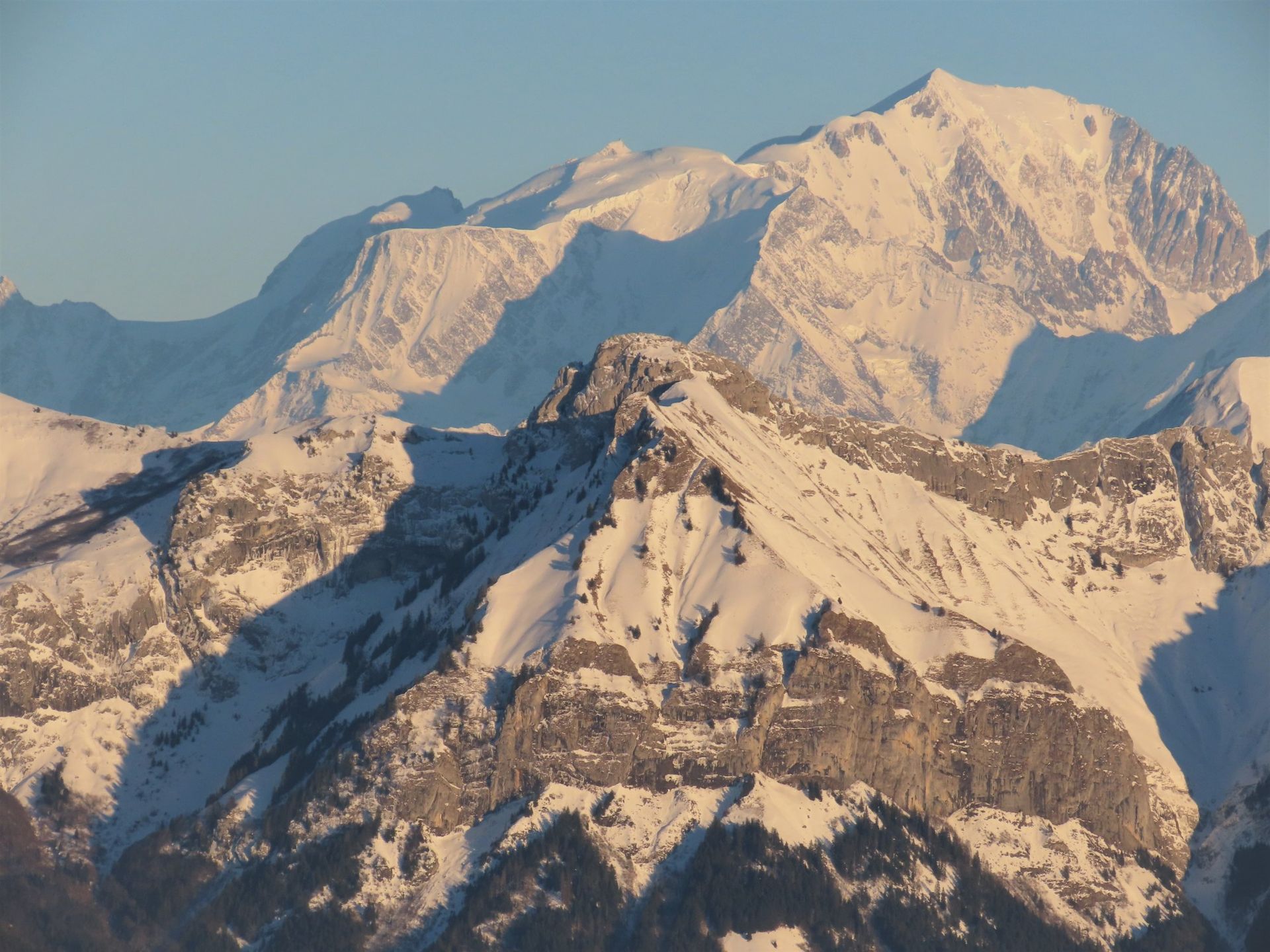
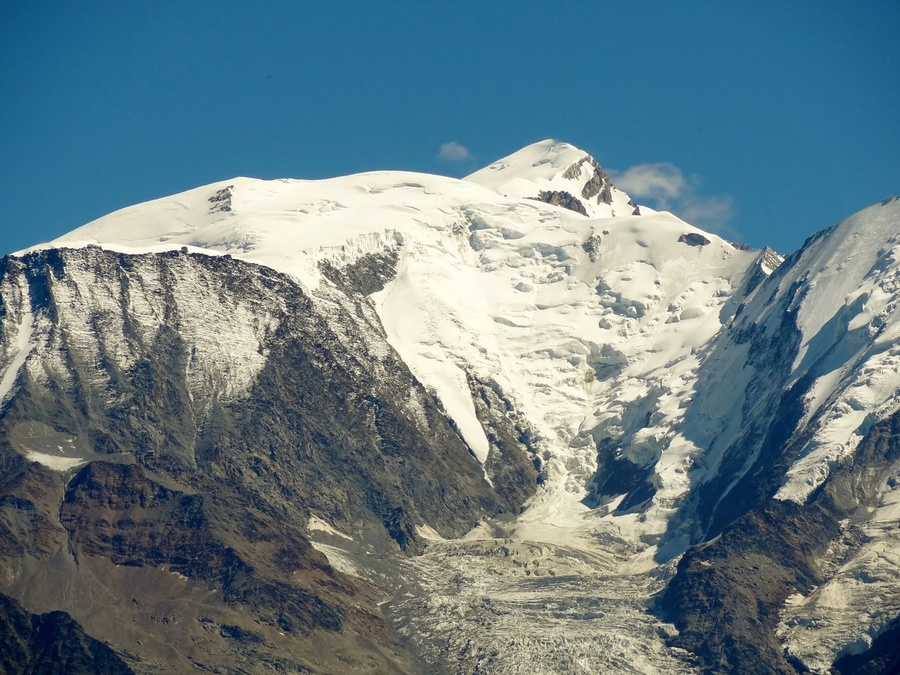
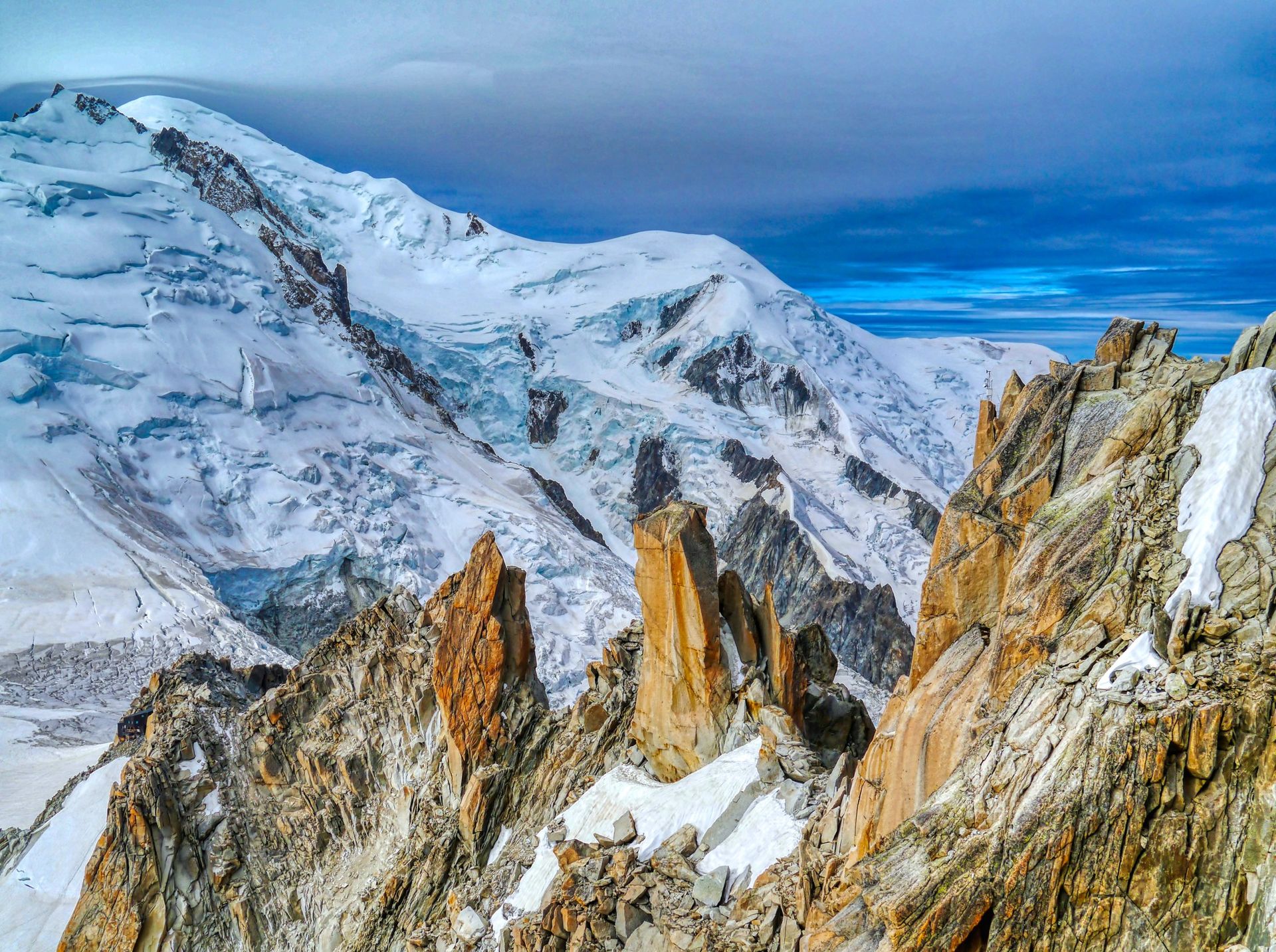
You travel to the French Alps, to the foot of the Mont Blanc massif. From there we climb step by step: first a few days acclimatising on summits around four thousand metres, then technique on the glacier, and only when body and group are ready, Mont Blanc itself. At just over 4,800 metres it is the highest summit in the Alps.
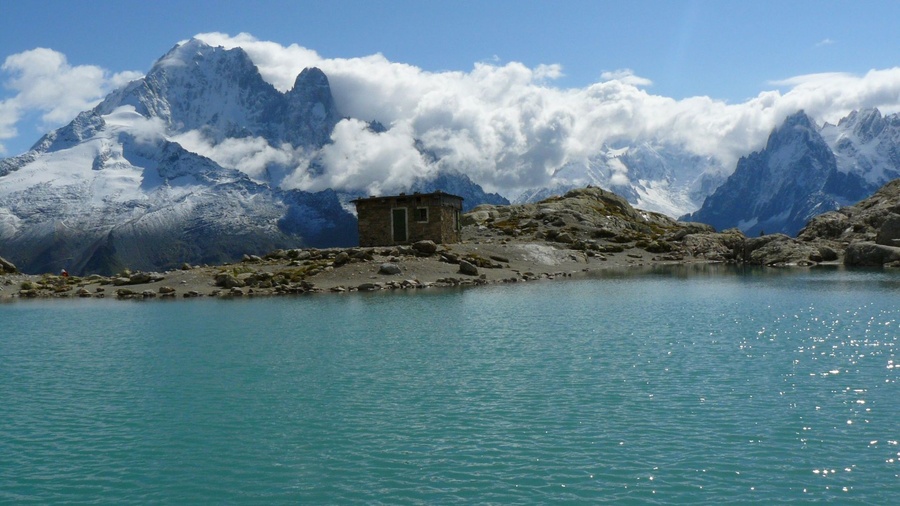
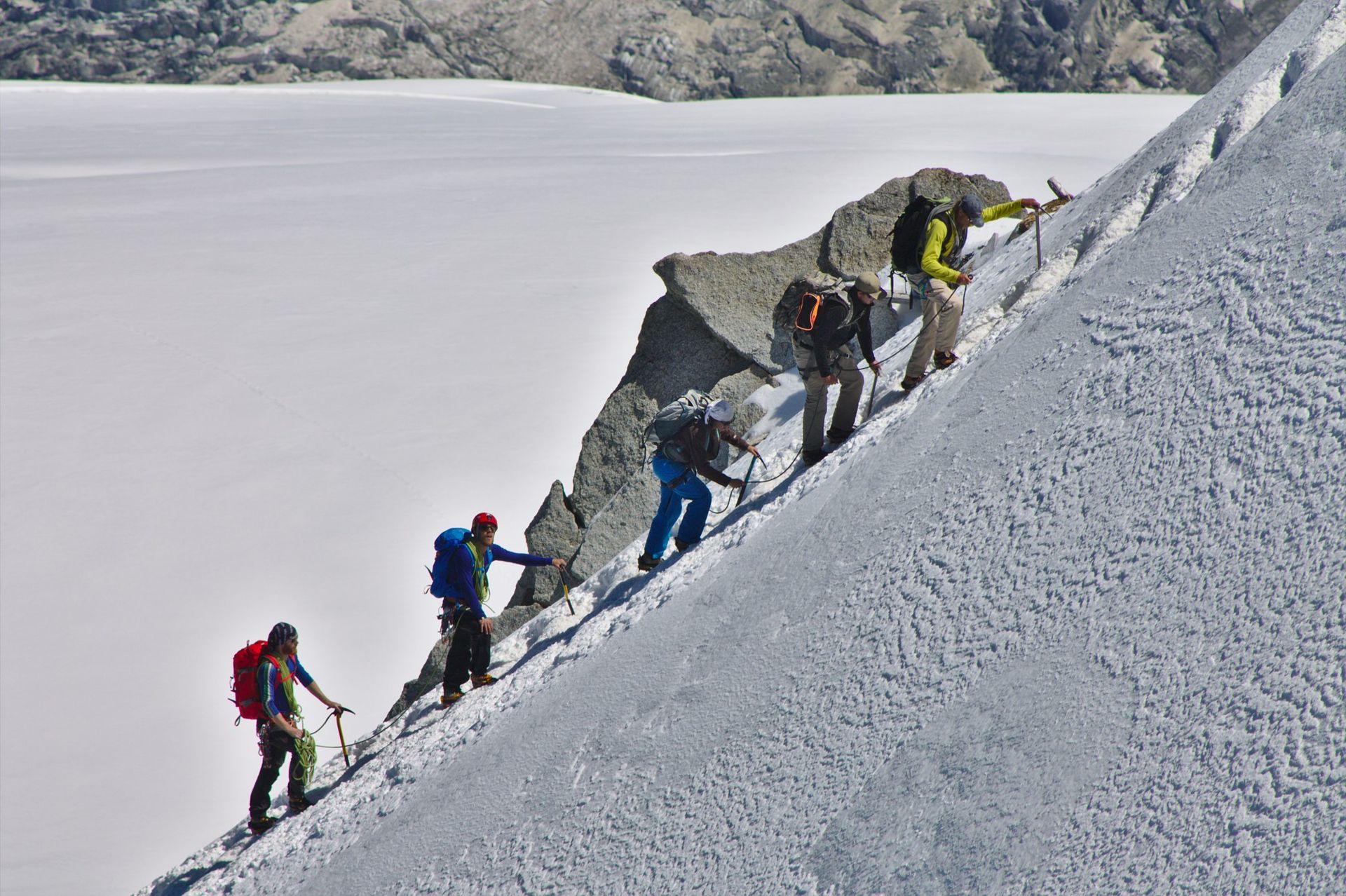
We do not sleep in tents, but in the valley and in mountain huts high on the mountain. By day you move on crampons with an ice axe, on one rope with your team and a certified mountain guide. The air thins, the ground steepens and the days start early. The last night in the hut is short: summit day begins in the dark.
What you mostly learn here is how to build up. No rushing, eating and drinking on time, matching your pace to the rope, and turning back when the weather or conditions say no. We prepare you for that over several months, with group training sessions open to all participants and a technical session with crampons and rope.
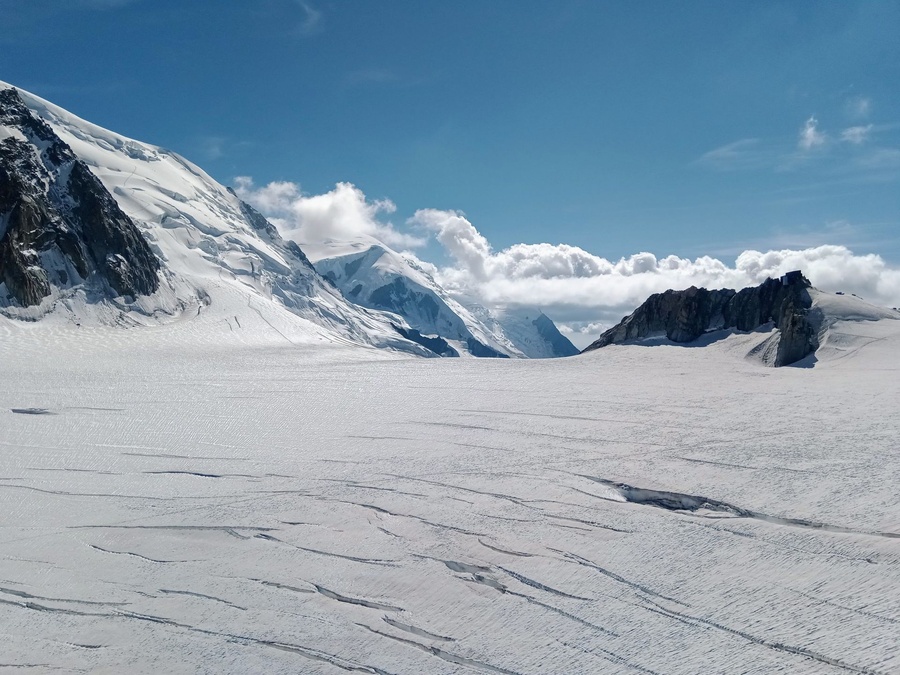
Acclimatising
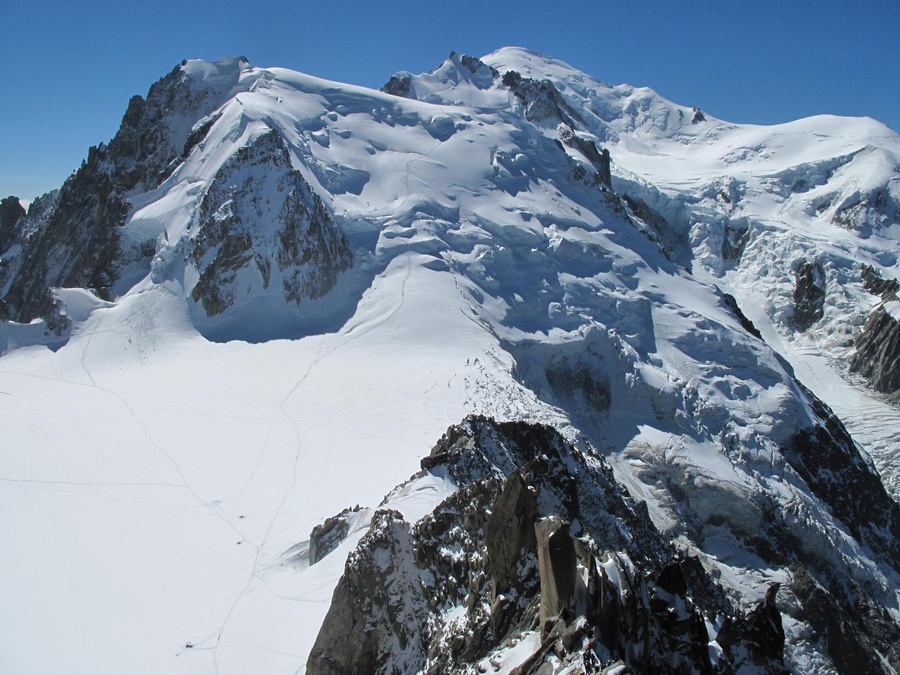
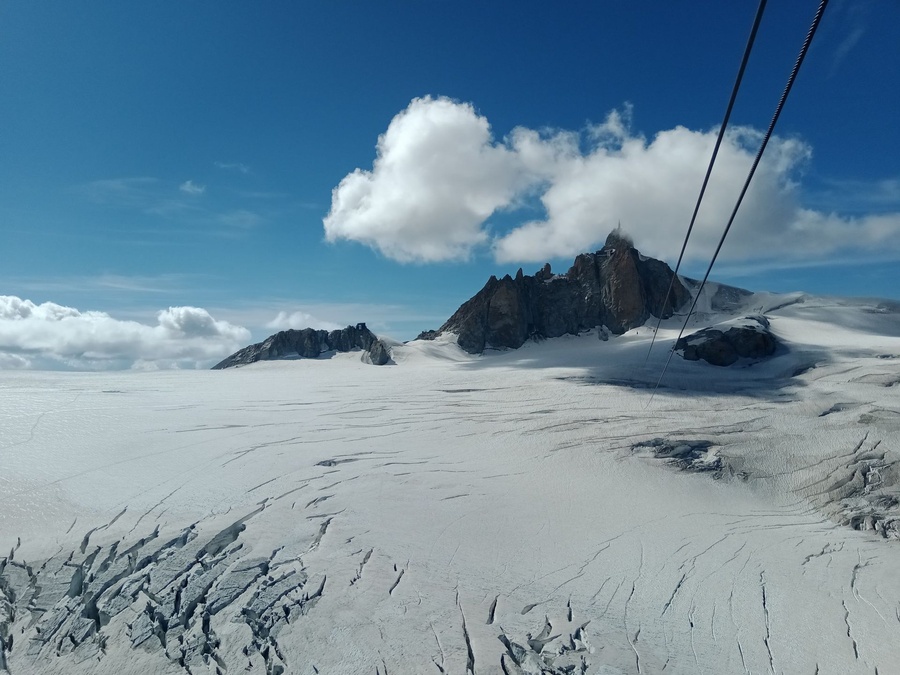
summits around 4,000 metresThe first days we climb summits around four thousand metres and sleep in the valley and in a mountain hut. That gives your body time to adjust to the thin air, and you feel the difference on summit day. You learn to walk at a pace you can hold for hours, to drink before you are thirsty and to spread your energy over several days. Mountain lifts take us high into the massif where they can, so you save your strength for the metres that matter.
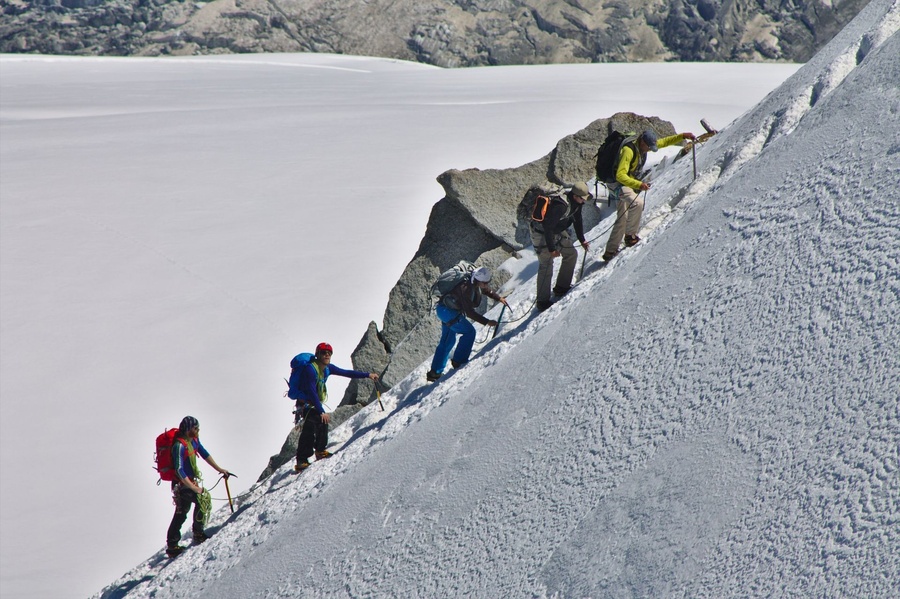
On the ice
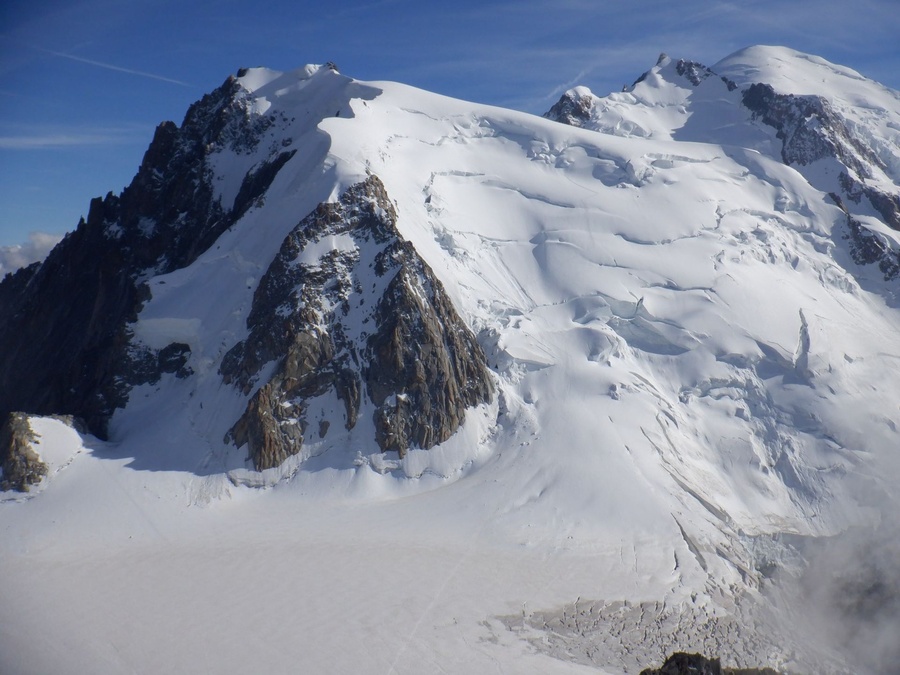
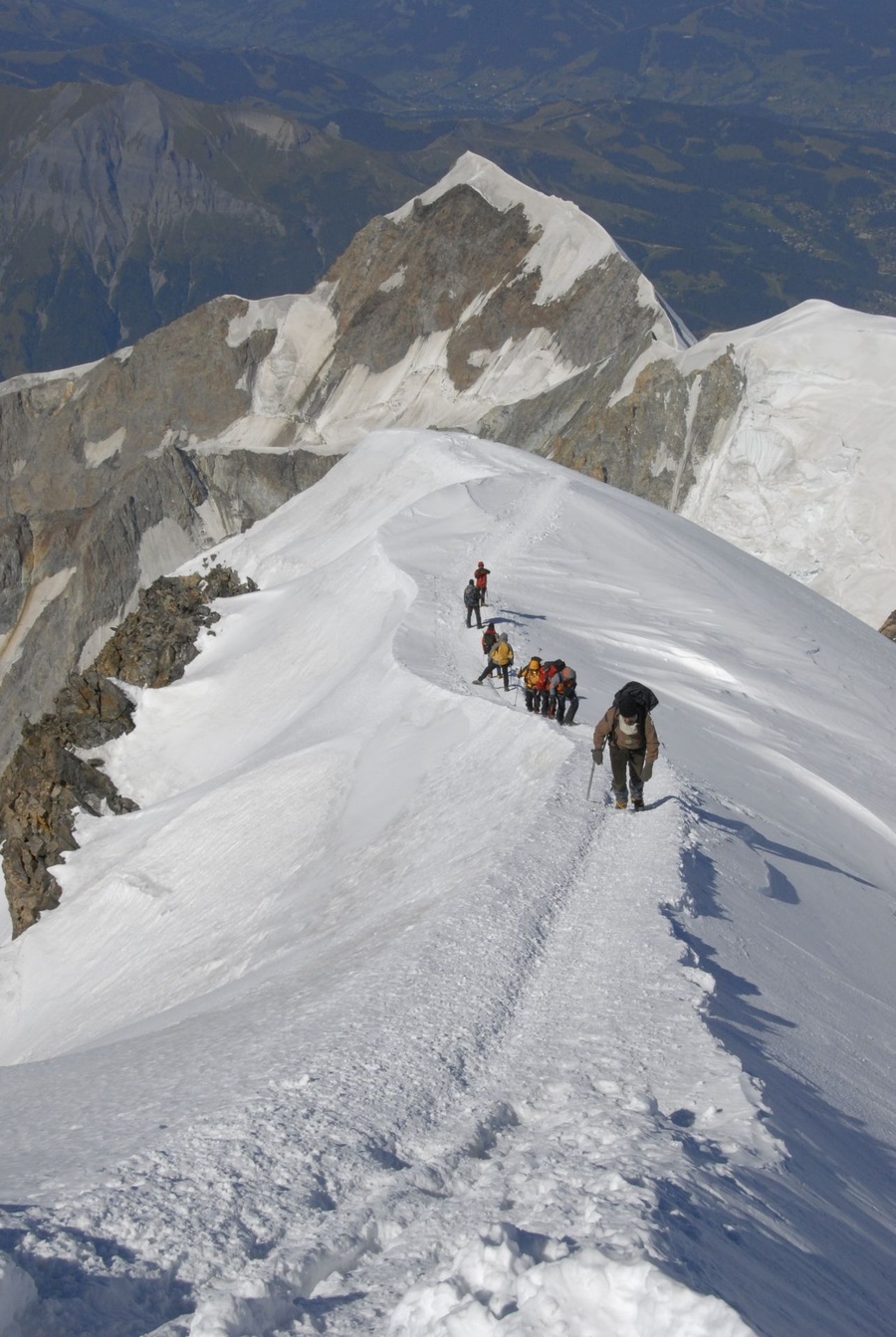
crampons, ice axe and ropeOn the glacier you walk on the rope, with your mountain guide in front and your team behind you. You learn to move on crampons over hard ice and steep snow, to brake with your ice axe and to keep the rope taut, so a slip never turns into a fall. Crevasses are not always visible, which is exactly why you walk roped up, spaced apart. Your pace is the pace of the rope team, so you learn to keep an eye on whoever is behind you. You practise the basics at home in the technical session of the preparation programme.
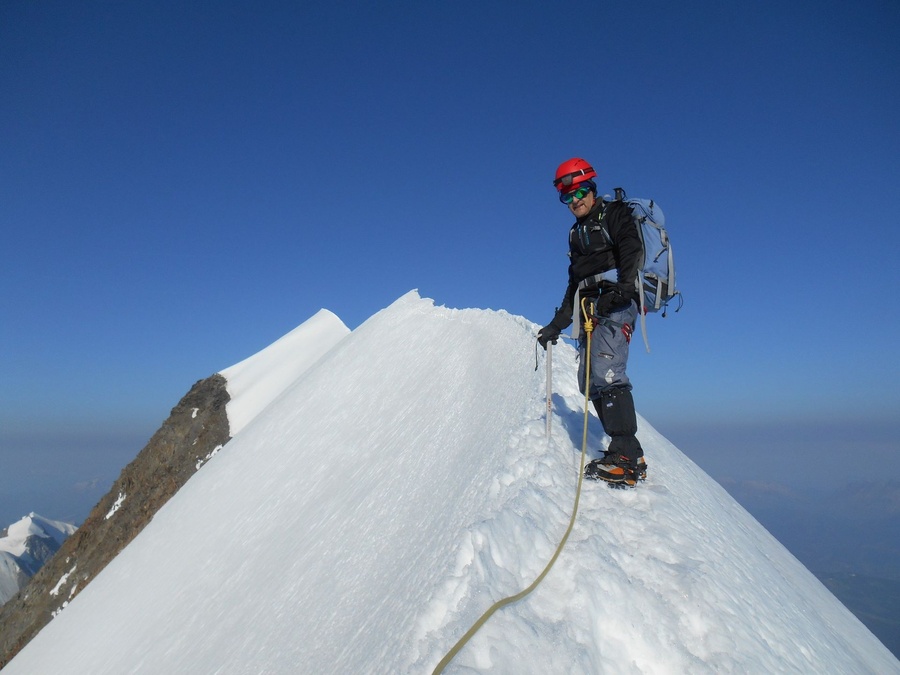
Summit day
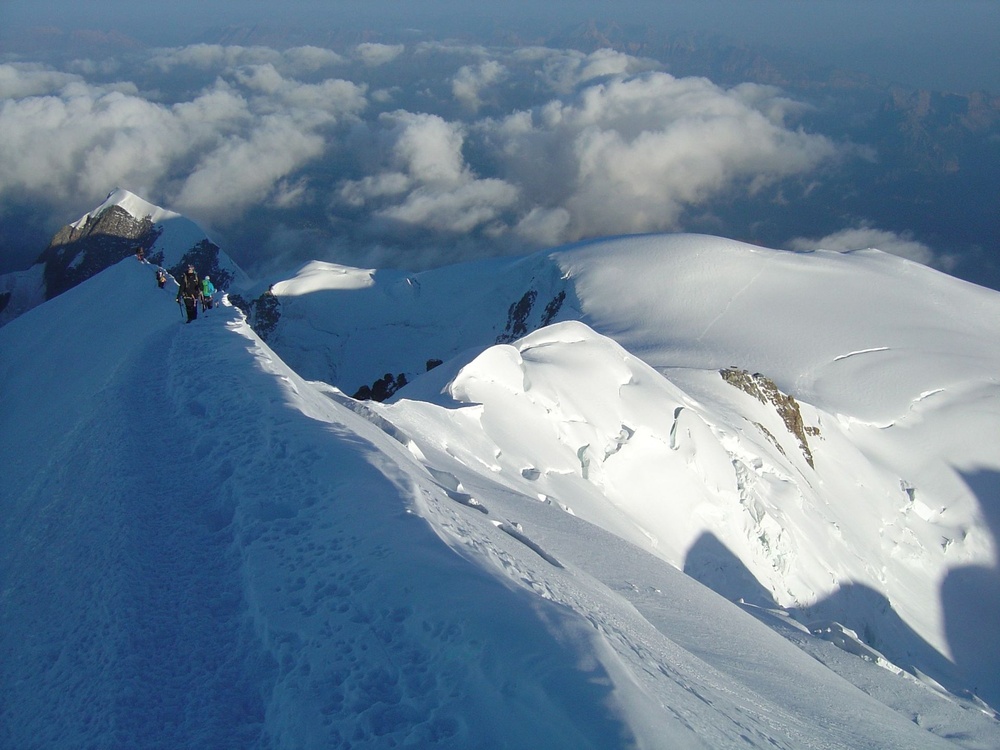
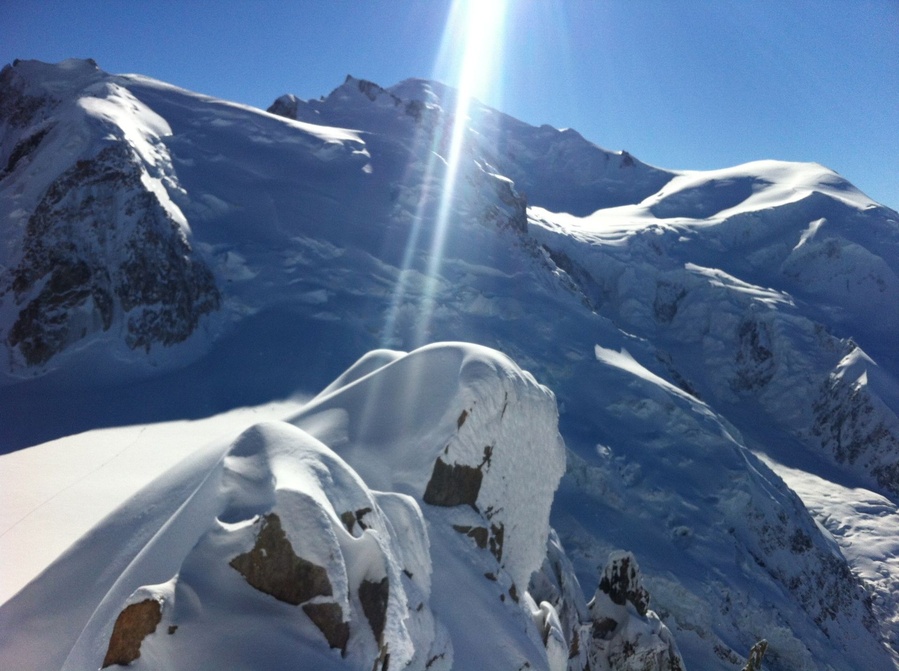
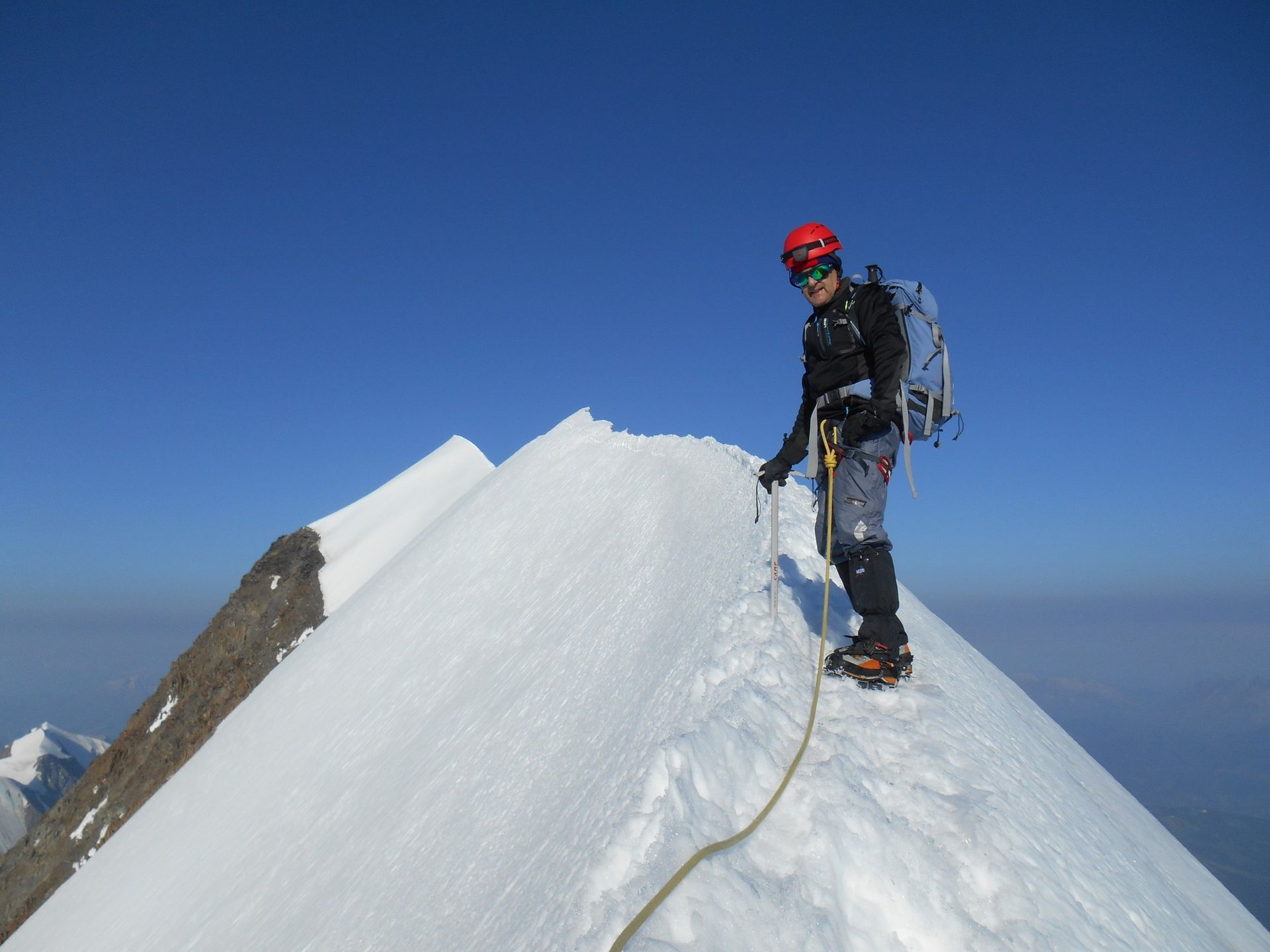
to just over 4,800 metresSummit day starts in the mountain hut, in the middle of the night. Breakfast, harness on, crampons on and out with your head torch, following the lights of other rope teams. It is cold, between minus fifteen and zero degrees, and colder in the wind. For hours you walk in rhythm over snow and narrow ridges, until the sun comes up over the Alps. The weather and conditions decide whether we set off and how far we go.
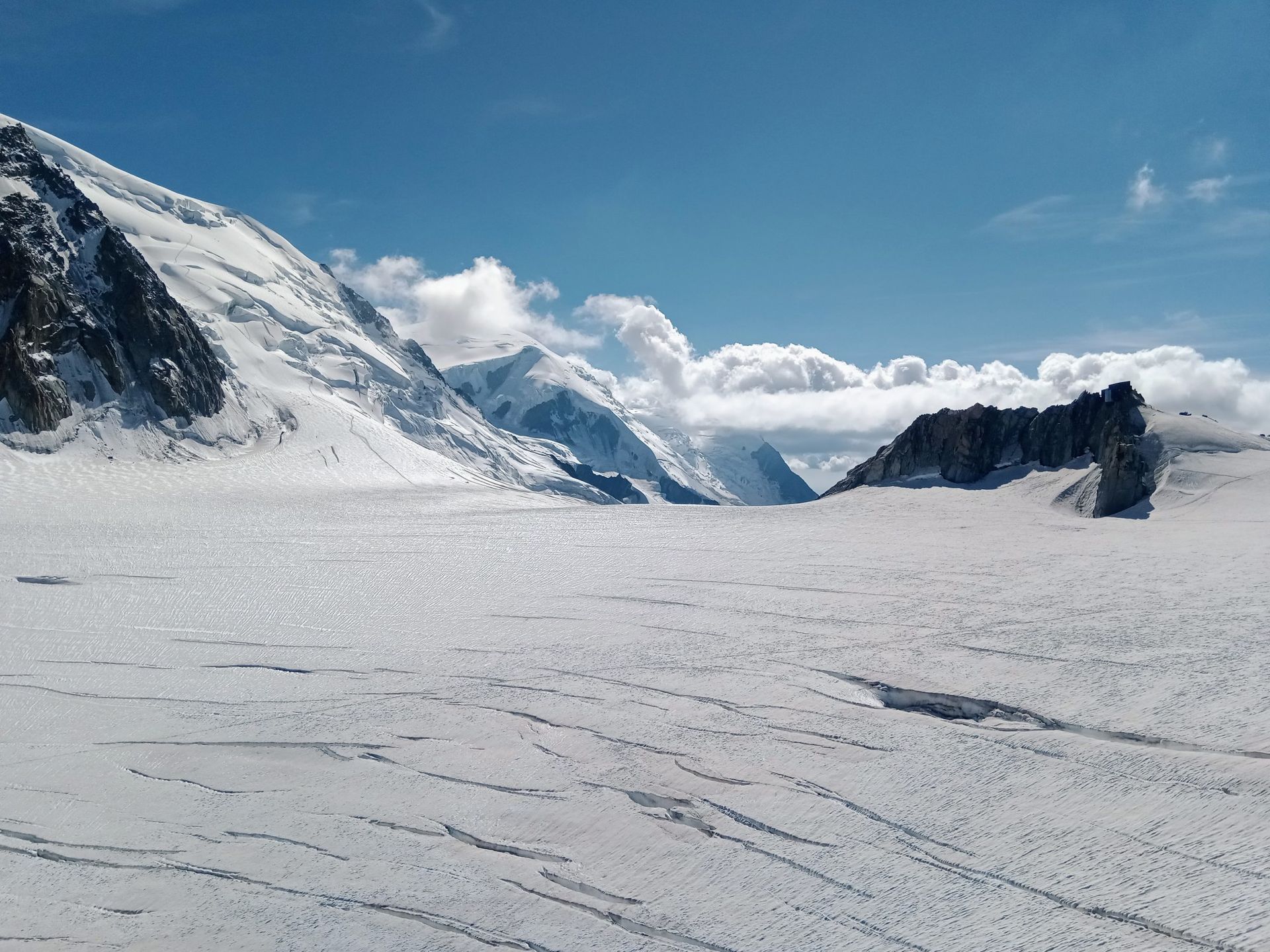
What makes this
expedition unique?
Highest summit in the Alps
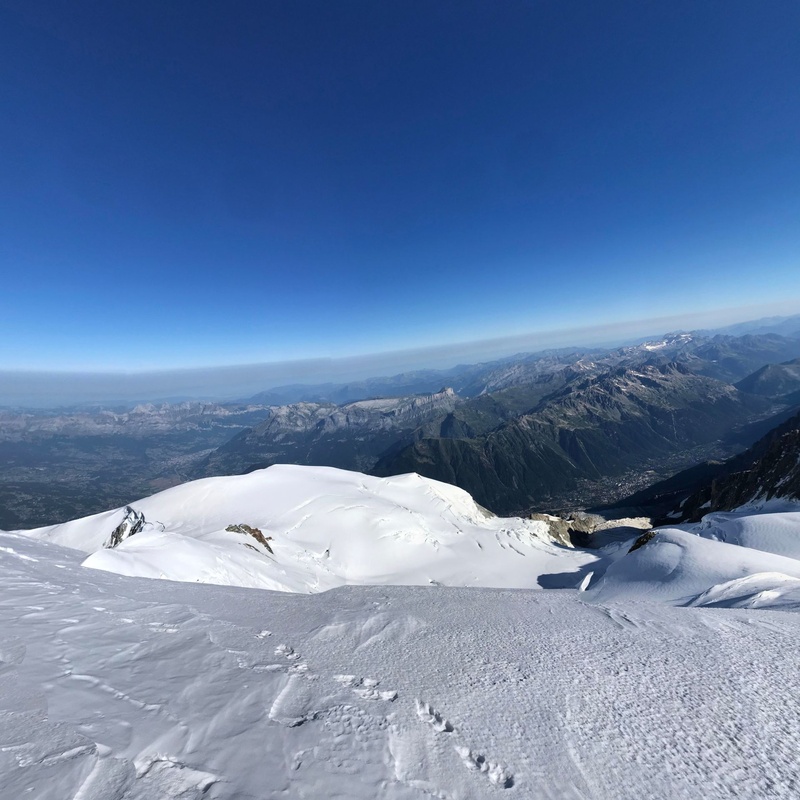
Just over 4,800 metres, on the border of France and Italy.
Built up step by step
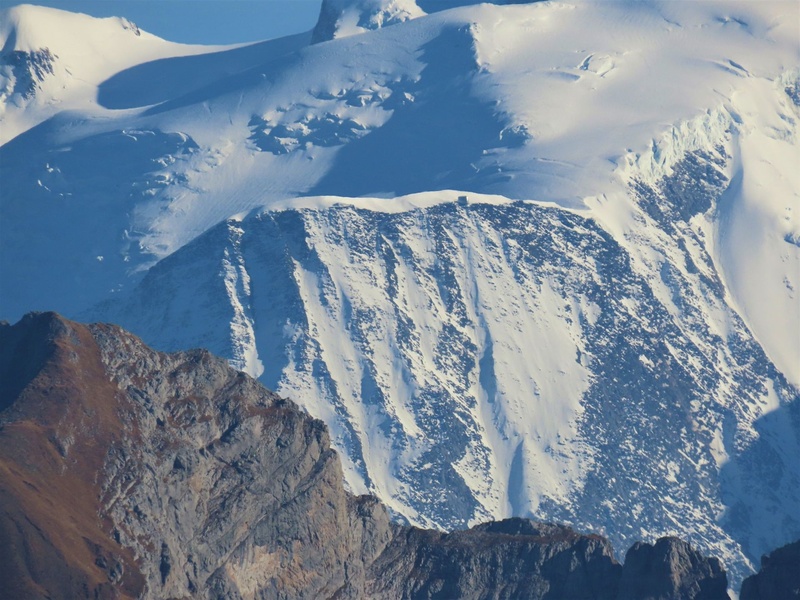
First acclimatise on summits around 4,000 metres, then the summit.
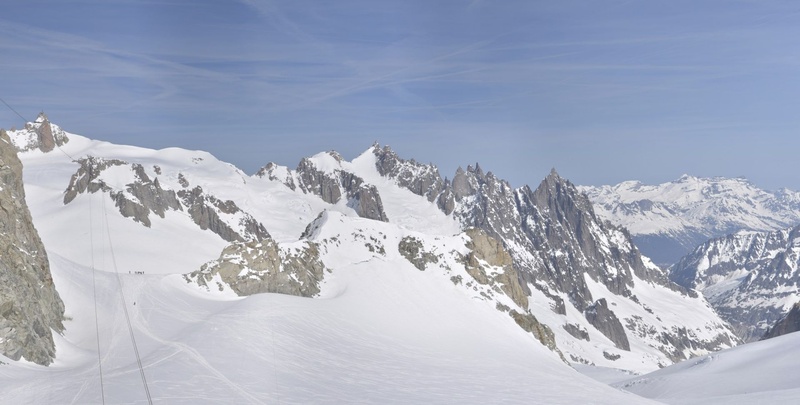
On the rope
Crampons, ice axe and rope, alongside certified mountain guides.
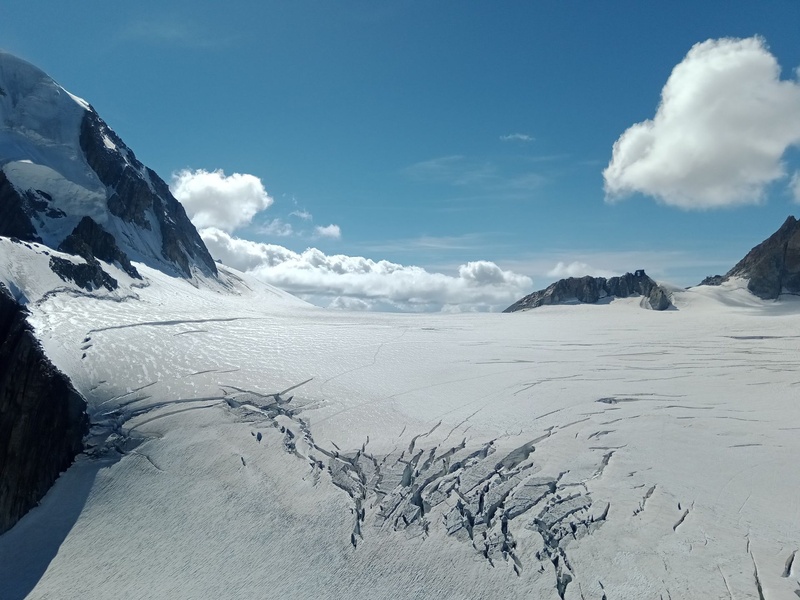
Mountain huts, no tents
We sleep in the valley and in huts high on the mountain.
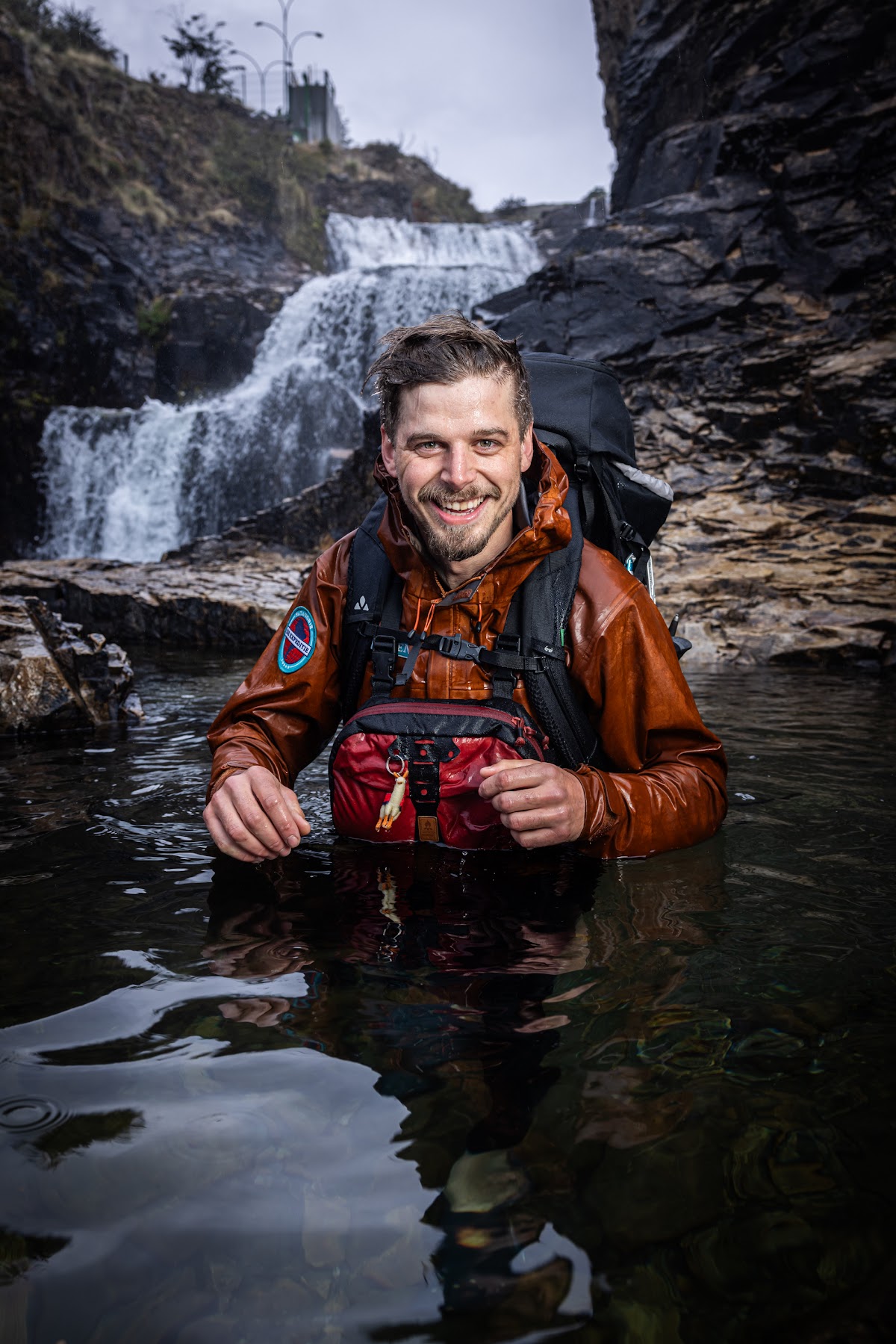
On Mont Blanc a lot depends on how well you have acclimatised. Go too fast in the first days and you pay for it on summit day. That is why we build up slowly and practise with crampons and rope beforehand, so that on the glacier you no longer think about your feet, but about your team.Koen De LeeuwFounder and expedition leader, known from De Expeditie on PlayParacommando · Wilderness First Responder Meet Koen
 De Expeditie
 De Tijd
 Humo
 Play Media
How we
work
Self-sufficient,
never alone
You carry your own pack, fit your own crampons and take your share of responsibility in the rope team. Because we sleep in the valley and in mountain huts, you carry no tent: only what you need for the day and the night in the hut.
You learn to walk on crampons, to brake with the ice axe and to move on the rope, alongside certified mountain guides and an experienced X Guide you meet well in advance during the preparation programme.
Safety and
guidance
Safety is our top priority. On the mountain you are roped to certified mountain guides at a low ratio, and our X Guides hold a Wilderness First Responder certificate.
We carry satellite communication, work with an evacuation plan and fixed safety procedures, and rely on local support in the Alps. The weather and conditions help decide whether and when we set off for the summit.
Before departure we carry out a thorough risk assessment.
Preparation
of 3 to 6 months
The programme starts after you sign up with a kick off. Monthly group training sessions and a technical training follow, with a final check two weeks before departure.
Everything
at a glance
All prices are per person and exclude flights. We book flights together with you during the preparation programme.
- Departure
- 22/07 to 28/07/2028
- Duration
- 7 days
- Level
- Challenge4/5
- Group
- Small, selected group
- Price
- €5,900 ppIncl. preparation programme
Included
- Full 3 to 6 month preparation programme
- Professional X Guides
- Certified mountain guides at a low ratio
- Technical climbing gear: crampons, ice axe, harness, rope and helmet
- Navigation and jetboils
- All nights in mountain huts and in the valley
- All meals during the expedition
- All local transport and mountain lifts
- Local activities
- All local tips
Not included
- Flights
- Transport to and from the airport
- Personal clothing (top, bottom, footwear)
- Insurance (cancellation and search and rescue)
Frequently asked questions
See all questionsCan you climb Mont Blanc without experience?
You do not need to be a mountaineer, but you do need to be fit and willing to train for months. The preparation programme starts 3 to 6 months before departure, with a kick off, monthly group training sessions open to all participants and a technical session with crampons and rope. On the mountain you learn the rest on the glacier, roped to certified mountain guides.
How high is Mont Blanc?
At the September 2026 survey the summit stood at 4,807 metres, just over a metre lower than in 2025 (4,808.76 metres). The summit is an ice cap, so its height changes from one survey to the next. Mont Blanc sits on the border of France and Italy and is the highest summit in the Alps.
How many days does it take to climb Mont Blanc?
The expedition takes 7 days, from 22 to 28 July 2028. The first days we acclimatise on summits around 4,000 metres and practise on the glacier. Then comes the climb itself, with a night in a mountain hut and a summit day that starts in the dark.
How hard is it to climb Mont Blanc?
The technique can be learned: walking on crampons, braking with the ice axe and moving on the rope. What makes it hard is the combination of altitude, cold and long days, over snow, ice and narrow ridges. That is why the expedition is rated Challenge (4/5). Good fitness and good acclimatisation matter more than climbing experience.
Do you get altitude sickness on Mont Blanc?
From around 2,500 metres anyone can be affected by altitude: headaches, nausea or poor sleep. That is why we first spend a few days acclimatising on summits around 4,000 metres before heading for the top, and our X Guides and the mountain guides keep an eye on everyone. Anyone who struggles too much goes down.
How cold is the summit of Mont Blanc in July and August?
In summer the temperature on the summit is usually between minus fifteen and zero degrees, and it feels a lot colder in the wind. Down in the valley it is simply summer. You get a packing list built around layers, which we go through together at the kick off.
Is climbing Mont Blanc dangerous?
Climbing Mont Blanc carries real risks: crevasses in the glacier, rockfall, altitude and weather that turns quickly. Safety is our top priority. You climb roped to certified mountain guides at a low ratio, our X Guides hold a Wilderness First Responder certificate and we work with satellite communication, an evacuation plan and fixed safety procedures. The weather and conditions decide whether we set off for the summit.
What is included and what does it cost?
The expedition costs €5,900 per person, excluding flights. Included: the 3 to 6 month preparation programme, X Guides and certified mountain guides, technical climbing gear, all nights in mountain huts and in the valley, all meals, local transport and mountain lifts. Not included: flights, transfers to and from the airport, personal clothing and insurance (cancellation and search and rescue). We book flights with you during the preparation programme; they are invoiced separately.
Other expeditions
View all expeditions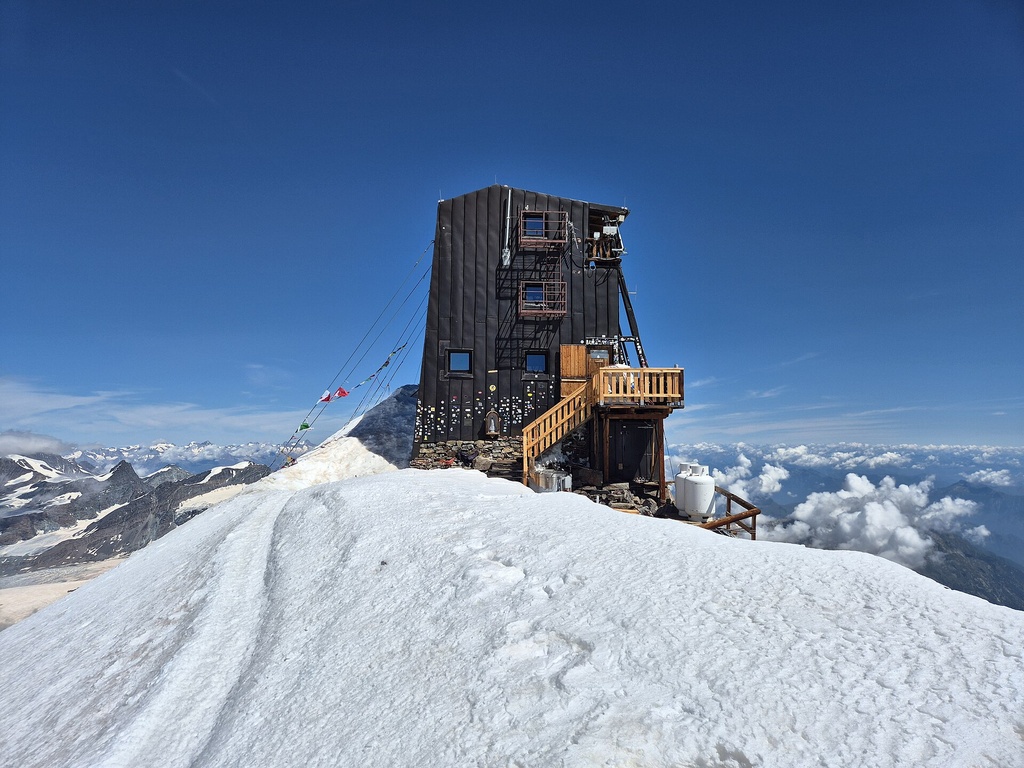
Sign up for
expedition updates
Stay one step ahead of the adventure. Receive the latest news and exclusive information about our expeditions in the wilderness.
Unsubscribe whenever you like. Read our privacy policy.
Your expedition on Mont Blanc
starts with a conversation
Your preparation is included and starts 3 to 6 months before departure.