
When you think of wilderness, you think of Patagonia, Alaska or Siberia. Far away, expensive, and a journey in itself. Meanwhile, two hours by plane from Brussels lies an unbroken old growth forest where you can walk for days without crossing a road, with the largest brown bear population in Europe outside Russia.
The Romanian Carpathians are the best preserved wilderness on the continent, and at the same time the least known. This article is about what that terrain is, why you go there in March, and what nine days of wilderness training actually involves.
The terrain: forest, limestone and ridges
The Carpathians form an arc of more than a thousand kilometres through Central and Eastern Europe, and the Romanian section is the roughest. Three things determine how a day unfolds there.
The forest. Beech and spruce, with patches of old growth here and there that have never been felled. This is not forest like the Ardennes. Fallen trunks lie across everything, the undergrowth is dense, and paths disappear without warning. A kilometre on the map is not a kilometre in your legs in that forest.
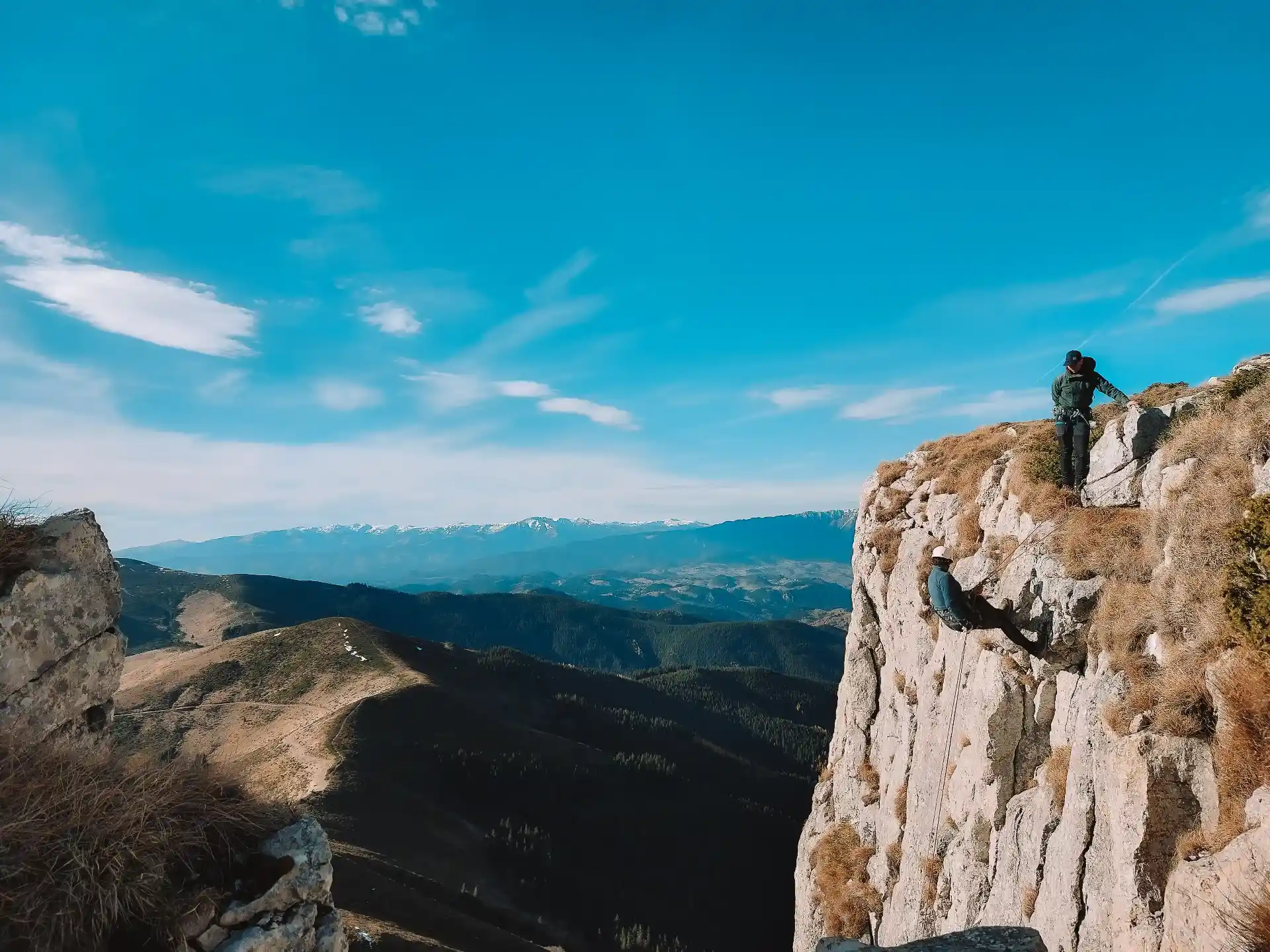
The limestone. Where the forest opens up, white rock faces and gorges appear. It is that stone that gives the Carpathians their character: sharp edges, ridges with views over hundreds of kilometres of forest, and walls you descend on rope because there is no way around.
The altitude. The peaks reach well over two thousand metres. Not extreme altitude, but enough for snow until late spring and for weather on the ridge that is completely different from the valley.
Bears, wolves and lynx
Romania is estimated to have six to seven thousand brown bears, well over half of all the bears in the European Union. Wolves and lynx live there too, in numbers that would be unthinkable elsewhere in Europe.
In practice you rarely see them. Bears avoid people, and the noise of a group moving through the forest is enough to keep them away. What does change is how you camp. Food does not go into your tent, your cooking spot sits away from where you sleep, and you carry your waste out. That is not drama, it is simply the discipline of an area where you are not at the top of the food chain.
The effect of that is subtle. You are more alert than in a landscape where nothing can harm you. That is exactly why it feels like wilderness and not like a nature reserve.
Why the end of March
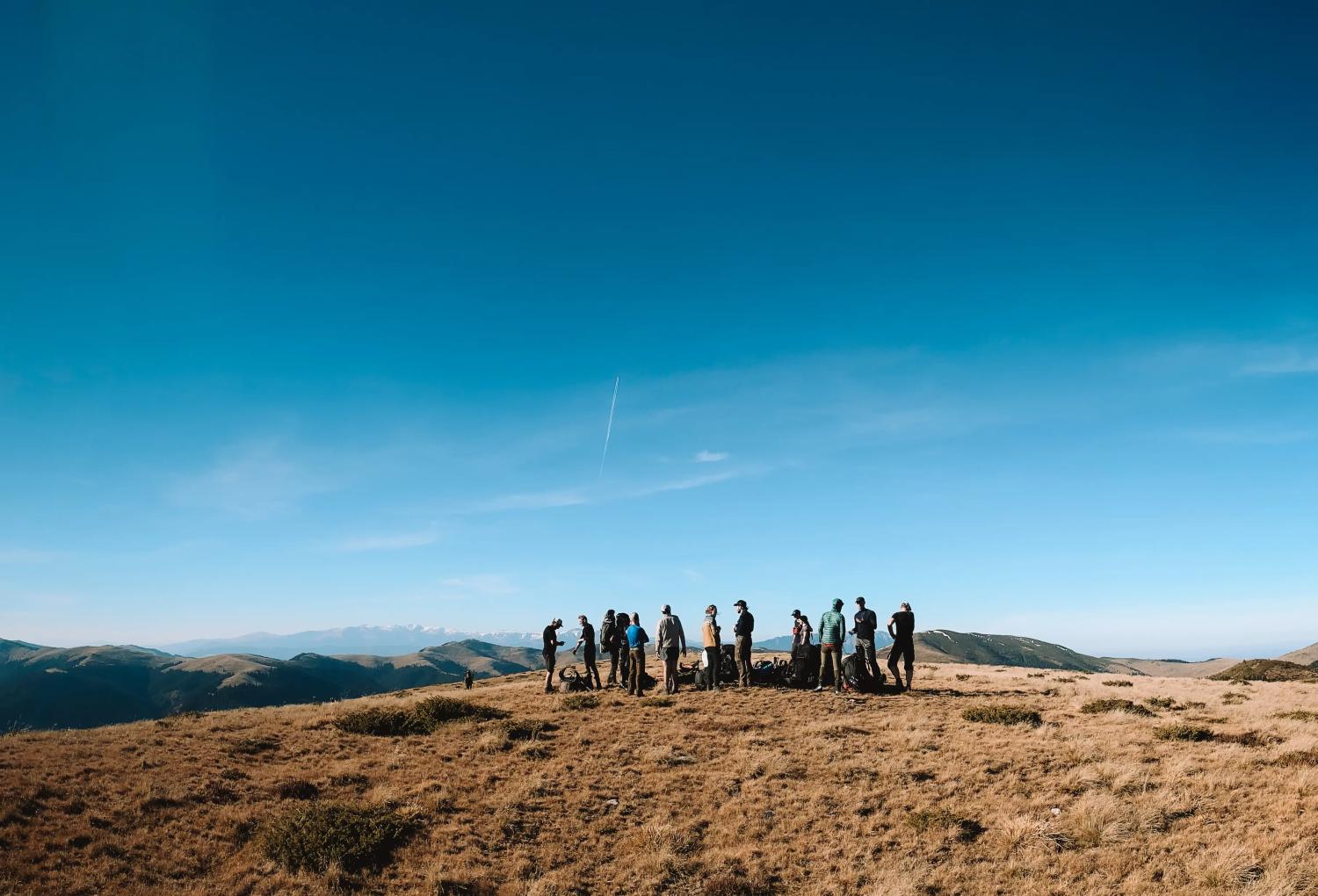
March is the turning point in the Carpathians. In the valleys winter is breaking, snow still lies on the ridges, and the weather can swing from spring sunshine to wet snow within a single day.
That sounds like a reason to pick another moment. It is precisely the reason to go then. Learning wilderness skills in stable summer weather teaches you little: building a shelter when it is dry and fifteen degrees is craft work. Building that same shelter when it is raining and your fingers have gone stiff is the real exercise. The season is what separates theory from ability.
On top of that, the forest is still bare in March. You can see further, navigating on landforms works better, and the ticks are not yet active.
The forest here looks like the Ardennes until you are standing in it. Work out your distance on the map, then halve it. Skip that and you arrive in the dark at the spot where you still have to build a shelter.
Koen De Leeuw, expedition leader
What wilderness training means here
No classroom and no demonstrations. The training consists of a series of situations in which you simply have to solve it, with whatever you are carrying.
- Navigation at night. Everyone picks up map and compass navigation in daylight quickly. In the dark, in dense forest, without landmarks, everything you were unconsciously doing by sight falls away.
- Shelter building. Building a shelter from what is lying around, and then actually sleeping in it. That last part is the lesson: you only find out at three in the morning where your construction falls short.
- Rescue techniques. Getting someone out of a ravine, moving an injured person over rough terrain, improvising with rope and whatever is at hand.
- Deciding under pressure. The thread running through it all. Improvise, adapt and overcome is not a slogan but the working method: the plan is rarely fully correct, and the question is what you do in the twenty minutes that follow.
Nine days, and Challenge is no understatement
The Carpathians expedition is rated Challenge (4 out of 5), and that is no understatement. Nine days, long distances every day over inhospitable terrain with a full pack, nights outside in changeable weather, and exercises that continue at moments when you would rather be sleeping.
You need no prior knowledge, but you do need solid fitness and the ability to function when you are tired and wet. It is the destination where participants most often say they underestimated how hard it would be, and just as often that it gave them the most.
Practical
The Carpathians expedition runs from 20 to 28 March 2027 and lasts nine days. Guiding by our X Guides, group equipment and the technical gear are included. This expedition is also the first step in the selection process for anyone who wants to become an X Guide.
Want to see the destinations side by side: which expedition suits you compares them on terrain and intensity. And the packing list for an expedition goes into detail on what has to come along.