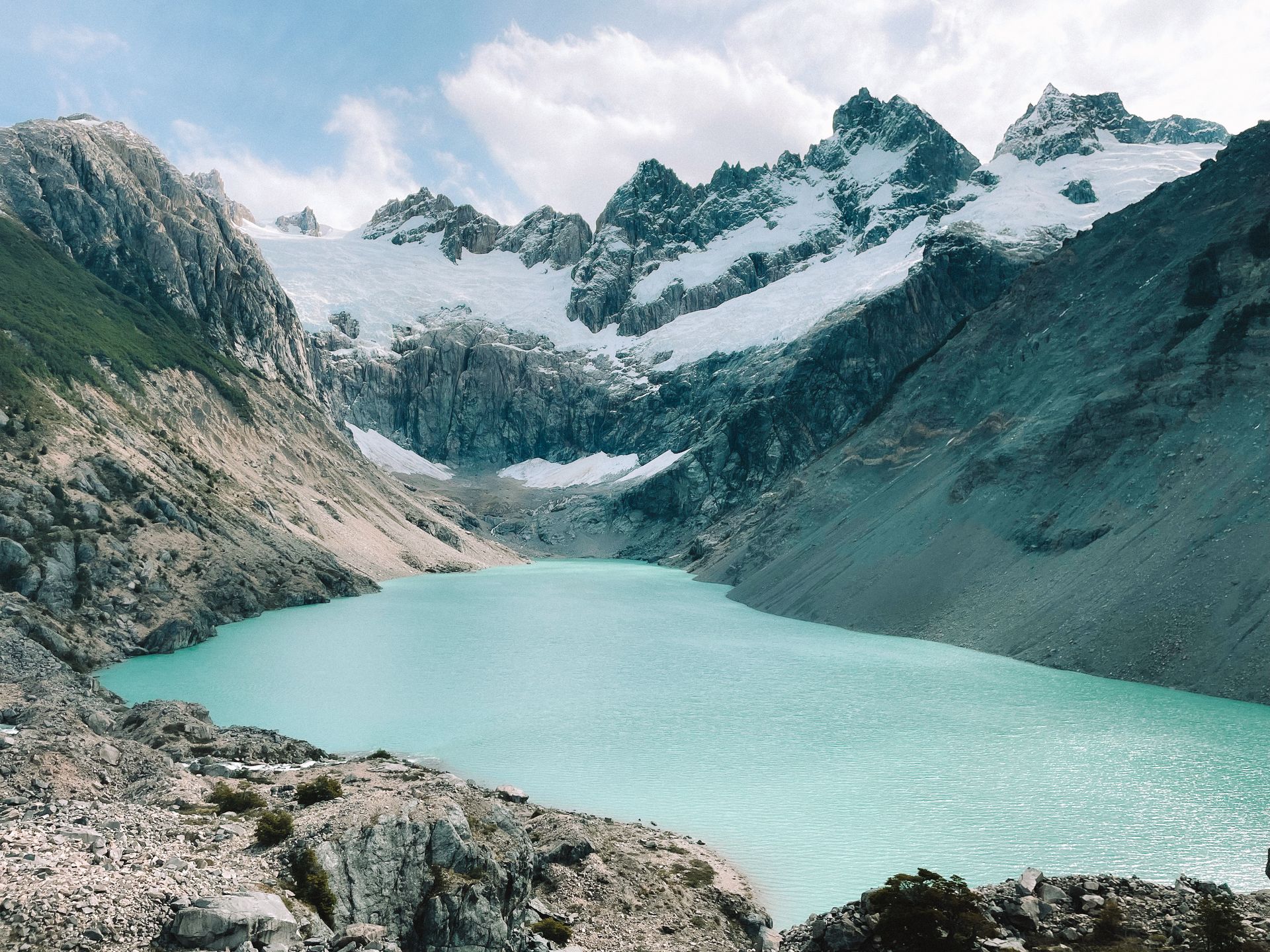
EXPEDITION PATAGONIA | 17 JANUARY TO 1 FEBRUARY 2028
Between ice and rainforest
The story of
this expedition
From Brussels you fly via Santiago to Balmaceda, in the Chilean region of Aysén. From there we drive on for about five hours to the starting point. After a final gear check we head into the wilderness around Laguna San Rafael National Park. From then on there are no trails, no signal and no village nearby.
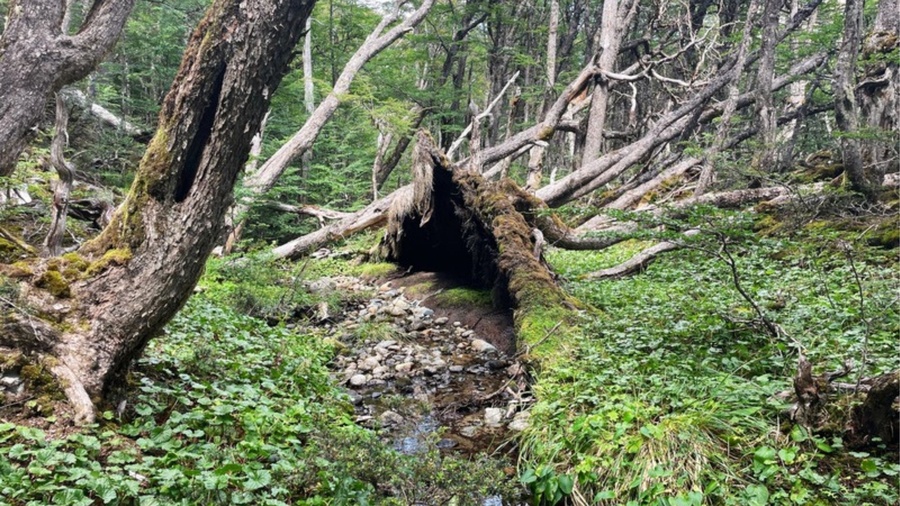
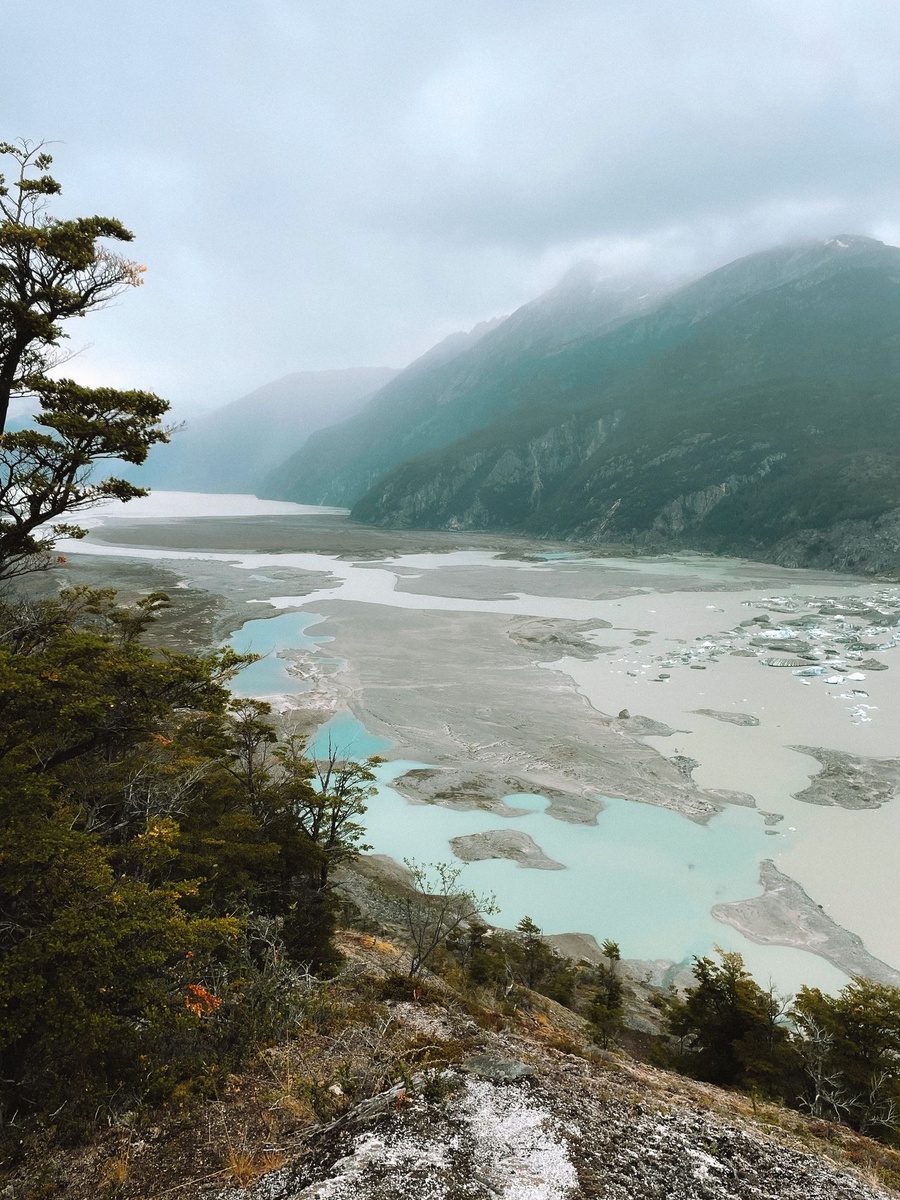
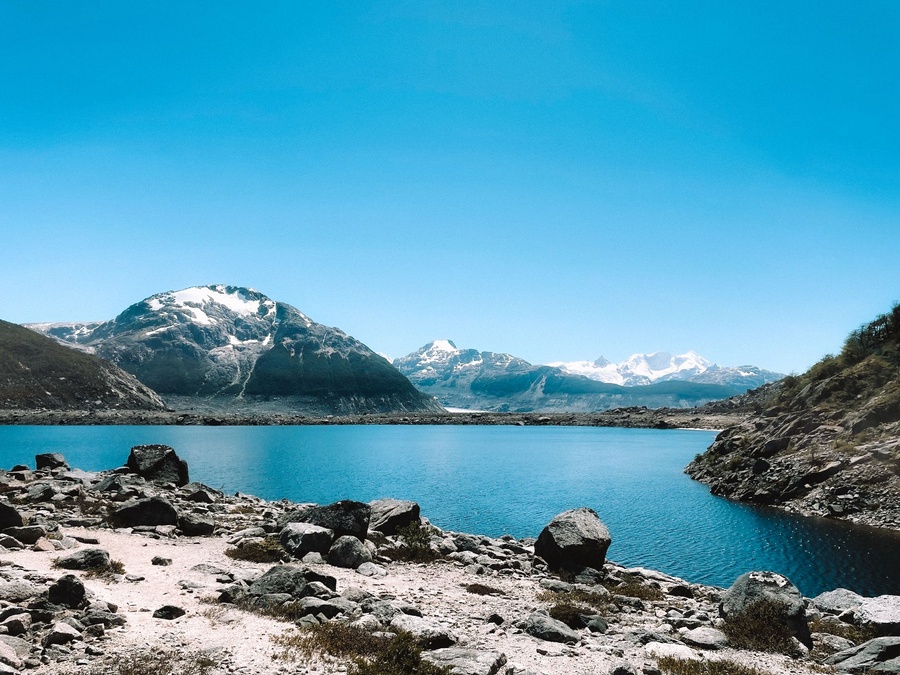
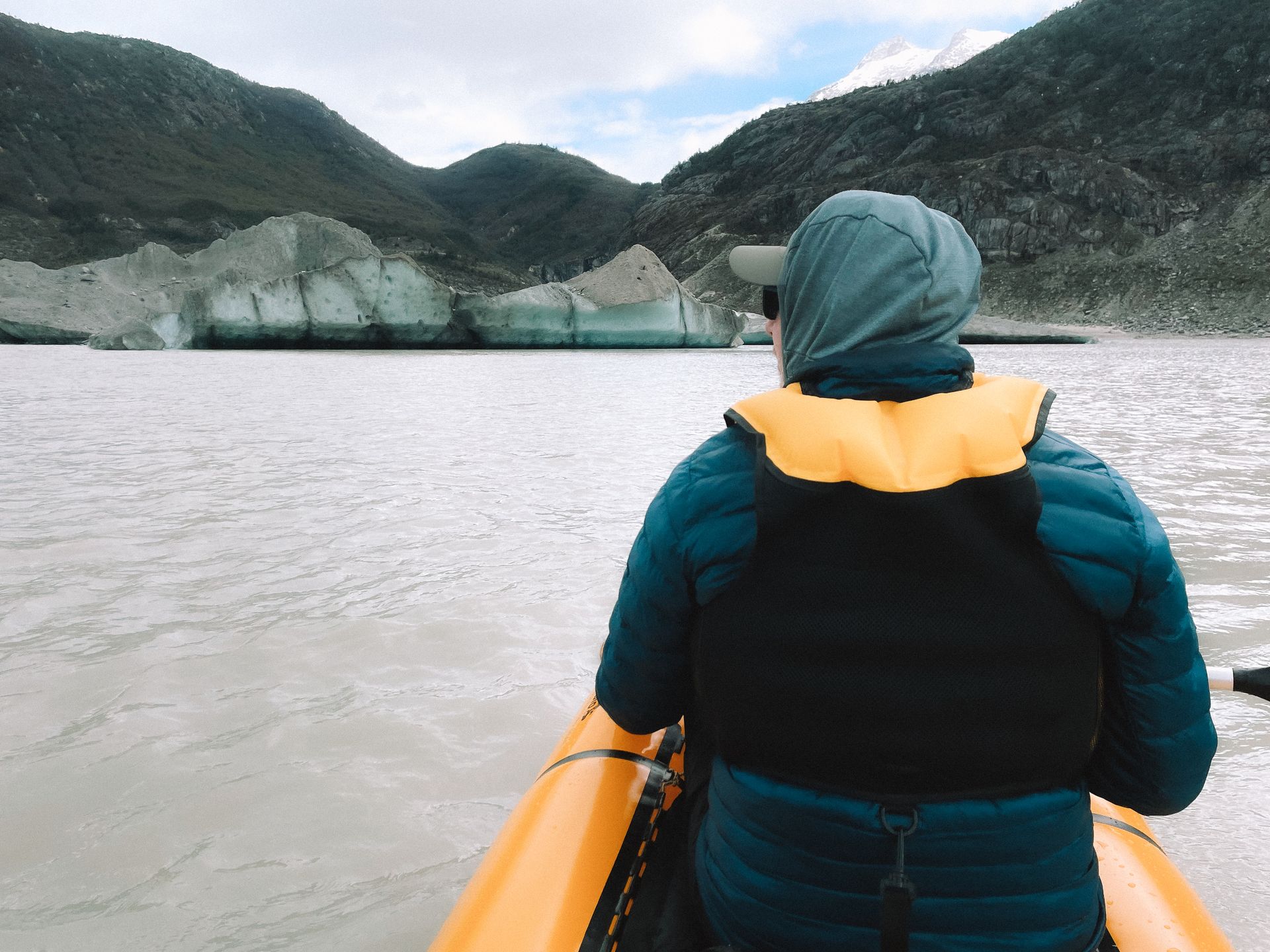
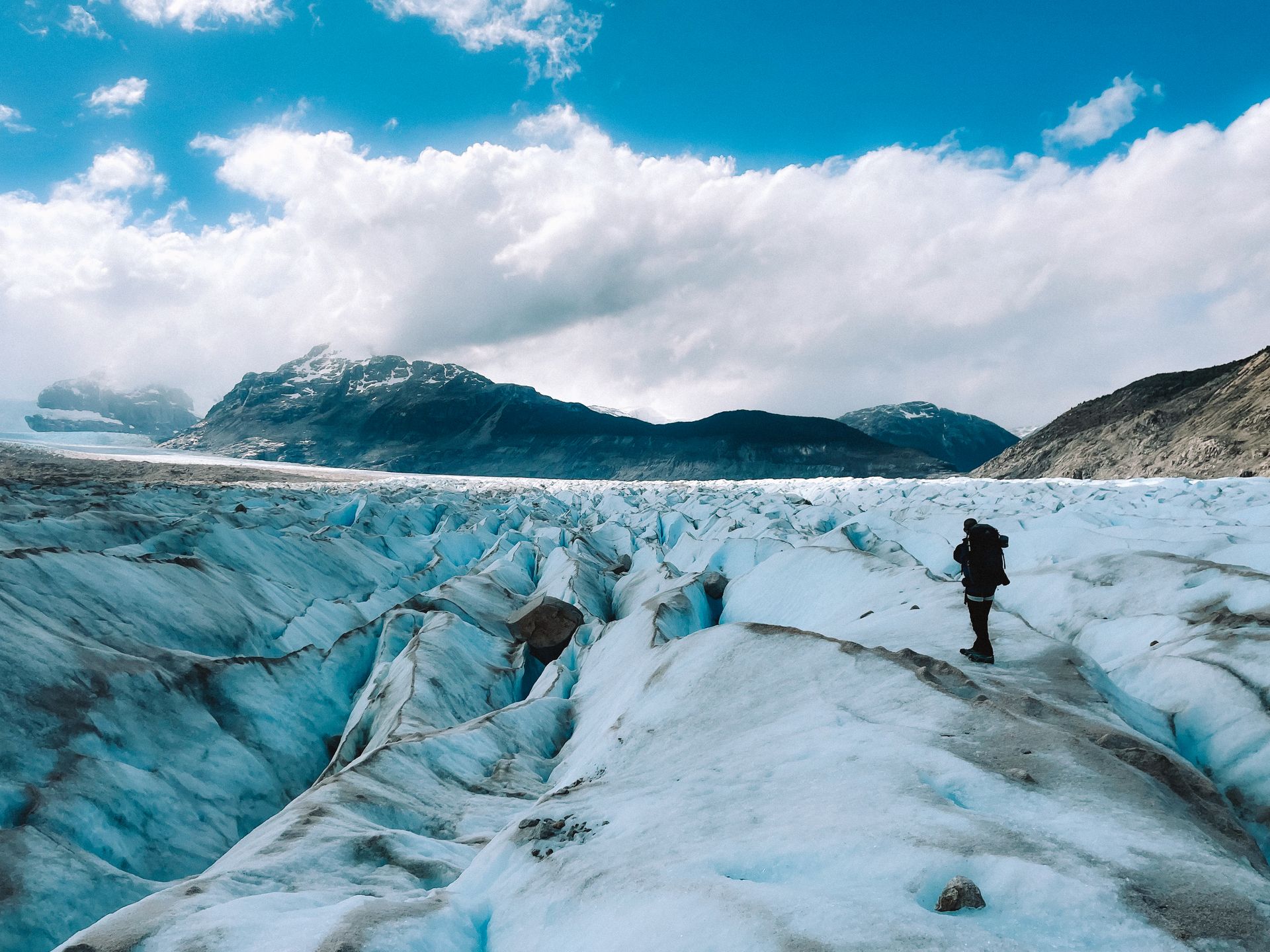
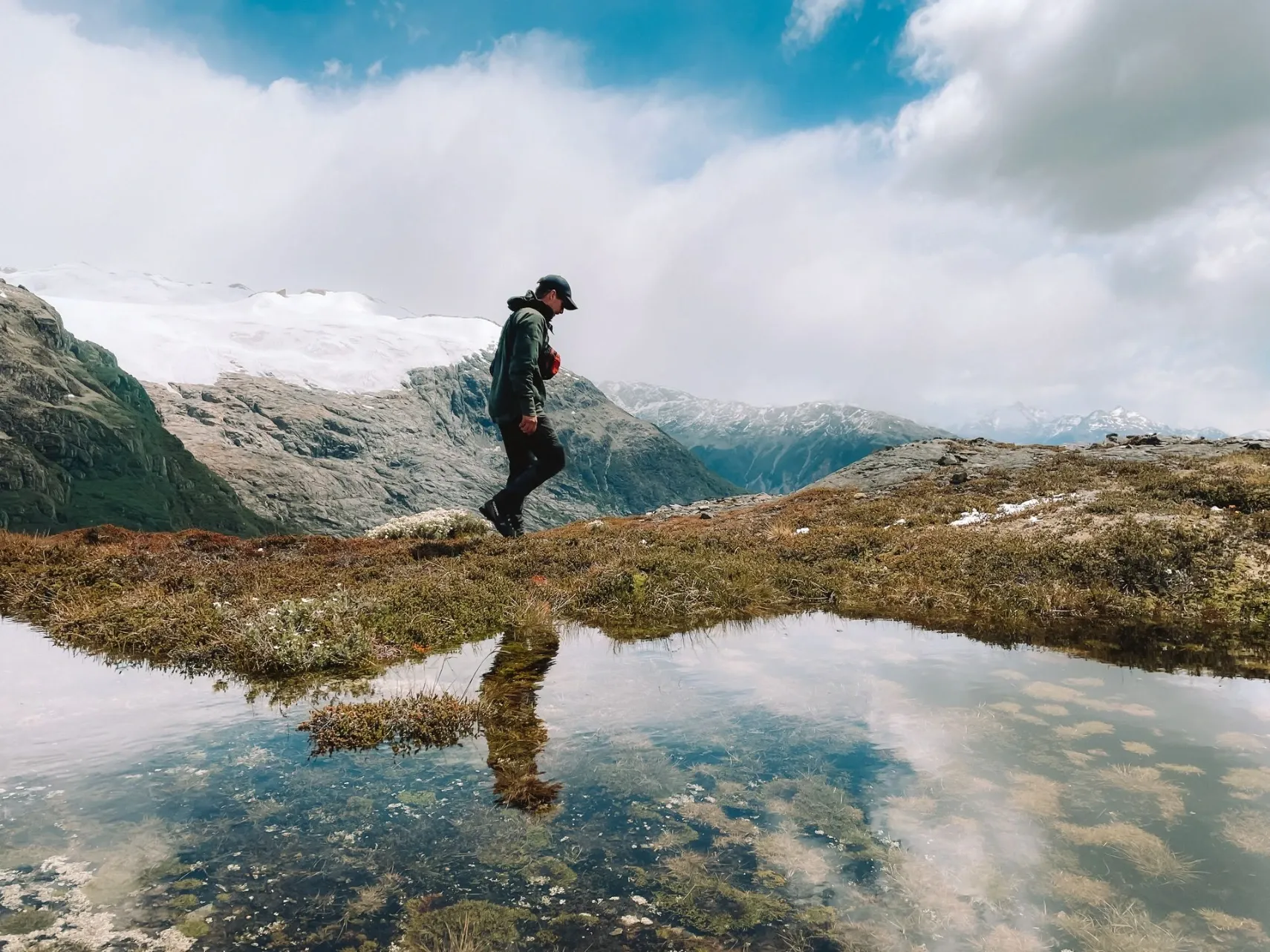
For days we find our own way through the Andes. We climb over ridges, descend through dense rainforest and cross glaciers with crampons on our boots. Where water blocks the way, we inflate the packrafts and paddle across lakes dotted with floating ice, or cross glacial rivers. Every evening we sleep outdoors without a tent, under a shelter, wherever nature allows, cook on the stove and filter water from the stream.
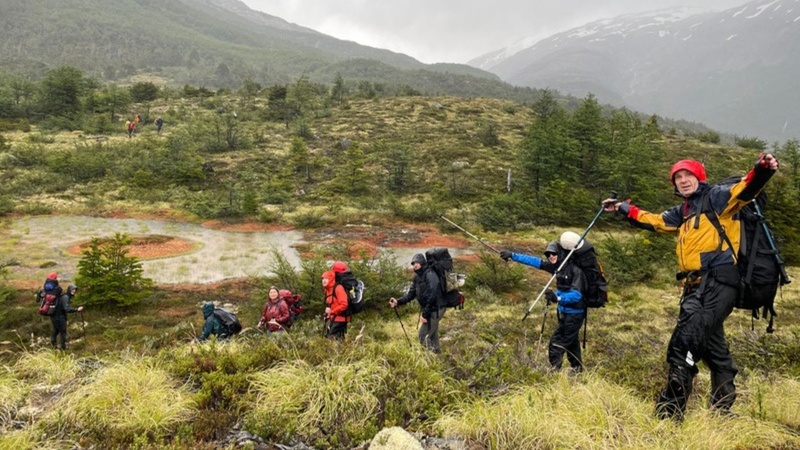
The weather here can turn within the hour: sun, wind and rain on the same day are normal, with temperatures from a few degrees below freezing to twenty five degrees. It shapes how far we get and where we cross. We decide together, every day, and we prepare you for it months in advance, with physical training and a technical session with the packraft.
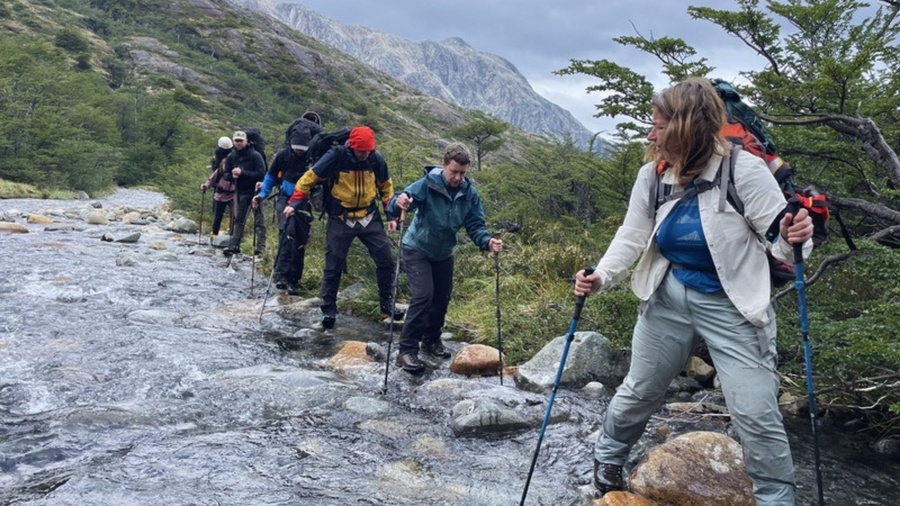
On foot
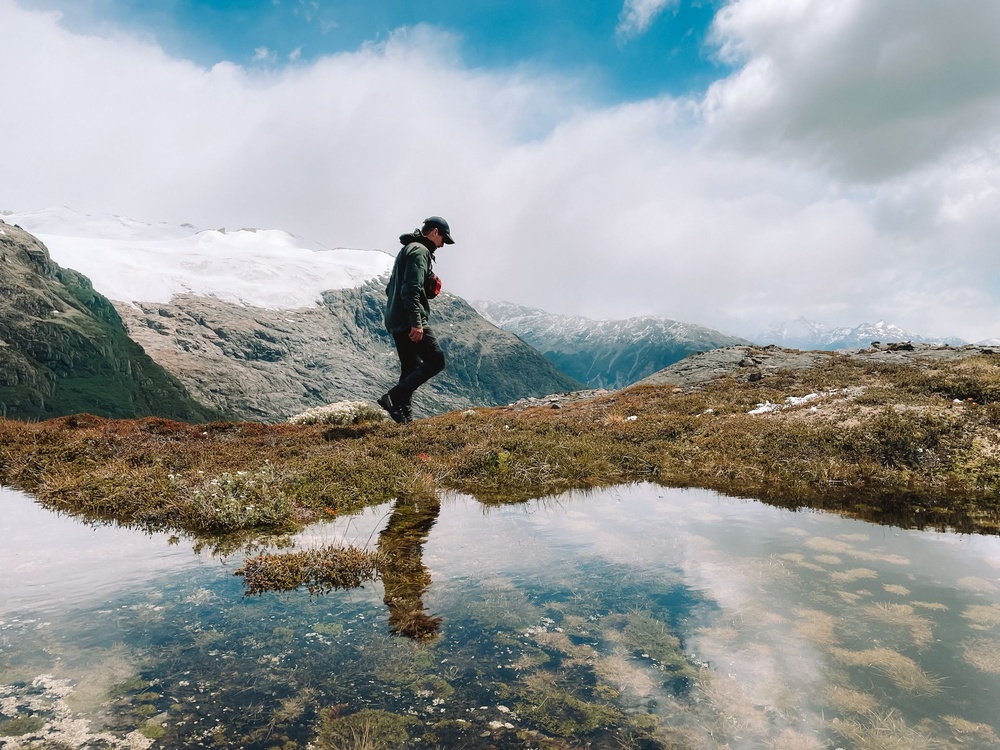
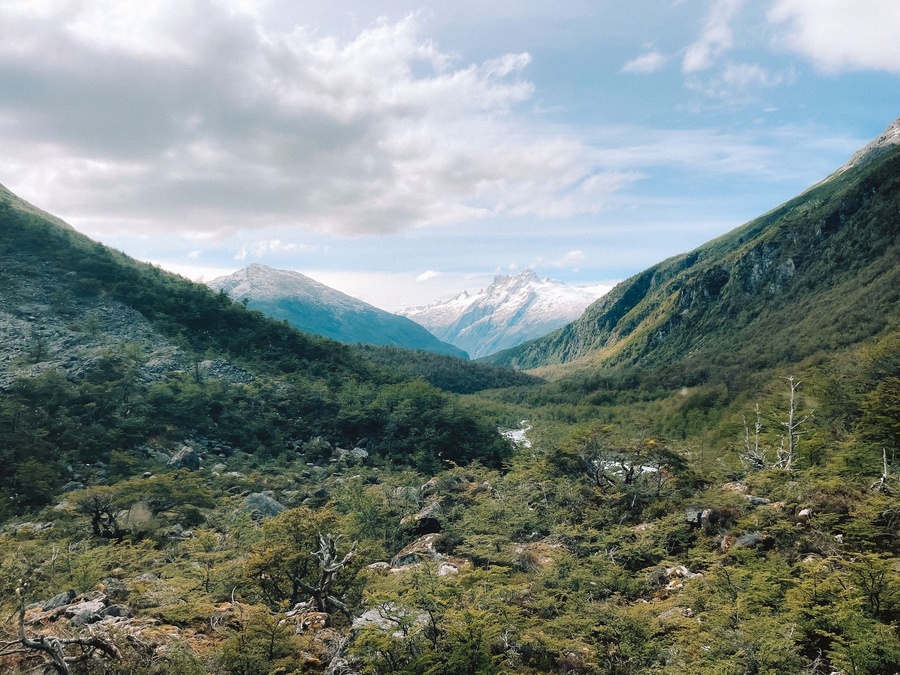
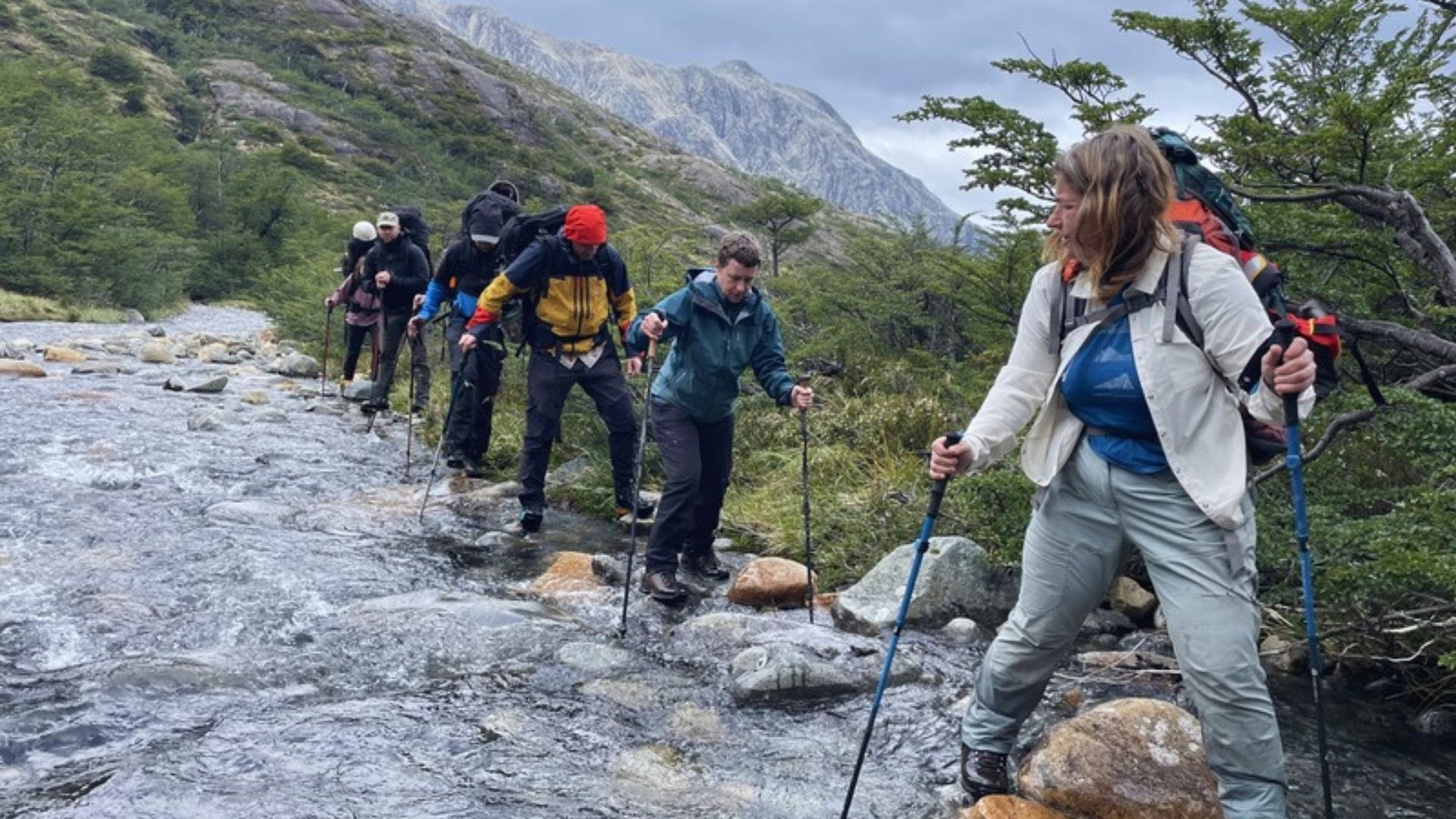
through the Andes without a trailThere are no signposts and no trail to follow. We find our own route over ridges, through rugged valleys and through dense rainforest, where you sometimes scramble more than you walk. You carry everything yourself: sleeping gear, food for several days and your packraft. Along the way we ford streams and smaller rivers, often as a whole group at once. You learn to read map and terrain, and to judge where a slope or a crossing becomes too much for the load on your back.
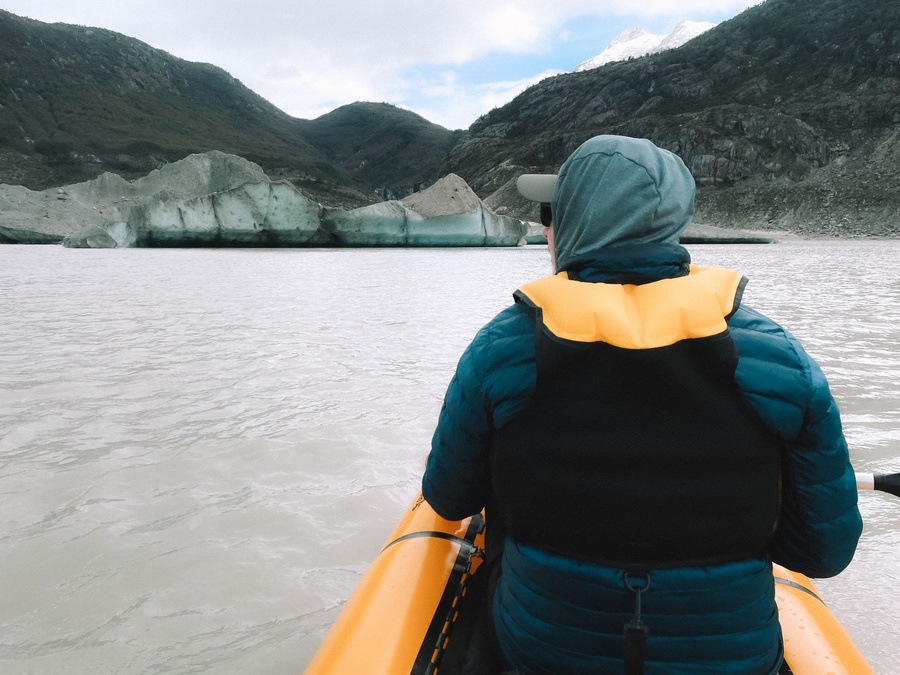
By packraft
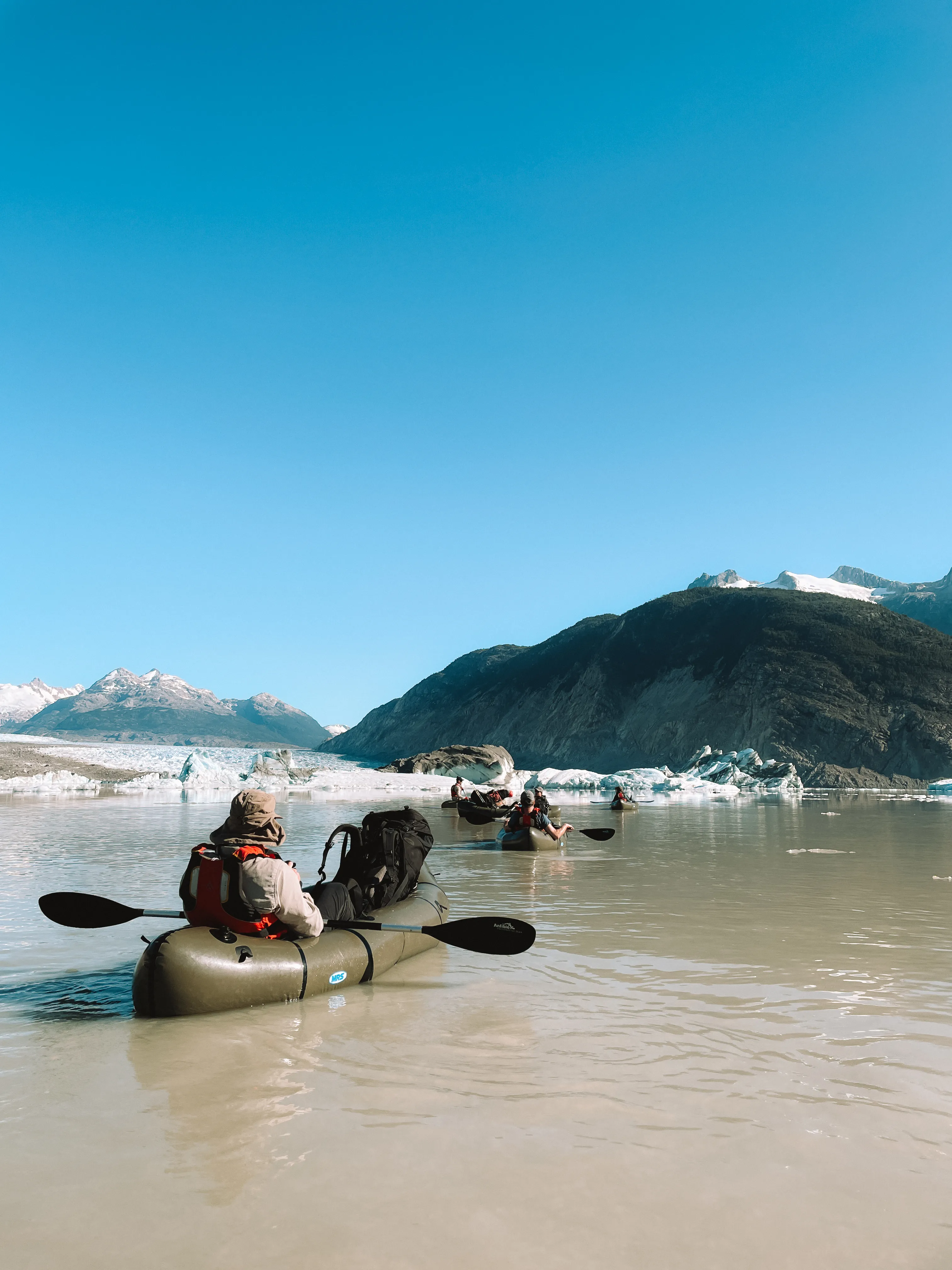
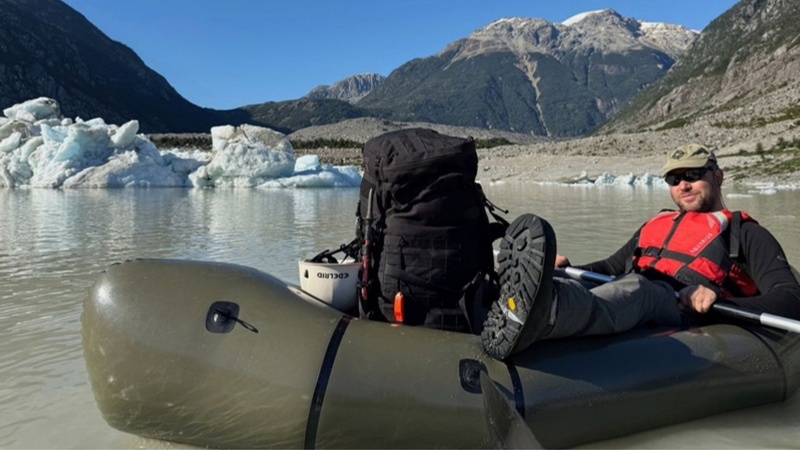
across ice lakes and glacial riversWhere the land runs out, we take to the water. A packraft is a light inflatable boat that you roll up and carry on your pack. With it we cross lakes where ice from the glacier floats, and paddle down cold glacial rivers. The water is ice cold and the wind can shift quickly, so we choose the moment to set off with care and stay close together. You learn to paddle with a full load and to decide when it is better to stay ashore.
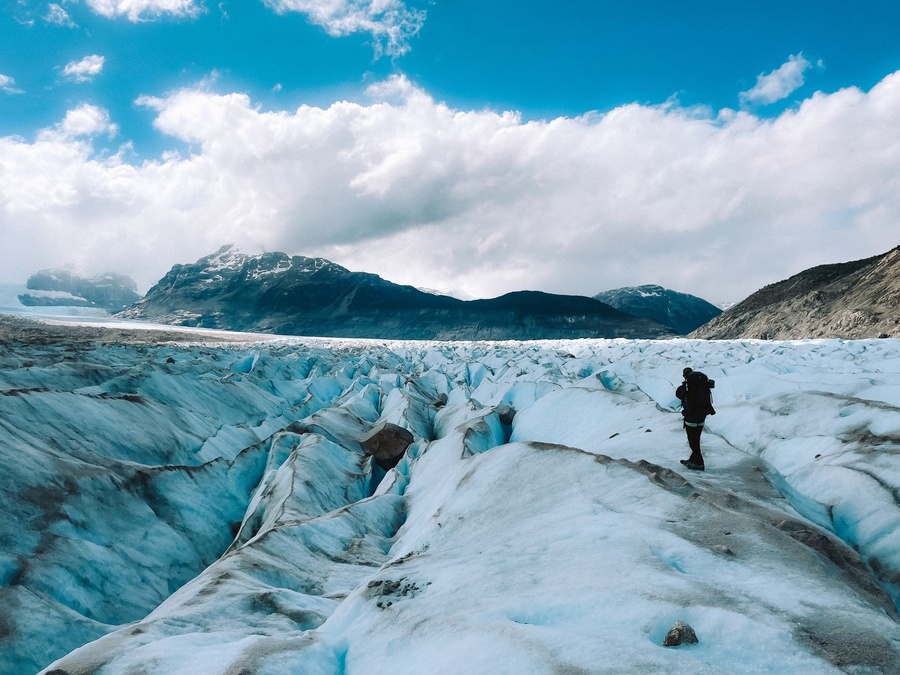
On the ice
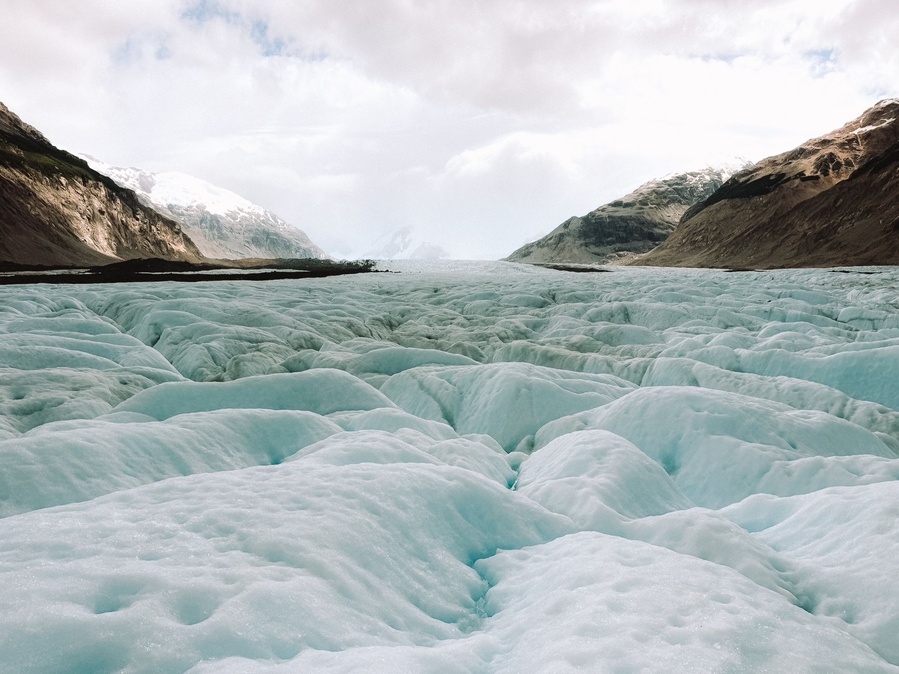
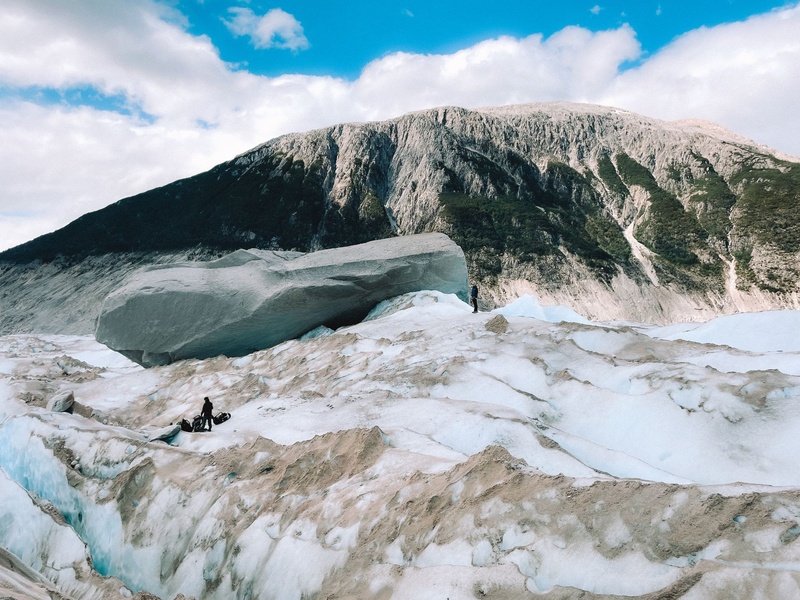
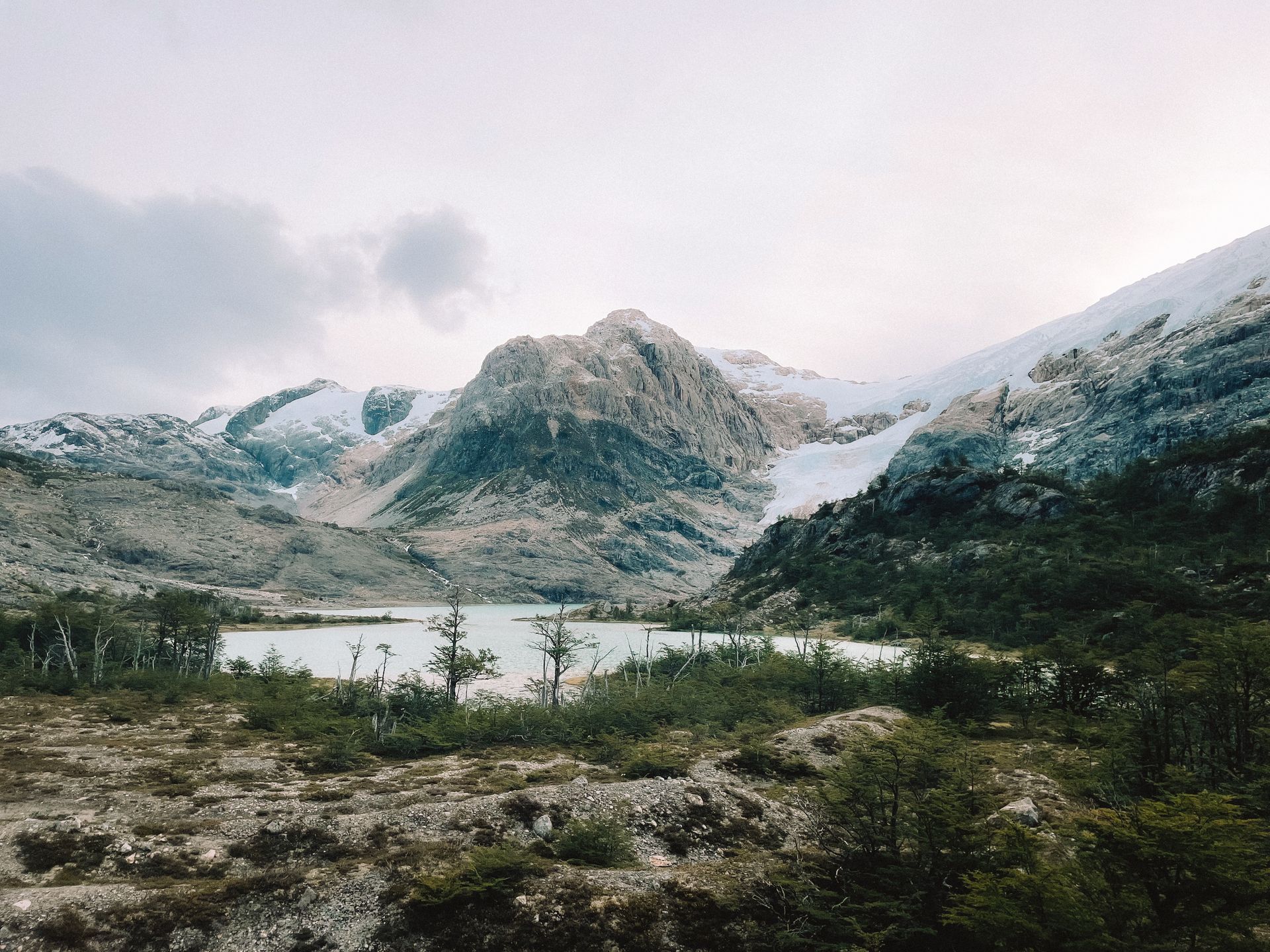
across glaciers and morainesPatagonia holds one of the largest ice fields outside the polar regions, and along the way you meet it up close. We cross glaciers wearing crampons, between blue crevasses and over moraines of loose rock. The ice is irregular and changes with the temperature, so we choose every passage with care. Snow and ice reflect the sunlight strongly: good sunglasses and sun cream are essential here.
What makes this
expedition unique?
Fully off grid
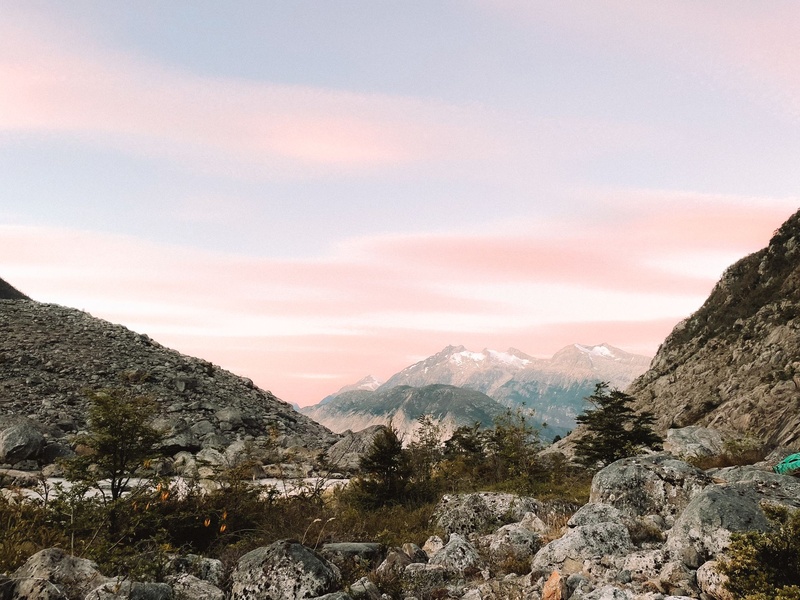
Days in the wilderness of Chilean Patagonia, without trails and without signal.
On foot and by packraft
Hard trekking combined with packrafting on ice lakes and glacial rivers.
From ice to rainforest
Navigating across glaciers, through rainforest and rugged valleys.
Four seasons in a day
Learning to anticipate weather that turns within the hour.
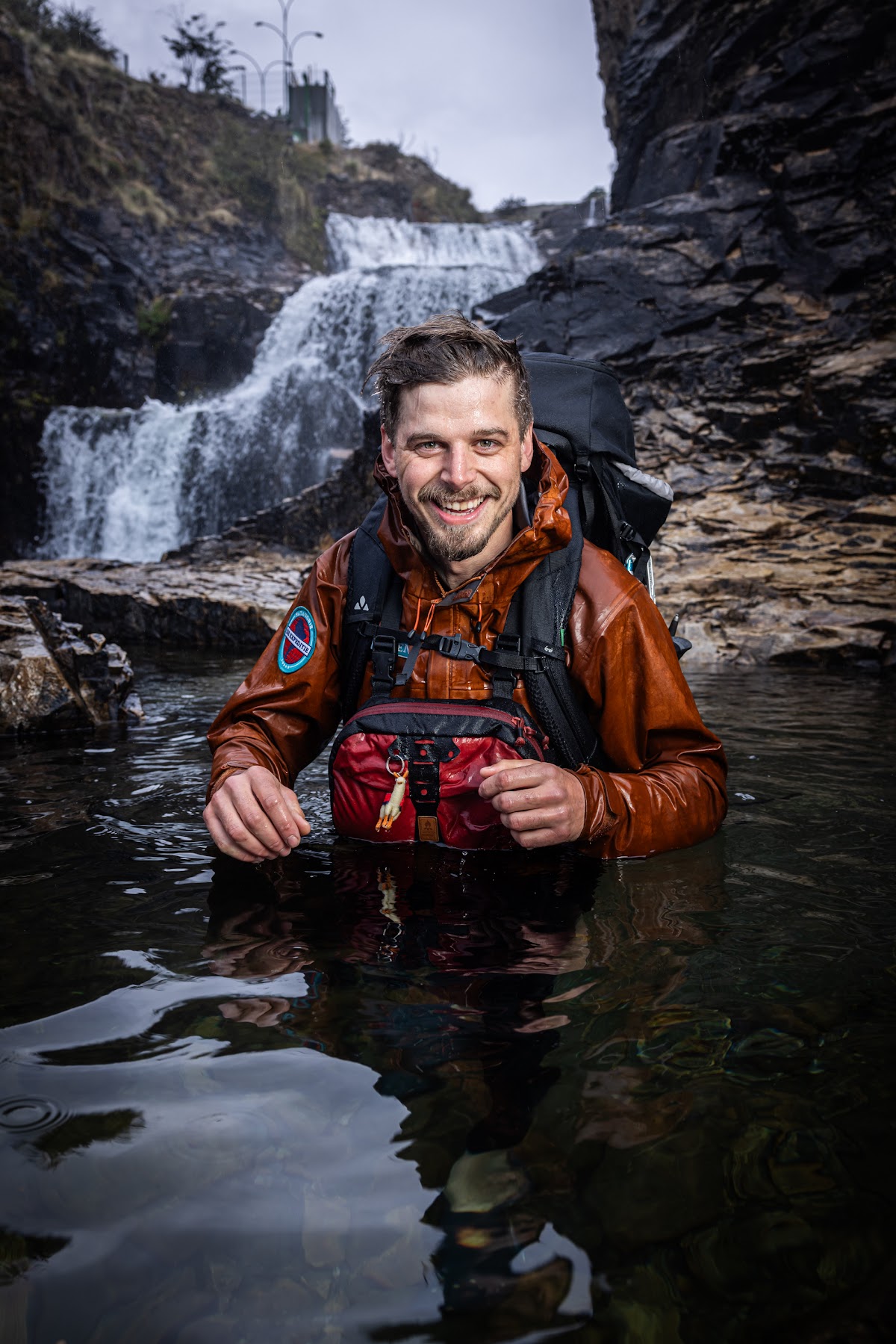
In Patagonia you do not plan against the weather, you plan around it. A lake that is mirror calm in the morning can be full of whitecaps by the afternoon, and after a day of rain a river becomes a different river. So every morning we look again at route, water and wind, and decide together how far we go. You learn that during the preparation, so that on site you can help judge it yourself.Koen De LeeuwFounder and expedition leader, known from De Expeditie on PlayParacommando · Wilderness First Responder Meet Koen
 De Expeditie
 De Tijd
 Humo
 Play Media
Everything about
Expedition Patagonia
Route, preparation, guidance, safety and price, together in one document.
Download the presentation PDF, straight to your device after leaving your email address.How we
work
Self-sufficient,
never alone
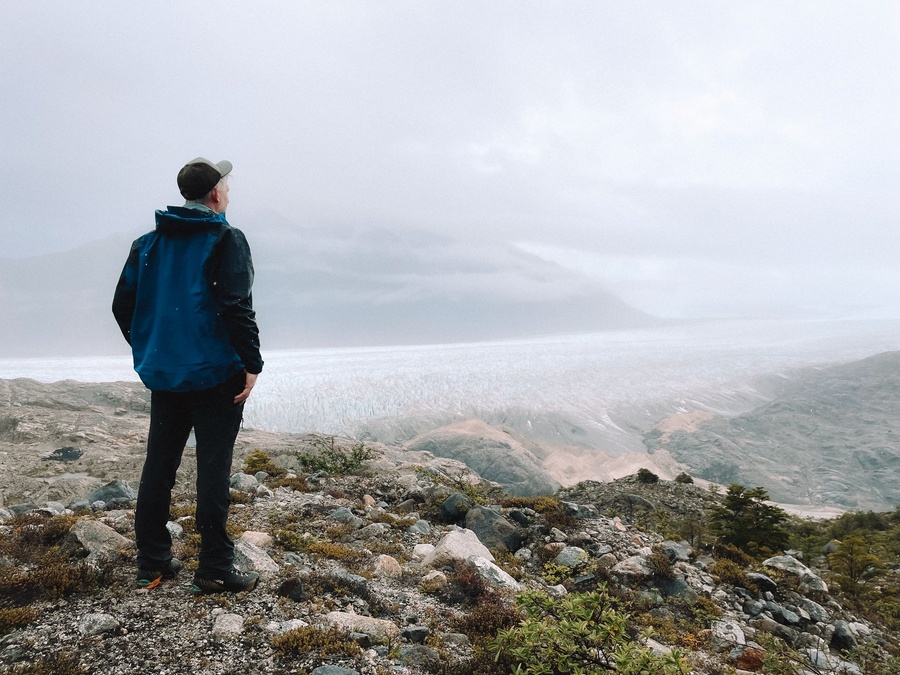
As soon as we set off, we are off grid. We carry everything we need, filter water from streams and rivers, cook freeze dried expedition food on the stove and sleep outdoors without a tent, under a shelter, where nature allows it: by a lake, at the edge of the forest or in the lee of a rock wall.
You learn to navigate without a trail, steer a packraft between floating ice and move across a glacier on crampons, guided by an experienced X Guide you meet long before departure, during the preparation programme.
Safety and
guidance
You step into nature, away from the beaten track, but always with experienced guidance at your side.
Safety is our top priority. Our X Guides are professionally trained, hold a Wilderness First Responder certificate and have years of experience in remote areas.
Our expedition leaders always carry two means of communication via satellite. We work with GPS tracking, fixed safety procedures, an evacuation plan and local support in Patagonia, and someone at our basecamp in Belgium can be reached day and night.
Before departure we carry out a thorough risk analysis and prepare everything down to the last detail.
Preparation
of 3 to 6 months
The programme starts after you sign up with a kick off. Monthly group training sessions and a technical training follow, with a final check two weeks before departure.
Everything
at a glance
All prices are per person and exclude flights. We book flights together with you during the preparation programme.
- Departure
- 17/01 to 01/02/2028
- Duration
- 16 days
- Level
- Challenge4/5
- Group
- 6 to 12 participants
- Price
- €9,000 ppIncl. preparation programme
Included
- Full preparation programme of 3 to 6 months
- Professional X Guides
- Packrafts, paddles and life jackets
- Crampons for the glacier crossings
- Backpack, sleeping bag and sleep setup
- Navigation, jetboils and water filters
- All overnight stays
- All meals during the expedition
- All local transport
- Local activities
- All local tips
Not included
- Flights (invoiced separately during the preparation programme)
- Transport between your home and the airport
- Personal clothing (top, bottom, footwear)
- Insurance (cancellation, hospitalisation and repatriation, search and rescue)
What struck me straight away in the Patagonia programme is how clearly and professionally the preparation is built up. The combination of screening, workshops and personal training advice gives you a great deal to hold on to. You feel yourself growing every week, physically and mentally. It gives you the confidence to really live such an intense adventure to the full.
Frequently asked questions
See all questionsWhere in Patagonia do we go?
To the Chilean side of Patagonia, in the Aysén region, around Laguna San Rafael National Park. It is an area of glaciers, lakes, rivers and rainforest, with few roads and hardly any inhabitants. We do not follow an existing route there: we find our own way.
How do I get to Patagonia?
You fly from Brussels to Santiago de Chile and take a domestic flight on to Balmaceda. From there we drive as a group for about five hours to the starting point. Local transport is included. We book the flights together with you during the preparation programme; they are invoiced separately.
What is the weather like in Patagonia in January?
January is summer in Patagonia: the days are long and there are fewer heavy storms, but the weather stays unpredictable. Expect temperatures from a few degrees below freezing to twenty five degrees, with wind, rain and sun taking turns within the hour. You receive a packing list built on layers, which we go through together at the kick off.
How hard is the expedition?
The level is Challenge (4/5). For days you walk without a trail over ridges, through rainforest and across glaciers with a full pack, and you paddle across lakes and rivers. You do not need to be an elite athlete, but you do need to be willing to work towards it for months: during the preparation programme you receive training advice and there are monthly group training sessions.
Where do we sleep during the expedition?
Outdoors, without a tent. Along the way we sleep under a shelter, wherever nature gives us a spot: by a lake, at the edge of the forest, in the lee of a rock wall. There are no huts or other facilities. Element X provides your backpack, sleeping bag and sleep setup, which you receive before departure.
Do I need experience with packrafting or glaciers?
No. Packrafting, navigation and your sleep setup are practised in the technical training during the preparation programme. On site our X Guides lead every crossing and every glacier passage; crampons and packrafts are included.
How safe is an expedition in Patagonia?
Safety is our top priority. Our X Guides hold a Wilderness First Responder certificate, we carry satellite communication and work with an evacuation plan and fixed safety procedures. The main points of attention are navigating without trails, cold wind and strong sun on snow and ice. Wild animals such as the puma are shy; condors and, with some luck, a huemul you are more likely to see from a distance.
What is included and what is not?
Included: the preparation programme of 3 to 6 months, professional X Guides, packrafts, crampons and group equipment, your backpack, sleeping bag and sleep setup, all overnight stays, all meals during the expedition, all local transport and local tips. Not included: flights, transport between your home and the airport, personal clothing and insurance (cancellation, hospitalisation and repatriation, search and rescue).
Other expeditions
View all expeditions
Sign up for
expedition updates
Stay one step ahead of the adventure. Receive the latest news and exclusive information about our expeditions in the wilderness.
Unsubscribe whenever you like. Read our privacy policy.
Your expedition to Patagonia
starts with a conversation
Your preparation is included and starts 3 to 6 months before departure.