
Most people have Morocco filed away as a destination for cities and desert. That between the two lies a mountain range with summits above four thousand metres, and that you can be there in three hours by plane, is one of the best kept secrets of southern Europe's back garden.
The High Atlas forms the dividing line between the fertile Atlantic plain and the Sahara. This article is about what that range is as an expedition destination, and why the summit of Toubkal is not the most important part of it.
The terrain: arid flanks and green valleys
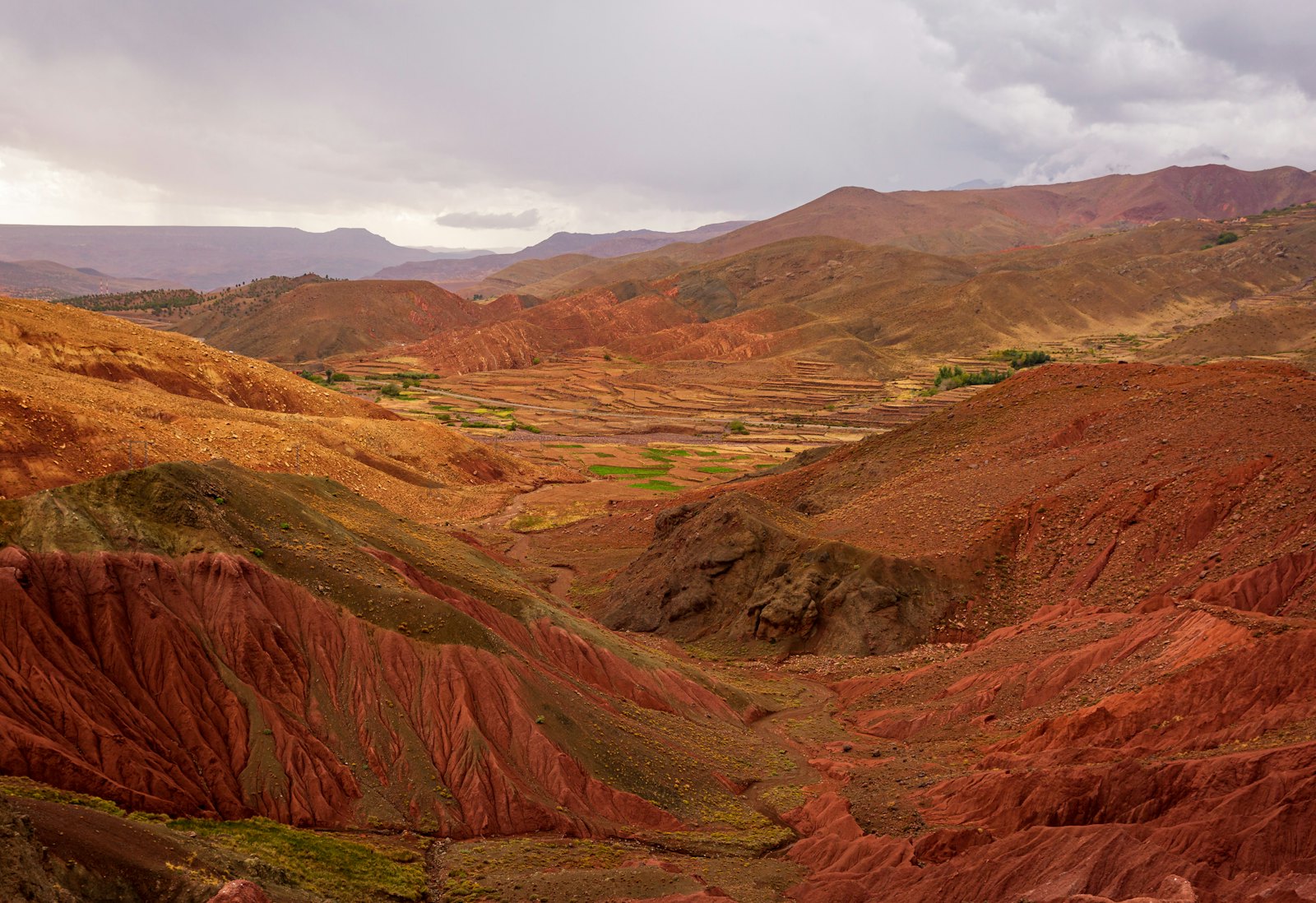
From a distance the High Atlas looks barren. No forest, little green, only rock in shades from ochre to red brown. Up close that is only half true.
The valleys. Wherever water comes out of the mountains, the ground is intensively worked. Terraces of walnut and almond, small fields, irrigation channels that are centuries old. Those green strips run like veins through an otherwise dry landscape, and in places the contrast between the two is only a few metres wide.
The flanks. Above the settlements everything falls away. Loose stone, gullies cut by meltwater that runs only a few weeks a year, and slopes that stay the same for hours. It is terrain that does not challenge you technically but does test your ankles and your patience.
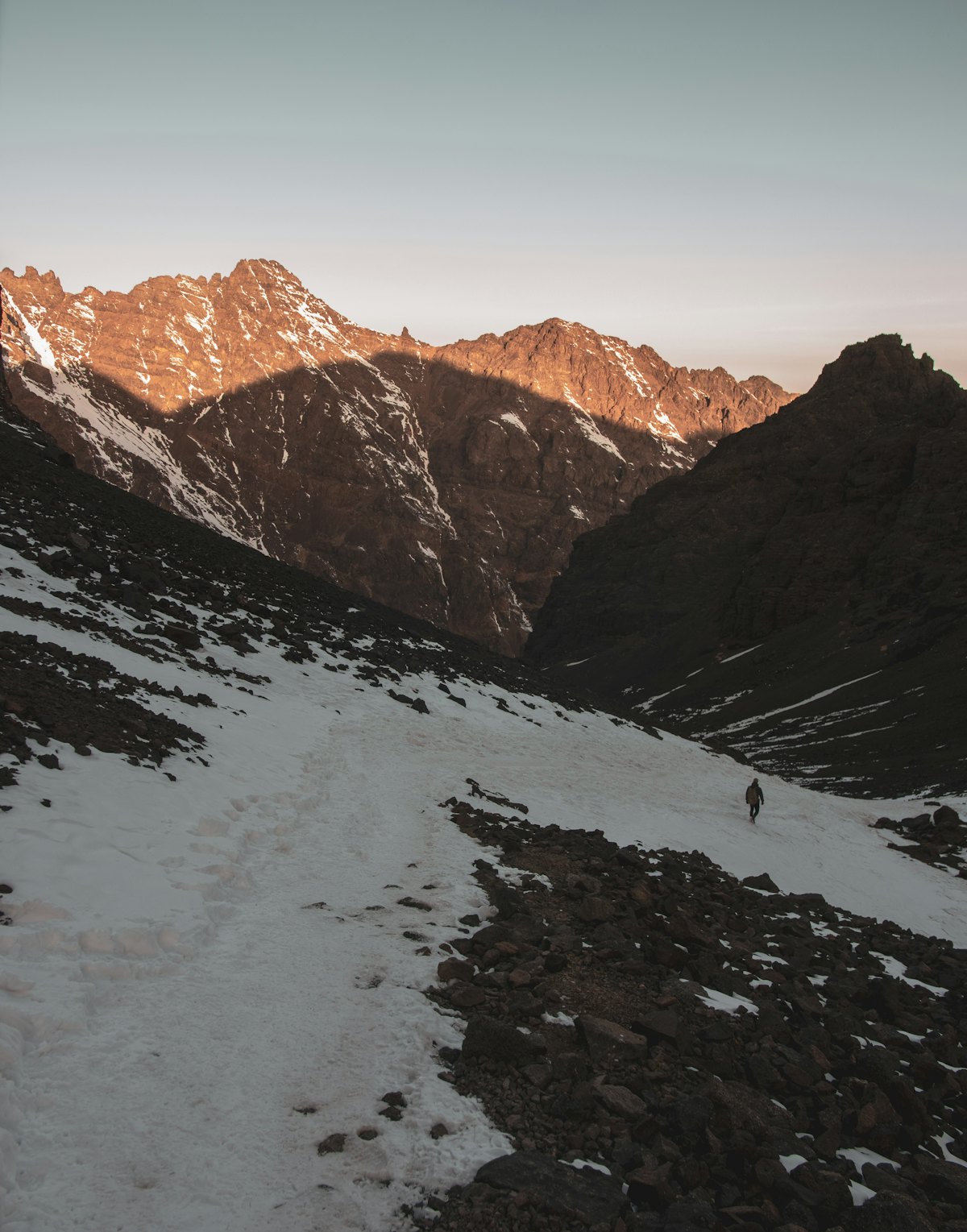
The summit. Toubkal reaches 4,167 metres, making it the highest mountain in North Africa. The ascent is a demanding walk, not a climb: no rope, no crampons in autumn. What makes it hard is the combination of altitude, loose ground and a long day.
The villages are not scenery
The valleys of the High Atlas are home to Amazigh communities, the indigenous people of North Africa, with a language of their own that is older than Arabic in the region. Many villages lie kilometres from the nearest paved road, and transport there is still largely by mule.
That makes this destination different from the others we offer. In Patagonia or Lapland you are in an empty landscape. Here you walk through an area people have lived off for centuries, and that changes the tone of the days. You pass fields being worked, you drink tea because refusing would be impolite, and you notice that a landscape you call rugged is simply home to someone else.
That is not a side note to the expedition. For many participants it is the part that stays with them longest.
Why October
Summer in the High Atlas is unworkable. In July and August temperatures in the valleys climb well above thirty degrees, and the heat makes long days with a pack irresponsible.
Winter goes to the other extreme. From December snow lies on the highest flanks and Toubkal becomes a winter ascent for which you need crampons and an ice axe.
October falls exactly in between. The heat has broken, the days are still long enough, and the first snow has not arrived. It is also harvest time in the valleys, which makes passing through the villages livelier than in the low season.
Break your boots in before you come. The flanks here are loose stone, and that is no place to discover that your new boots rub. And do not refuse tea in a village: that is not a delay, that is where you are.
Koen De Leeuw, expedition leader
Altitude in miniature
Four thousand metres is not extreme altitude, but it is enough to feel. Above three thousand metres most people notice their pace drop and their breathing change, and on summit day it is unmistakable.
That is precisely what makes the Atlas a good place to learn how your body responds to altitude. You get the real experience of thin air and having to slow down, without the risks and the days of acclimatisation that come with a six thousand metre mountain. Anyone who later wants to go to Chimborazo or Kilimanjaro already knows here how that feels.
Long stages and well broken in boots
The Atlas expedition is rated Adventure (3 out of 5) and lasts six days. You need no experience, but you do need the fitness to walk long stages with real ascent several days in a row, and a well broken in pair of boots: the loose stone on the flanks is no place to test new footwear.
Practical
The Atlas expedition departs in October 2027 and lasts six days, through the High Atlas to the summit of Toubkal. All the details are on the page for the Atlas expedition.
Want to see the destinations side by side: which expedition suits you compares them on terrain and intensity. And the packing list for an expedition goes into detail on what has to come along.