
Of all the destinations we offer, this is the only one rated Xtreme (5 out of 5). Not because the climb itself is so difficult: technically Mount Vinson is easier than Mont Blanc. What sets the level is where it stands.
At 4,892 metres Mount Vinson is the highest summit in Antarctica and the seventh of the Seven Summits. This article is about what that continent asks of an expedition.
No one is coming
Start with what matters most. On every other mountain we offer there is some form of help, however slow. In the Alps a helicopter comes. In Nepal and Ecuador there are villages, porters and roads. In Antarctica there is none of that.
There are no permanent inhabitants, no roads, no rescue service. The nearest town is on the other side of the Southern Ocean. If something goes wrong you depend on your own group and on an aircraft that can only come when the weather allows, and that can take days.
That fact changes everything about how decisions are made. Margins that are acceptable on another mountain are not acceptable here. Caution there is not a character trait but a procedure.
How you get there
The route to the mountain is an expedition in itself, and it explains why the programme lasts twenty days.
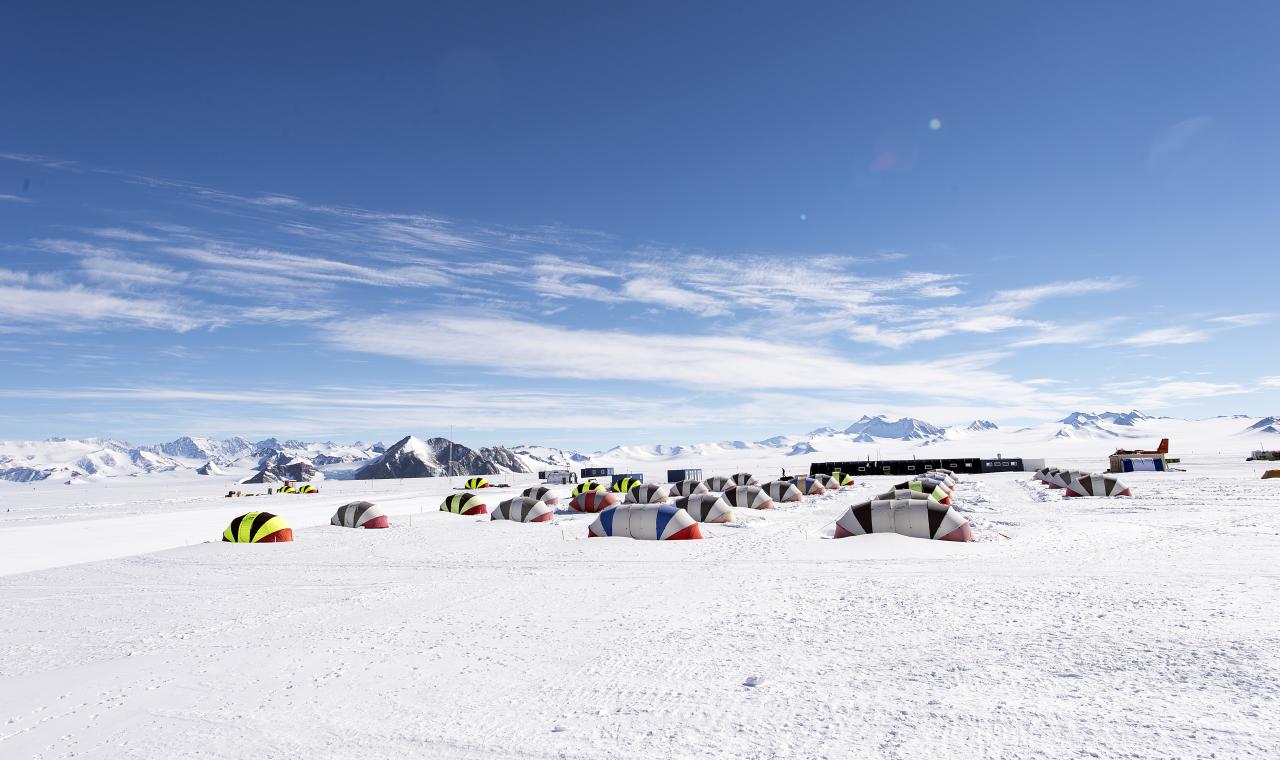
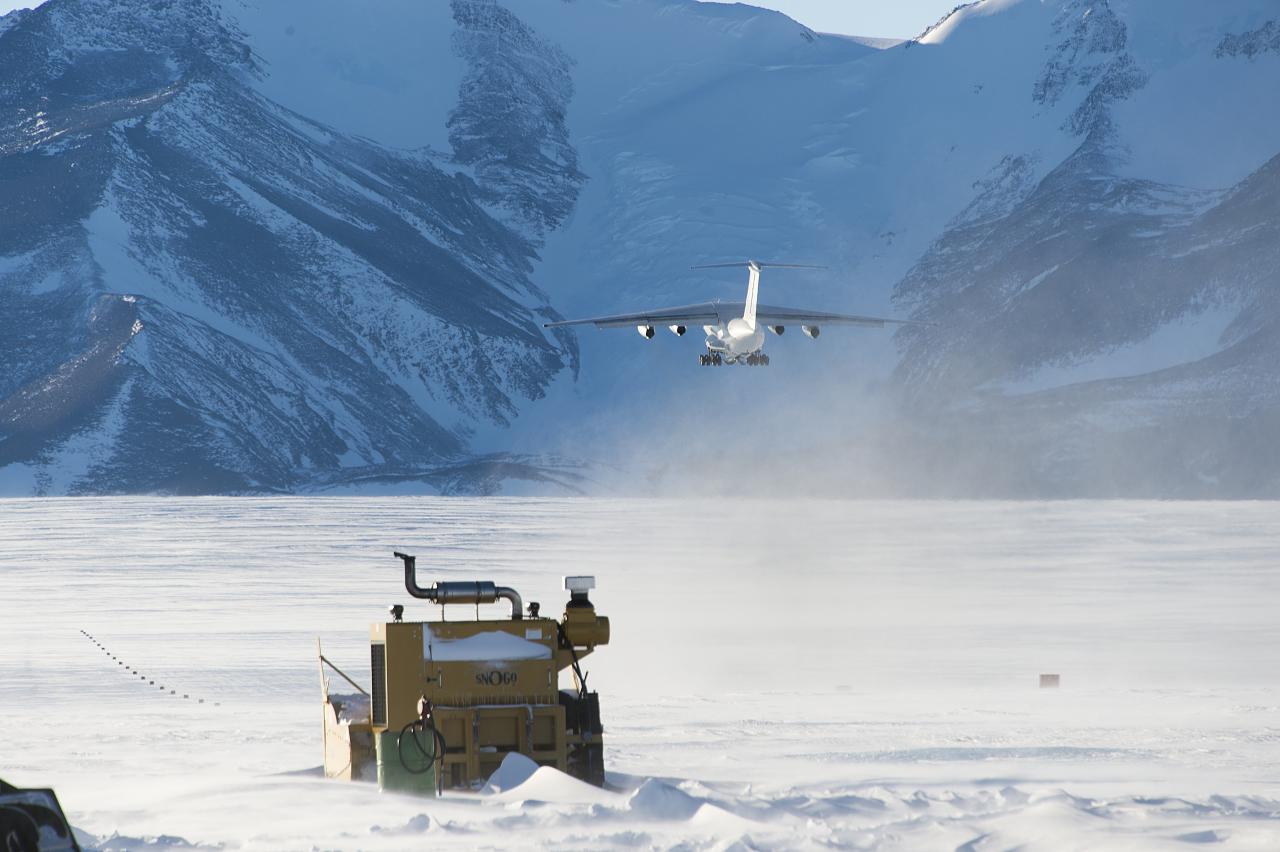
You set off from the far south of Chile and fly across the Southern Ocean to Union Glacier, a camp deep inside the continent where aircraft land on a runway of blue ice. No asphalt, no concrete: scoured glacial ice, hard enough to carry a transport plane.
From there you continue in a small ski equipped aircraft to base camp at the foot of the mountain. And then the waiting starts, because both flights only go in good weather.
So of those twenty days only a handful are climbing days. The rest is transport and margin. Anyone who sees that as wasted time has not understood the destination: that margin is exactly what makes the expedition possible.
The cold is unlike polar cold elsewhere
In the southern summer, temperatures on the mountain in Antarctica typically range between minus 20 and minus 40 degrees. That is cold, but the number is not what makes the difference.
What makes the difference is the dryness. The air on the continent holds almost no moisture, and that has two consequences. You lose water constantly without noticing, because your sweat evaporates immediately. And your kit does stay dry, an advantage you never have in Lapland or Scotland.
The real danger is the wind. In still conditions minus 30 is workable. Add wind and exposed skin freezes in minutes, and that is why at the higher camps nothing happens for days at a time.
No one is coming for you here. That changes every decision we make. Margins that are normal in the Alps we do not use here. On this continent, caution is not a character trait but a procedure.
Koen De Leeuw, expedition leader
Twenty four hours of light
In December the sun does not set in Antarctica. That sounds practical, and it is: you are not bound by daylight and you can set off when the weather is best, including at three in the morning.
But it does something to a person. Without darkness your body loses its reference point. Sleeping in a tent where it is permanently light takes most participants a few days to adjust to, and anyone who sleeps badly at altitude does not recover. Eye masks are no luxury on this expedition.
Set against that is a landscape lying for hours in low, raking light. It is the kind of light people cannot put into words afterwards.
What the climb itself involves
The climb goes over glacier and snow slopes, with fixed lines on the steepest section. You work with crampons, rope and an ice axe, in a rope team, and you sleep in high camps that you set up and supply yourself.
For someone with basic alpine experience that is manageable. What makes it hard is not the difficulty but the whole of it: days of hauling gear in extreme cold, at altitude, with building a snow wall around your tent as a routine task.
Fewer people have stood on the summit of Mount Vinson in all of history than reach Mont Blanc in a single summer. Not because it is technically out of reach, but because so few people get to that continent at all.
Here experience is a requirement, not a recommendation
This is the only destination where previous experience is a requirement rather than a recommendation. You must already have worked with crampons and rope, already have been at altitude, and already have camped several days in real cold.
Beyond that, Antarctica demands a kind of patience people rarely have. You can lie in a tent for three days while nothing happens, knowing what the expedition costs. Whoever starts pushing then is the most dangerous person in the group.
Practical
The Mount Vinson expedition departs in December 2027 and lasts twenty days, via Union Glacier. All the details are on the page for the Mount Vinson expedition.
Want to see the destinations side by side: which expedition suits you compares them on terrain and intensity. And the packing list for an expedition goes into detail on what has to come along.