
Say Oman and people think desert. That is only partly right. Within a few hours' drive the country offers three completely different landscapes, and it is that combination that makes it one of the most versatile expedition destinations there is.
This guide explains what terrain you will meet there, what it asks of you and when to go.
Three landscapes in one country
The Hajar mountains
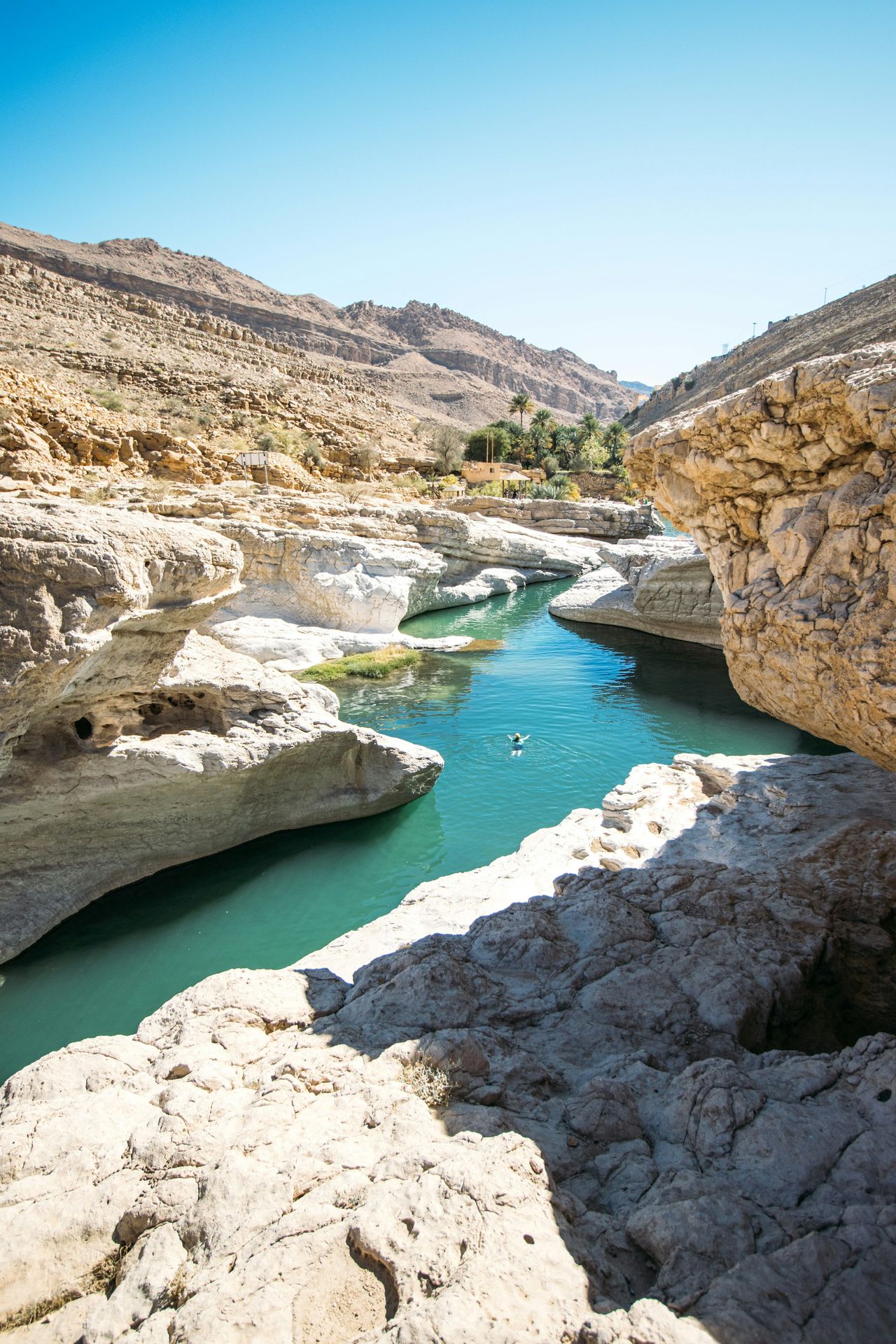
A limestone range in the north, cut through by wadis: dry riverbeds that fill after rain and hold deep pools all year round. Steep walls, narrow passages and clear water in the middle of an arid landscape.
The interior
Between the mountains and the dunes lies a vast stony region with abandoned villages and old irrigation channels. This is 4x4 terrain: little tarmac, a lot of horizon, and the place where you feel distance.
The Empty Quarter
The Rub al Khali, the largest continuous sand desert on earth. Dunes hundreds of metres high, no infrastructure, no signal. The quietest terrain we travel in.
What canyoning in a wadi actually is
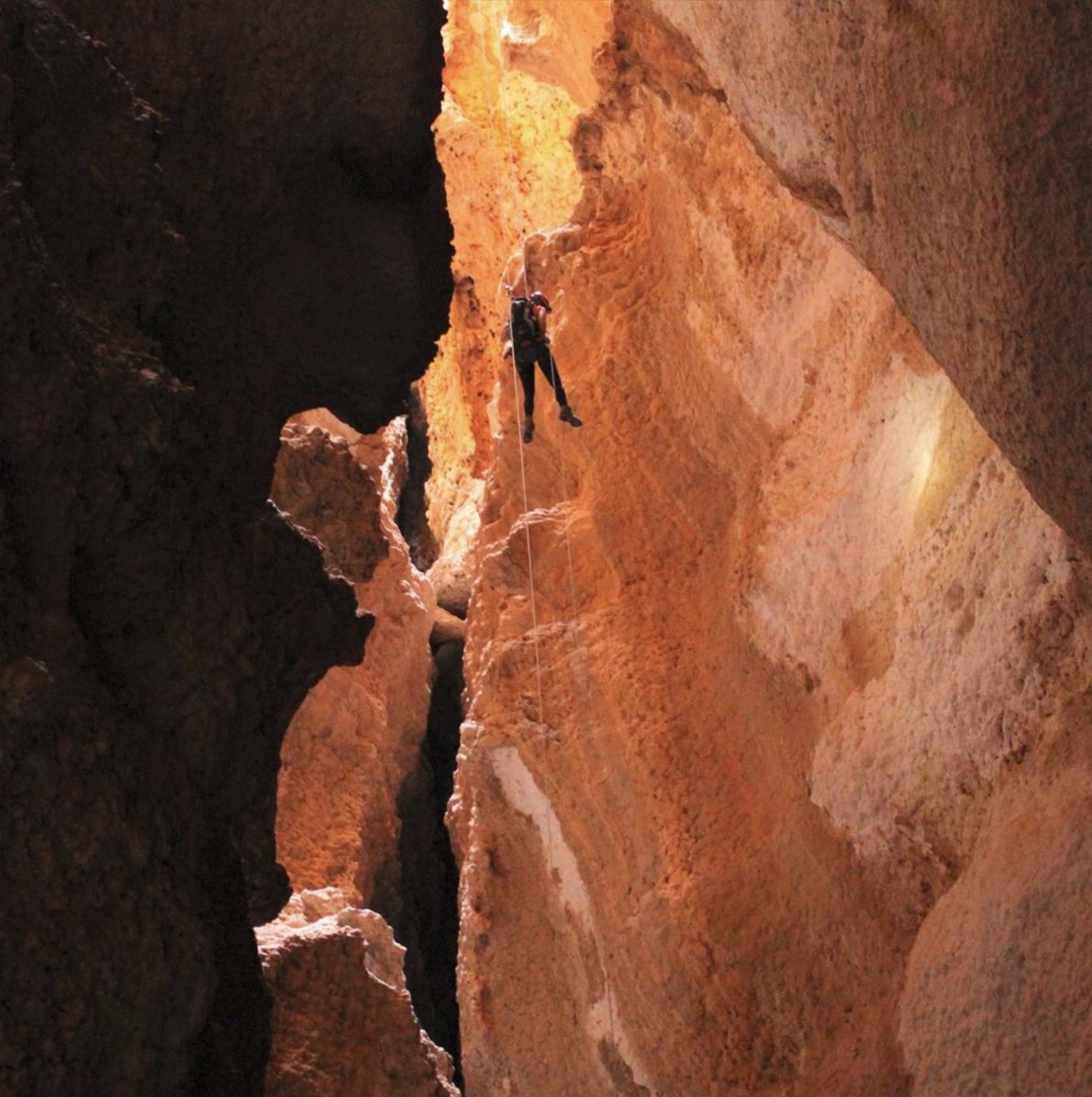
Canyoning sounds more technical than it usually is. In practice it means descending a canyon through a mix of walking, scrambling, swimming and abseiling. The water is cold, the rock is slick, and you cannot go back the way you came. That last part is exactly what makes it interesting: once you are in the canyon, the only way out is forward.
No prior rope experience is required. What counts is being comfortable with height and willing to get into the water. You learn the technique on site from the guides.
Heat by day, cold at night
The biggest surprise for most participants is not the heat but the swing. It climbs sharply in the sun during the day, but as soon as the sun drops a desert cools fast, and in the dunes you sleep under a clear sky with no cloud cover to hold the warmth in.
That means your packing list has to cover two extremes: protection from sun, sand and dehydration by day, and a warm layer for the night. Long sleeves while walking are not a choice but standard, not against the cold but against sunburn and abrasive sand.
Water is the real theme here
In a desert everything comes down to managing your water. How much you need, and why drinking too much is also a problem, is covered in Hydration basics.
In a canyon it is not about strength but about pace. Rush it and you soak your feet at the first swim, then walk for days with blisters. Staying dry where you can is not a luxury, it is maintenance.
Koen De Leeuw, expedition leader
When do you go?
The window is narrow. In the summer months the interior is too hot to enter responsibly, and in the depth of winter the mountains can turn unpleasantly cold. What remains is autumn and early spring.
Our expedition therefore leaves at the end of October: 30 October to 9 November 2026, eleven days. That is the period when the wadis still hold water, the days are workable and the nights in the dunes stay pleasant.
Long days, height and water combined
We rate Oman at level 3 of 5, Adventure. In practice: long days on uneven terrain, several nights outdoors and a few sections combining height and water. No technical climbing experience needed, but a solid base level of fitness and a willingness to accept discomfort.
What is included: guiding by X Guides, the 4x4 drives, the canyoning and survival gear, the sleep setup, and all overnight stays and meals on location. What you bring yourself is your clothing and personal kit.
The expedition
All dates, the day by day itinerary and the current price are on the page for the Oman expedition.
Your gear
What you bring yourself and in what order to buy it is covered in the expedition packing list.
Still unsure?
Compare the terrain types and seasons in which destination suits you.
From canyon to Empty Quarter
Few destinations let you swim in a canyon and sleep among dunes without a single light on the horizon in the same week. That contrast is why Oman is on our calendar.