
We hear it regularly. Someone signs up for an expedition, receives the packing list by email and thinks: right, where do I start? Not because the list is unclear, but because they have never looked at their wardrobe with the question of whether something is suitable for minus twenty degrees, or how waterproof that rain jacket actually is.
Then the searching, googling and comparing begins. Suddenly there is a GORE-TEX Pro jacket on your screen at 550 euro, a sleeping bag at 1,200 euro and mountain boots at 400 euro, and you think: I had not budgeted for this. Understandable, and completely unnecessary.
Because here is the truth: you do not need the most expensive gear to do an impressive expedition. What you do need is the right gear for the right environment. And the big difference is not always where you expect it.
Two kinds of gear: what we provide and what you provide
Before we talk about cost, it helps to understand how the division of responsibility works on an Element X expedition. There are two categories.
The expedition equipment
The first category is the specialised expedition equipment. These are the items you will not simply find in a regular sports shop, technical kit that we assemble carefully for every expedition.
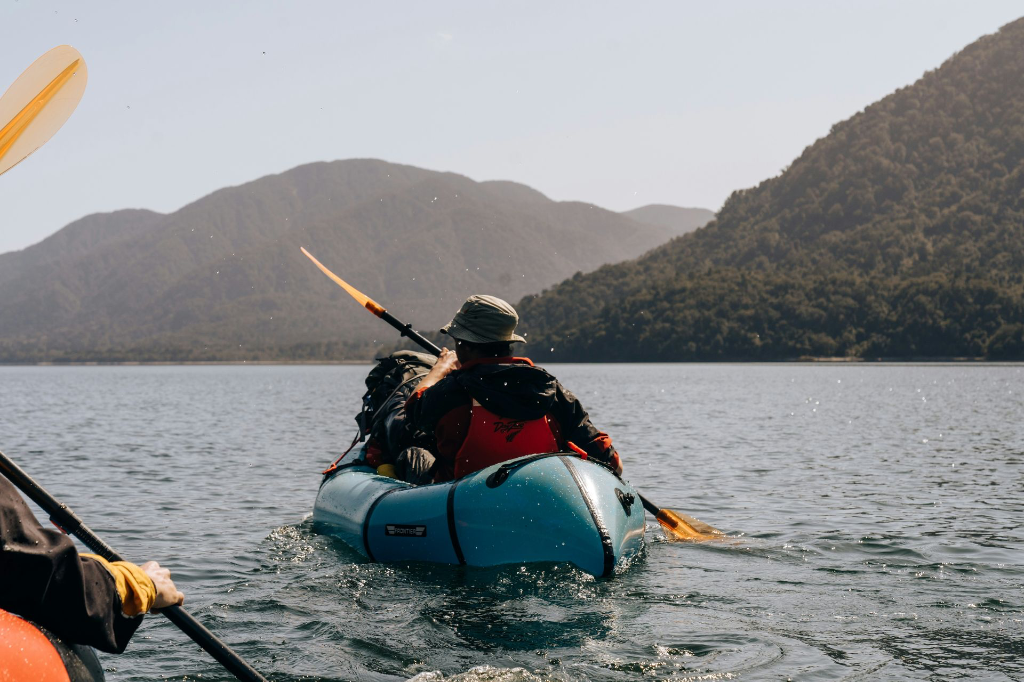
Take the sleeping bag: on an Arctic expedition that means a model rated to minus thirty or forty degrees, not something you pick up cheaply in the sales. Then there is the mat, the bivvy bag, the pack, trekking and navigation equipment, the Jetboil, a packraft for Patagonia or Kyrgyzstan, snow shovels and snowshoes in Lapland, the satellite phone, the trauma kit and the repair kit.
All of that is included in your expedition price. We supply it, check it and distribute it across the group.
Your personal kit
The second category is you. Your clothing, your footwear and your personal kit such as head torch, sunglasses, water bottle and thermal underwear. You buy that yourself, or you already own it, and you bring it along.
That is where your freedom sits, and with it the entire difference in cost.

The two phases of your preparation
An expedition does not start when your flight leaves. It starts the day you sign up. And the gear question is exactly one of the things you tackle in your individual preparation phase.
During that individual phase you receive your packing list. That document is your starting point. The first thing we ask: do not go shopping straight away. Look at what you already own. A decent pair of walking trousers? Perfect. A rain jacket you wore last summer that happens to be the right fabric? Possibly good enough. A set of merino socks you bought for mountain biking? Probably fine. You do not need to buy anything at that stage. Just gather what you have.
Then comes the group phase, which starts with the kick off. That is a full day on which you meet your expedition team, do physical tests, taste expedition meals, sit around the fire together and go through every detail. On that day we look at what you brought: what works, what is missing, what could be better and what really will not do. Not to judge your wardrobe, but to make sure you stand at the start line safe and comfortable. Only after that day do you really know what you still need. And then you buy precisely, without stress.
So what does it actually cost?
That depends on three things: your destination, your brand and quality choices, and what you already own. Let us make it concrete per type of expedition.
A short adventure close to home
Take a micro expedition in the French Ardennes. Two days, familiar terrain, no extreme temperatures. For this kind of trip, look in your own wardrobe before you buy anything at all. Walking trousers, a fleece, a rain jacket, decent socks, a head torch and a power bank: that is it.
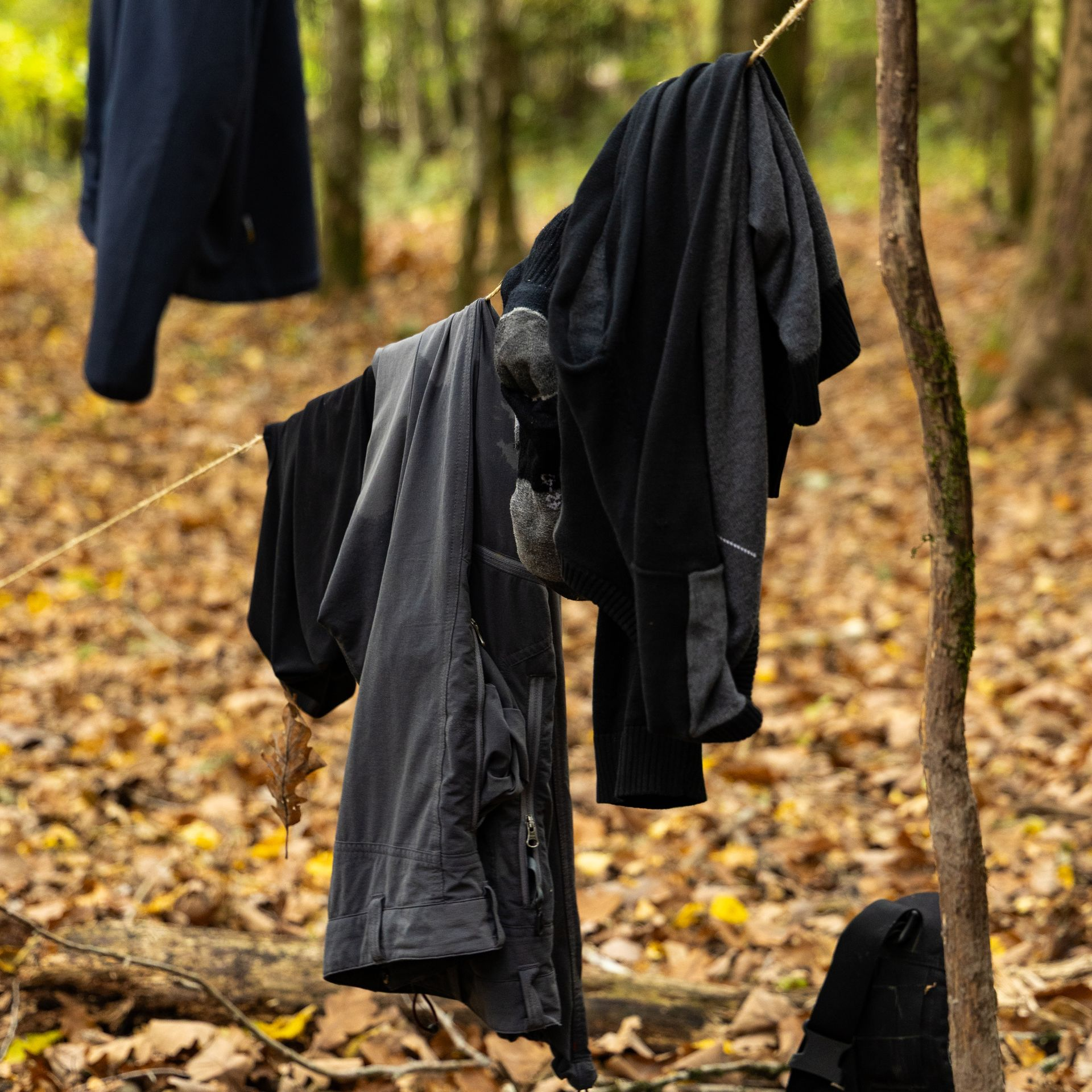
For a day or two in the Ardennes in May you do not need extreme arctic layers, and chances are you already own most of it.
The one investment we always recommend here is a good pair of walking boots your feet already know. Quality pays off there, whatever the brand.
So boots and a light uninsulated rain jacket are the only things you look at deliberately. The rest is probably already somewhere in your wardrobe.
Starting from nothing: from 200 euro for the basics. Fully premium: around 1,000 euro for the set.
Expeditions in the heat
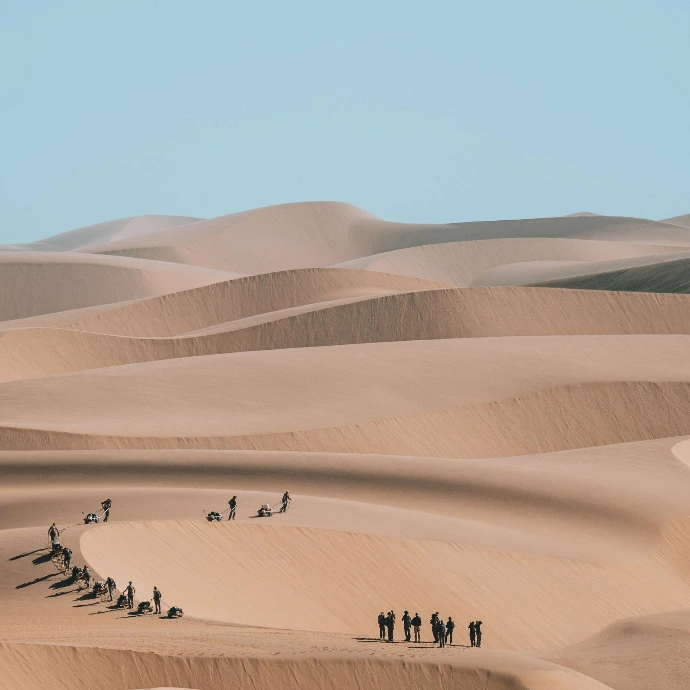
Expeditions into desert and steppe regions, think a crossing of the Namib, the Anti Atlas in Morocco or the dry highlands of the Sahara region, call for a specific packing list but not extreme layering. The story here differs from the mountains.
You need protection from the sun, not only from the cold. Long sleeves are compulsory while walking, not to stay warm but to avoid sunburn, insects and wind damage. A buff or balaclava for sandstorms. Good socks and footwear that keep sand out.
It is entirely possible to be fully ready for this type of expedition with what you already own, topped up with a few targeted purchases from a regular sports shop. Anyone wanting more comfort invests in a few well chosen quality pieces. Anyone going fully premium, head to toe, can spend 2,000 to 3,000 euro. But that is a deliberate choice, not a requirement.
Starting from nothing: from 500 euro for a set. Fully premium: around 2,000 euro.
Mountain expeditions: from Kyrgyzstan to Patagonia
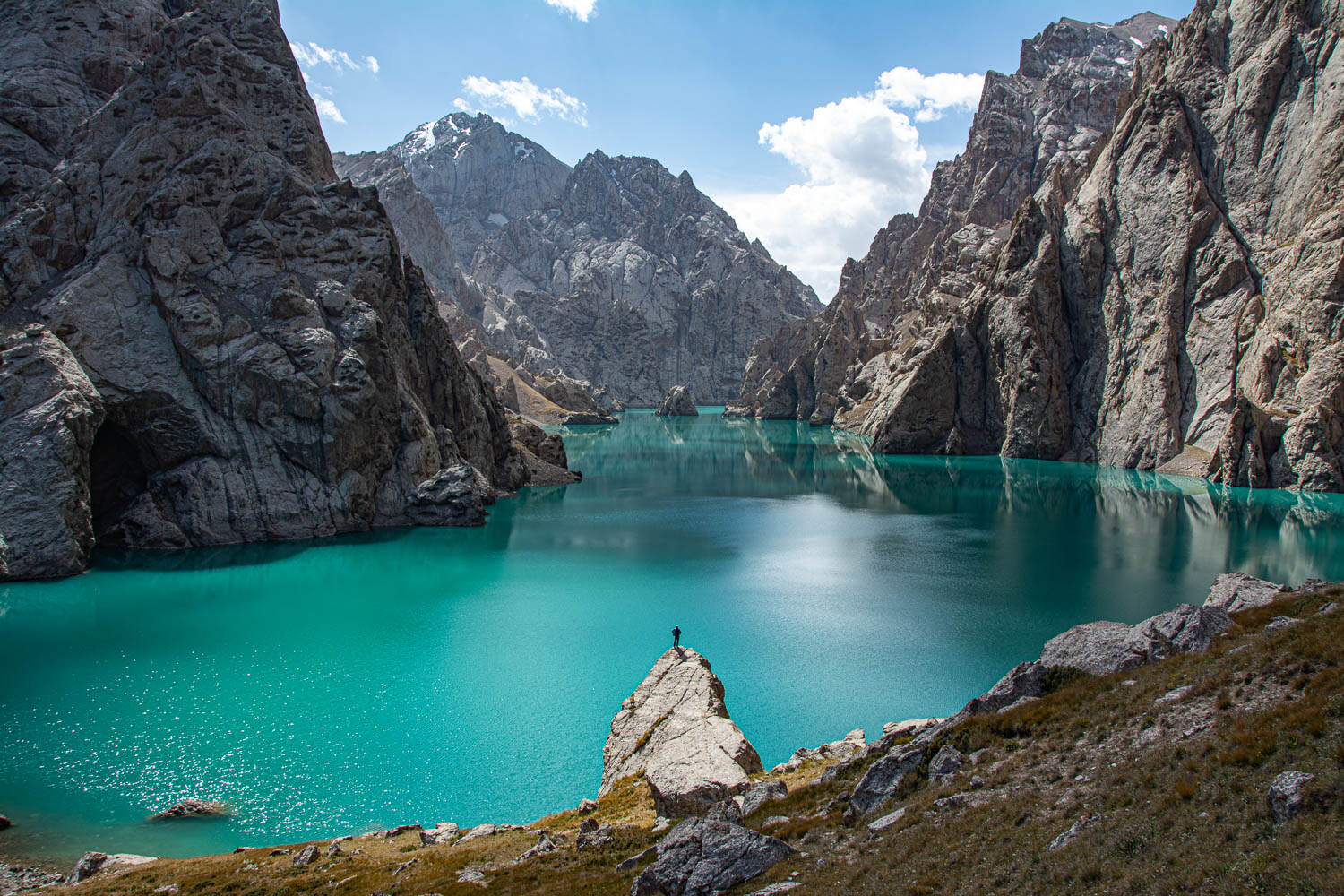
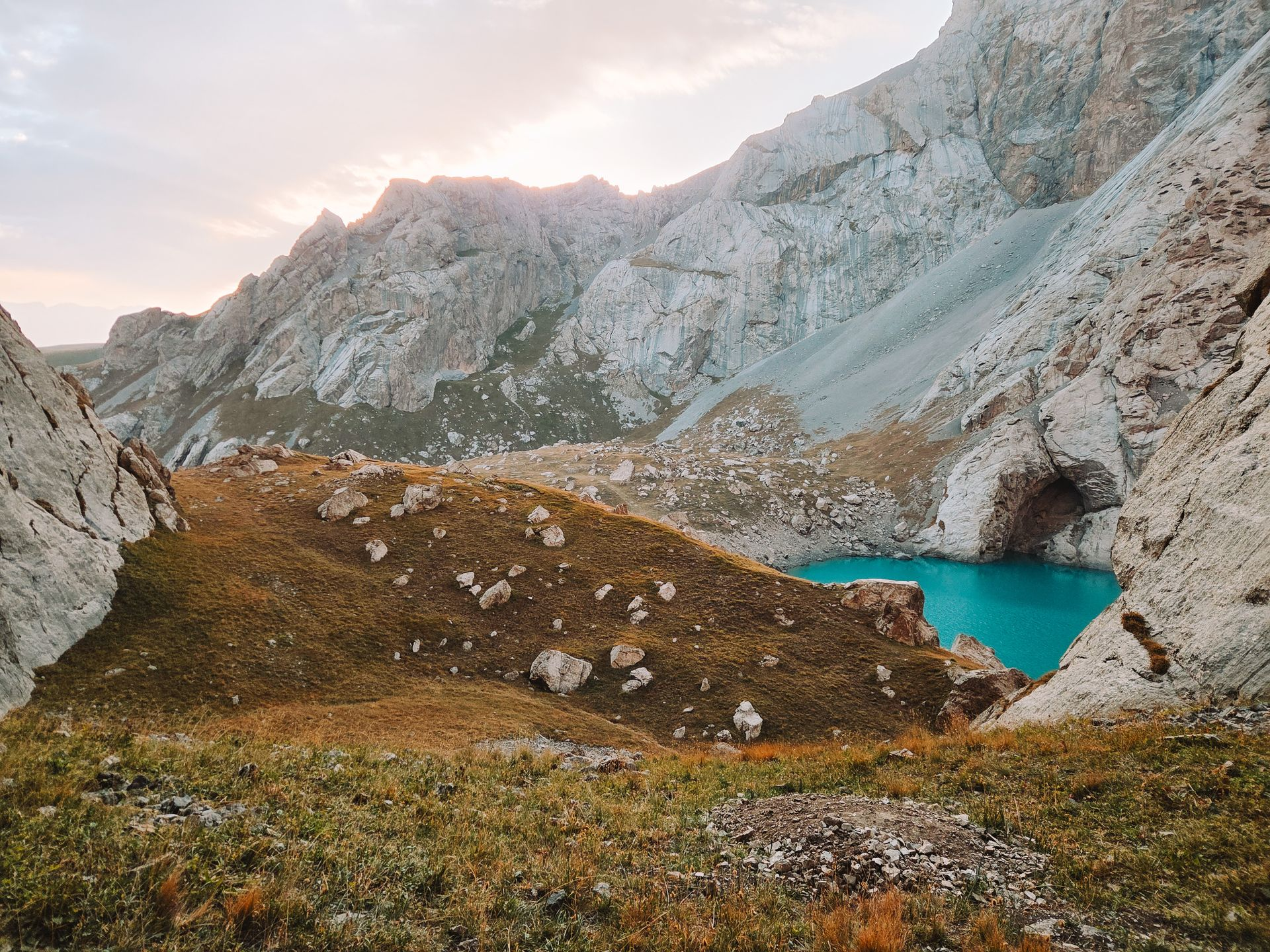
This is where it gets more interesting. Mountain environments demand more technical clothing because the weather swings more sharply. In Kyrgyzstan you can start a day above twenty degrees in the valley, walk through rain at altitude and camp at zero in the evening. In Patagonia the weather is even less predictable: four seasons in one day is not a figure of speech there, it is reality.
For this type of expedition a decent rain jacket is not a luxury but a safety item. One that is genuinely waterproof and windproof, mind you. At the budget end of the spectrum, people get through a mountain expedition perfectly well with a set from a regular sports shop.
In the mid range, mixing solid basics with targeted quality investments, you are more comfortable and drier. And at the premium end, with a GORE-TEX Pro jacket, technical mountain boots, merino thermal layers and good mitts, you pay around 2,500 euro for the full set. In return you carry gear that lasts years in the harshest conditions.
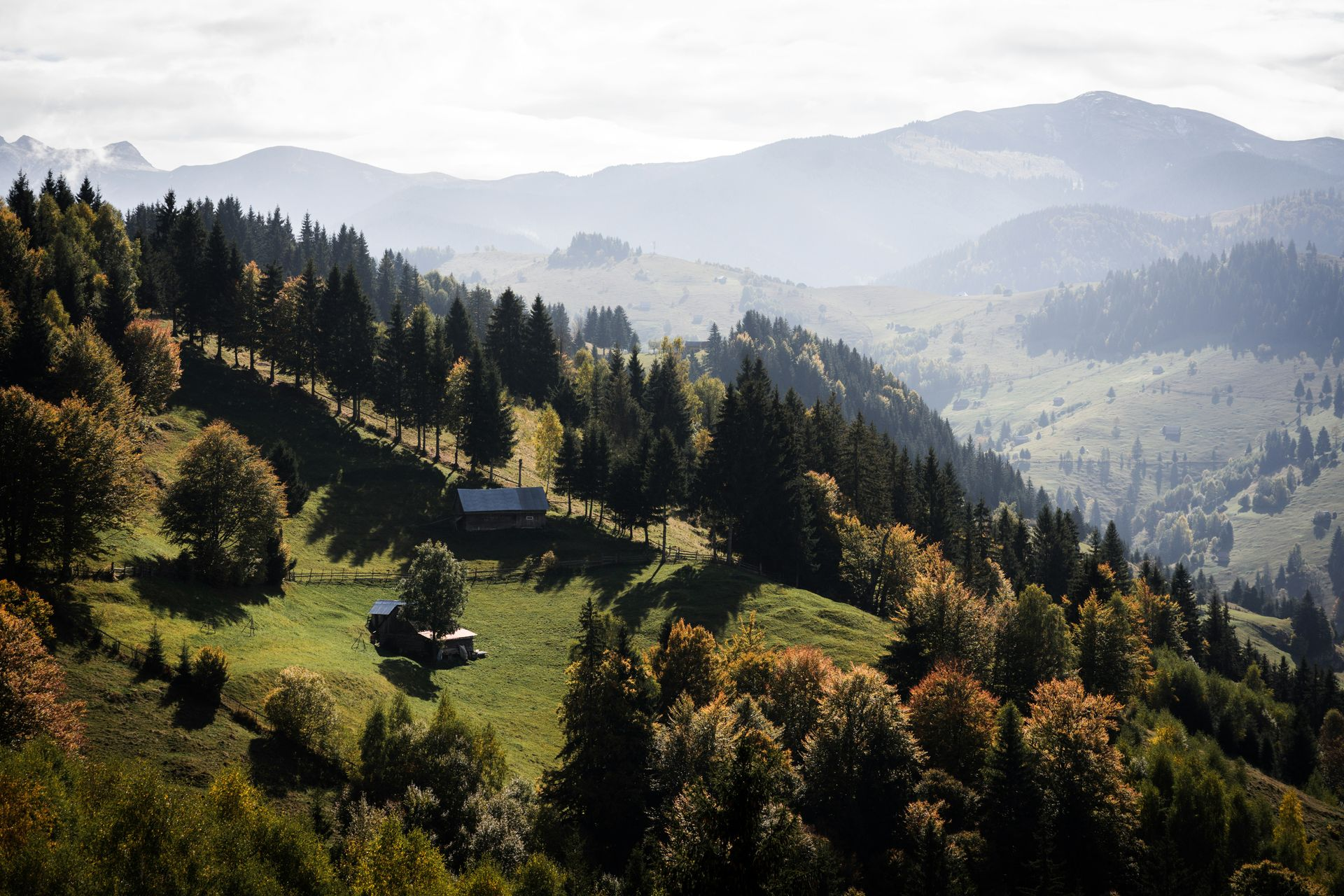
Starting from nothing: from 750 euro for a set. Fully premium: around 2,500 euro.
Arctic: the extreme end of the spectrum
The Arctic is a different category. Full stop. If you travel into Lapland at minus thirty, gear failure is not a comfort problem but a safety question. This is where we are most direct in our advice. Some items on the Arctic packing list are not negotiable on quality: mitts rated to minus thirty, and thermal underwear without cotton, because cotton holds moisture and in extreme cold that is dangerous. There is a hard line there.
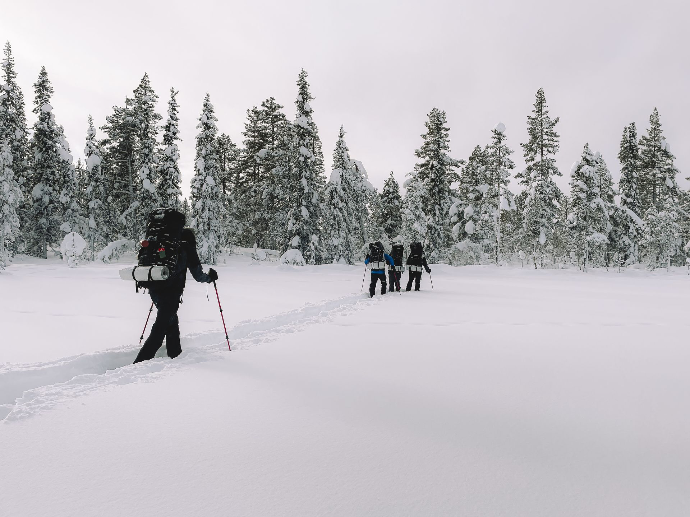
That does not mean you have no choices here. With deliberate, targeted purchases for the critical layers, and by starting from what you already own for the rest, you get further than you would think. Anyone aiming for the mid range combines quality items in the critical positions with solid basics elsewhere. The full premium set, with arctic mitts, arctic boots, a down jacket and heavy merino thermal layers, comes to around 2,800 euro for everything you supply yourself.
But do not let that figure put you off. Most participants on our Arctic expedition turn up with a mix: some of it was already in the cupboard, some bought deliberately, some on our advice after the kick off. Nobody has to decide their budget on day one.
Starting from nothing: from 1,000 euro for a set. Fully premium: around 2,800 euro.
The expeditions behind these budgets
The figures above belong to concrete destinations. These are the four types we guide most often.
- Untamed Adventure Weekend: the short adventure close to home, three days in the French Ardennes.
- Oman: desert and canyoning, the hot end of the spectrum.
- Kyrgyzstan and Patagonia: the mountain expeditions with the most changeable weather.
- Escape The Arctic: the extreme end, where the packing list is not negotiable.
Where does the real price difference sit?
After hundreds of participants turning up at the kick off, the pattern is clear. Two things account for most of your final budget.
How much do you buy?
The packing list we give you is deliberately lean. Every item is on it because it is needed, not because it is nice to have. Anyone who starts adding, an extra spare layer, a second pair of gloves just in case, another pair of trousers in case of, quickly notices the budget climbing. And the pack getting heavier. Stick to the quantities we advise and you buy precisely rather than too much.
Where do you buy your gear?
Chains such as Decathlon are a good start for basic kit: the prices are fair and for many items the quality is more than sufficient. Anyone wanting to go further will find more specialised brands and deeper knowledge in specialist shops. The range is wider and the advice more technical, but the prices are noticeably higher too. Neither is automatically the right choice. It depends on your destination, your budget and how often you use this kind of gear.
The biggest price differences sit in four categories
Rain jacket
The gap between a decent entry level jacket and a premium GORE-TEX Pro shell is enormous. Both keep you dry. The difference lies in how long they do that, how well they breathe under hard effort and how long they last. For a first expedition a good basic jacket is fine. For anyone in the mountains every year, investing in quality works out cheaper over time.
Footwear
Quality always pays here. Not necessarily the most expensive model, but your feet carry you. A pair of boots that hurts after three days or soaks through costs you more than the quality version you are still wearing in ten years. This is the item we advise on most directly: invest here.
Thermal underwear
Merino against a synthetic base layer. The price difference is a factor of three to four. The difference in use is just as real: merino does not smell after three days of wear, and on an expedition without a shower that is worth more than you would expect.
Insulated jacket
A premium synthetic jacket against an entry level model. Both keep you warm. The weight and how small they pack differ sharply. On a weekend in the Ardennes you barely notice. On day twelve in Patagonia, where every gram in your pack counts, you certainly do.
The honest answer
We do not want to frighten you with big numbers. Nor do we want to pretend a few euro will get you ready for an Arctic expedition.
The honest answer is this: the cost of your clothing is variable, and you decide where you sit. What is not variable is that you bring the right categories of item, in the right quality for that specific environment. Within those categories there is almost always a cheaper and a more expensive option.
We see participants who shop carefully and are superbly prepared. We see participants who go premium and are equally well prepared. The difference is not in the price, but in how precisely you buy.
And that is exactly what the kick off is for. Not to tell you what to buy, but to look together at what you already have, what is genuinely needed and where you top up deliberately. That avoids duplicate purchases, unnecessary spending and the nagging question of whether you are getting it right. You do not have to decide that alone.
Do you have questions about one of our expeditions or about the preparation programme?
See our expeditions Contact us