
Patagonia has a reputation that runs ahead of the destination itself. Everyone knows the photographs: granite towers, turquoise water, glaciers calving into lakes. What those photographs do not show is the one thing that actually matters in the field: the wind.
This article is about what Patagonia actually is as an expedition destination. The terrain, the weather, why you go there in January, and what twenty consecutive days in that landscape do to a person.
Three landscapes, close together
What makes Patagonia unusual is not one spectacular landscape, but the speed at which they turn into one another. In a few days of walking you can pass through three worlds that anywhere else would lie thousands of kilometres apart.
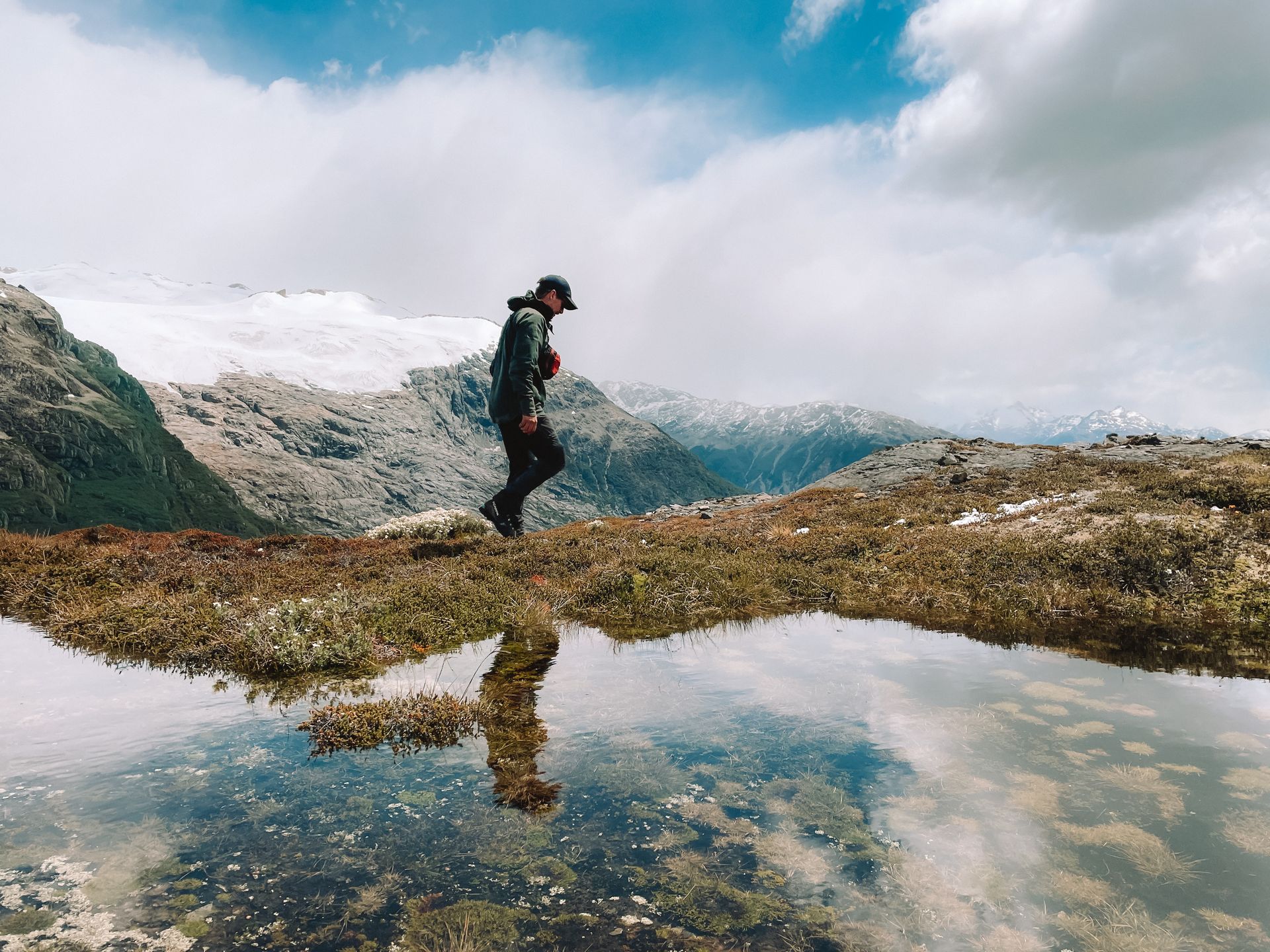
The Andes. Not an altitude destination: the summits rarely exceed three thousand metres. But the rock is steep, the valleys are deep and the passes are narrow. It is mountain terrain that wears you down not through altitude but through variation: every day you climb and descend more than you expect.
The ice. The Southern Patagonian Ice Field is the largest ice mass in the southern hemisphere outside Antarctica. Dozens of glacier tongues run down from it, into the lakes and right up to the forest. Walking on such a glacier is a different kind of movement: no path, no obvious direction, and a surface that feels different every hour of the day as the sun works on it.
The temperate rainforest. This surprises most people. On the western side of the Andes so much rain falls that a dense, moss green forest grows there: twisted lenga and coihue, everything covered in lichen, and a floor that never fully dries out. It is beautiful and it is slow. In that forest you cover a fraction of what you would on open ground.
The wind is the real signature
In the Patagonian summer, westerly winds blow across the continent for weeks on end, with no land to break them. Gusts of a hundred kilometres an hour are not the exception, they are a normal day.
What that means in practice: you walk at an angle. You pitch your tent with its back to the wind and you anchor everything, including whatever you put down for a moment. A sleeping mat that blows away is gone. Talking within the group becomes impossible, so you communicate with gestures. And the wind tires you in a way you do not feel in your legs but in your head: it never stops.
It is also exactly why Patagonia stays with you as a destination. No other environment makes it so consistently clear that you have no say in the matter.
Packrafting: why on foot is not enough
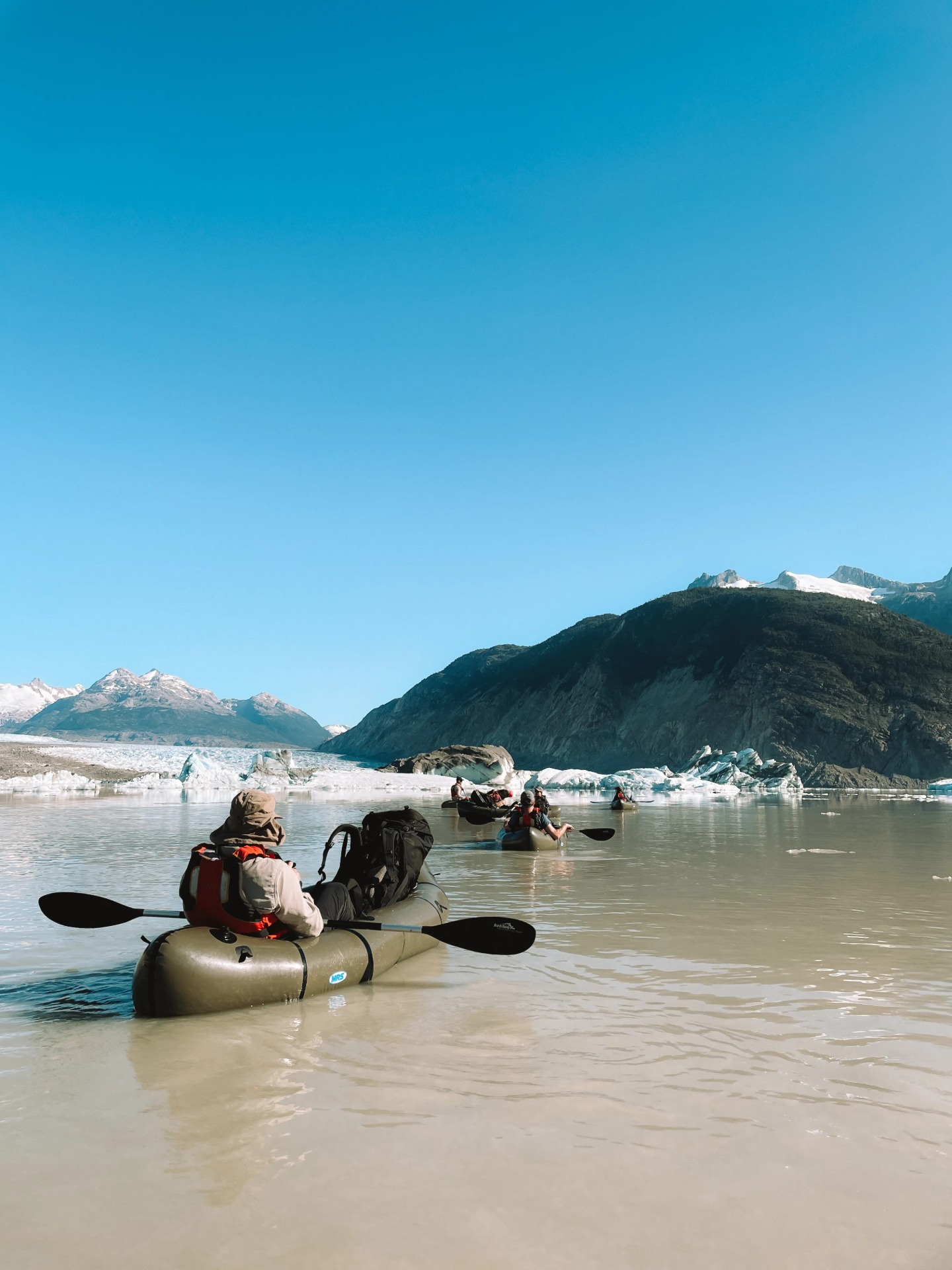
Patagonia is full of water. River valleys, fjords, lakes that run for kilometres and cost you days to walk around. A packraft, an inflatable boat of a few kilos that fits in your pack, changes that completely.
It opens up lines that do not exist on foot: you cross where others walk around, you descend a river in a day where the bank would take a week, and you reach shores no path leads to. It makes the route logical instead of laborious.
It does ask something of you. Water in Patagonia is meltwater, so it is cold, and the weather on a lake can turn within twenty minutes. Paddling there is not relaxation between walking days, it is a discipline in its own right.
Pitch your tent with its back to the wind and anchor everything, including whatever you put down for a moment. And do not talk into the wind: gestures work, shouting costs you your voice and gains you nothing.
Koen De Leeuw, expedition leader
Why January and February
In the southern hemisphere January is high summer. In Patagonia that means long days, with light until well after ten in the evening, and daytime temperatures that are comfortable.
Comfortable is relative. Even in midsummer it can snow in the mountains, and the temperature easily swings fifteen degrees within a single day. What summer does give you is workability: the passes are free of snow, the rivers are crossable, and you have enough daylight to walk long stages without finishing in the dark.
Outside that window it quickly becomes impossible. In the Patagonian winter the days are short, the passes are closed and the terrain is unreliable.
What twenty days do
The Patagonia expedition is rated Challenge (4 out of 5) and lasts twenty days. That duration is not a detail, it is the essential difference from the shorter destinations.
A week in the field you can get through on adrenaline. Twenty days you cannot. Somewhere around day six the novelty falls away, and what remains is rhythm: get up, pack, walk, cook, sleep, again. That is the moment an expedition becomes something other than a trip. You stop counting how many days are left.
Afterwards, participants rarely name the glaciers as the strongest moment. They name the second week, when everything became simple.
Three weeks without comfort and without a way out
You need no technical mountaineering experience, but you do need good endurance and the willingness to live without comfort for three weeks. Daily stages with a full pack, camping in wind and rain, washing in meltwater and no signal.
The hardest part is not physical but mental: there is no way out. On day twelve you cannot decide that you have had enough. For most participants that fact is the real lesson of the destination.
Practical
The Patagonia expedition runs from 19 January to 8 February 2027 and lasts twenty days. On foot and by packraft, through mountains, across glaciers and through rainforest. Guiding by our X Guides, group equipment and the packrafts are included.
Want to see the destinations side by side: which expedition suits you compares them on terrain and intensity. And the packing list for an expedition goes into detail on what has to come along.